

Lindsey Graham Death Conspiracy: Trump Slams FBI Investigation After Ukraine Poison Claims
As the FBI's presence at the senator's residence remains a subject of intense speculation, the gap between official findings and public suspicion continues to widen.
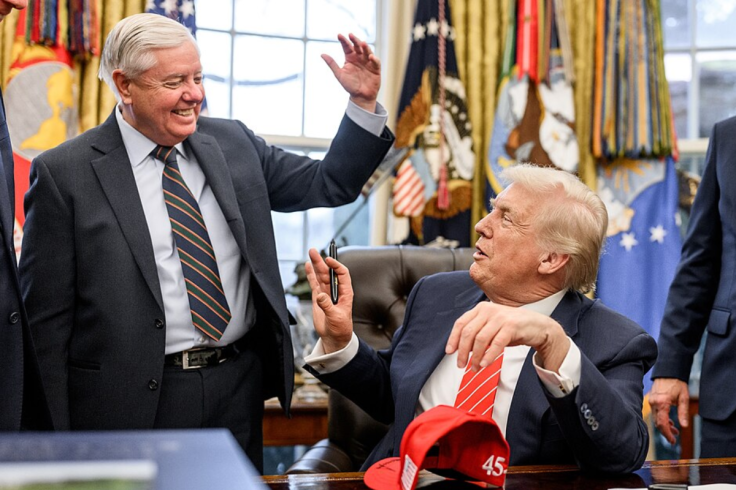
Days after Lindsey Graham's death, Donald Trump is pushing back against conspiracy theories claiming the 71‑year‑old senator was 'poisoned'. The president, a long‑time ally and sometime critic of Graham, has publicly dismissed suggestions that Russia or any other foreign power killed the South Carolina Republican, even as online speculation and calls for further investigation continue to mount.
The Lindsey Graham's office announced that a preliminary examination by the Washington, DC, Medical Examiner found he died from an aortic dissection caused by arteriosclerotic cardiovascular disease. The statement followed a whirlwind trip to Kyiv, where Graham was photographed alongside Ukrainian president Volodymyr Zelensky and reiterated his support for US military aid. That timing, paired with a brief reference from his staff to a 'sudden illness,' has been more than enough to fuel social‑media suspicion that his death might not have been natural.
Lindsey Graham Trip To Ukraine Becomes Focus Of Rumours
Graham had just returned from Ukraine when he reportedly fell ill and died. In Kyiv, he met Zelensky and senior officials in a visit pitched as a show of solidarity against Russia's invasion. Within hours of news of his death, some commentators were drawing a straight line between that visit and his collapse back in Washington.
Far‑right activist Laura Loomer was among the first to amplify the idea that something darker might have happened. On X, formerly Twitter, she asked whether Graham had been 'poisoned by a foreign adversary either abroad or upon returning to the US,' and demanded an investigation. She seized on the wording used by Graham's staff, repeating the phrase 'brief and sudden illness' and openly asking if that was code for poisoning.

Loomer's posts ricocheted through conspiracy‑minded corners of social media, where Russia, Ukraine, US intelligence agencies and even political rivals were all cast as possible villains without evidence. In that ecosystem, the fact that Graham appeared healthy in footage from Kyiv just days before his death has become the central talking point.
More mainstream figures have been more cautious, though some share a basic instinct that every medical stone should be overturned. Republican senator John Cornyn told reporters that he had seen the initial diagnosis of a dissected aorta and accepted that such a rupture 'could cause his death.' But given where Graham had been and 'the sorts of things he was advocating for,' Cornyn said, it would be wise to settle lingering questions with full toxicology testing.
Pressed on whether he feared Graham had been poisoned, Cornyn did not endorse the theory outright. Instead, he framed toxicology as a way to 'rule out any foul play,' a lawyerly formulation that still left room for the public to read between the lines.
Trump Rejects Lindsey Graham Conspiracy Talk, Knocks FBI
Trump, whose every word on such matters is parsed for political meaning, has now tried to slam the brakes on the speculation. In a phone interview on Greg Kelly Reports, the host floated Russian involvement in Graham's death. Trump was having none of it.
'I'd love to say yes, but I think he had some problems,' Trump said when asked about the poisoning narrative, according to the interview. He pointed to family history, noting that Graham's father had also died from heart complications 'just about at the same age.' Trump added that he believed the public essentially knew 'the full story,' a clear signal he was not buying the darker online theories.
On 14 July, Trump addressed the issue again in the Oval Office after reporters asked about FBI agents seen at the senator's residence. He acknowledged that conspiracy theories were swirling, but said he did not see evidence of sinister forces at work.
'I don't see a lot of evil there,' Trump told the press. 'I know there's all sorts of conspiracy theories going along, and I think the FBI is wasting their time if they're doing that.' It was an unusual moment in which Trump sounded more like a sceptic of deep‑state intrigue than a promoter of it, and cast the federal agents as over‑diligent rather than corrupt.
The FBI has not, in the material seen, detailed the nature of its presence at Graham's home. Without an official readout of what agents were doing there, it remains unclear whether they were preserving records as a routine matter or responding to something more specific. Nothing is confirmed yet beyond the medical examiner's preliminary findings.
Why Lindsey Graham's Sudden Death Fuels Theories
Forensic psychiatrist Dr Carole Lieberman, who has publicly called for a full autopsy including toxicology, argues that the swirl around Graham's death fits a familiar pattern. Sudden loss, especially of a public figure who looked vigorous on camera days earlier, often invites elaborate explanations.
'Some people come up with conspiracy theories because they find it hard to understand what happened and they want to make sense out of it,' Lieberman said. She pointed to Graham's confident, apparently healthy appearances in Ukraine and Washington right up until his return to DC, which, for many observers, sit awkwardly alongside the idea of a lethal cardiovascular event hitting without warning.

Lieberman's stance is not an endorsement of poisoning claims so much as a call for a thorough, documented answer. A full autopsy and toxicology screen, she suggests, would either cement the medical examiner's conclusion of aortic dissection due to long‑term heart disease or provide data if anything unusual were present.
At this stage, though, the official line remains that Graham died from natural causes linked to arteriosclerotic cardiovascular disease. Whether the toxicology results Cornyn and Lieberman want will be released publicly is unknown. Until then, the gap between the formal diagnosis and the internet's appetite for intrigue is likely to remain uncomfortably wide.
For now, the medical examiner's finding of aortic dissection stands as the only verified fact in the case. Whether federal authorities will release further details remains a matter of intense public and political debate.
© Copyright IBTimes 2026. All rights reserved.