Andy Burnham's Property Tax Plan Could Leave London Homeowners With a £7.5 Billion Bill, Analysis Find
Andy Burnham's property tax proposal could significantly impact London homeowners, with varying effects across boroughs

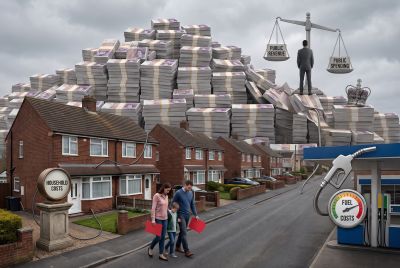
London homeowners could collectively pay an estimated £7.5 billion ($9.90 billion) more each year under a property tax plan backed by Andy Burnham, according to newly published analysis. The proposed overhaul would replace council tax and stamp duty with an annual levy based on a property's current market value.
The analysis suggests the impact would vary across the capital. Homeowners in higher-value boroughs could face significantly larger annual bills, while many households in several outer London boroughs would pay less under the new system.
The findings come as Burnham prepares to set out his economic agenda following his return to Westminster. He has backed reforms aimed at overhauling local government funding and devolving more powers to England's regions. Campaign group Fairer Share, which developed the plan, argues England's council tax system is outdated because it still relies on property valuations from 1991.
How the Proposed Tax Would Work
The proposal would replace the current council tax system with an annual charge based on a property's market value. Owners of primary residences would pay 0.48% of a property's value each year, while second homes, empty properties and homes owned by overseas buyers would be charged 0.96%.
Fairer Share says the changes would create a fairer system because annual charges would reflect current property values. The campaign also argues that removing stamp duty would make it easier for people to move home by removing one of the upfront costs associated with buying property.
The analysis estimates that the higher rate on second homes, empty properties and overseas-owned homes would raise about £5 billion ($6.60 billion) nationally, helping offset the removal of council tax and stamp duty.
Which Areas Could See the Biggest Changes?
The analysis suggests the impact would vary across London because property values differ between boroughs. Westminster would have the smallest proportion of households paying less under the proposed system, with around 12% expected to benefit. Wandsworth follows with about 23%, reflecting relatively high property values alongside comparatively low council tax bills.
Elsewhere, more households are expected to pay less. Around 58% of households in Barking and Dagenham are estimated to benefit, while about half of households in Hackney, Southwark, Islington and Croydon would also pay lower annual property taxes.
According to the analysis, any increase would initially be capped at £1,200 ($1,584.49) a year until a property changes ownership.
Andy Burnham is backing a proposal to scrap Council Tax and Stamp Duty, replacing them with a Proportional Property Tax (PPT).
— MB (@MBdaytrading) June 24, 2026
📌 Rate: 0.48% of current property value
📌 Cap: £1,200 per year initially
📌 Supporters claim 77% of households would save an average £556 annually
A…
Andy Burnham supports the Fairer Share campaign’s proposal to replace Council Tax and Stamp Duty with a Proportional Property Tax (PPT) at a flat 0.48% of current property value.
— Moving Home with Charlie (@moving_charlie) June 24, 2026
The £1,200 initial annual cap on increases and claims that 77% of households would save (average…
🚨 EXPOSED: THE BRUTAL COST OF A BURNHAM PREMIERSHIP.
— David Shaw (@David90shaw) June 22, 2026
Keir Starmer is barely out of the door, and the Labour establishment is already preparing to raid your bank account.
Andy Burnham’s economic blueprint has leaked, and it is a complete disaster for the British middle class.…
Why Burnham Supports the Changes
Burnham has said reforming property taxation forms part of his plan to rebalance economic growth by giving England's regions greater powers and investment. During interviews on Sunday, Communities Secretary Steve Reed defended that approach, arguing that stronger regional economies would also benefit London. He said creating more employment opportunities outside the capital could reduce pressure on London's housing market by easing migration and demand for homes.
London Mayor Sir Sadiq Khan has warned against reducing investment in the capital's regional funding reforms. The property tax proposal has also been criticised by opponents who argue that many London homeowners would face higher annual costs if it were introduced.
The proposal has not been adopted as government policy, and no legislation has been introduced. Any changes to council tax or stamp duty would require parliamentary approval before they could take effect.
© Copyright IBTimes 2026. All rights reserved.
- Recommended For You