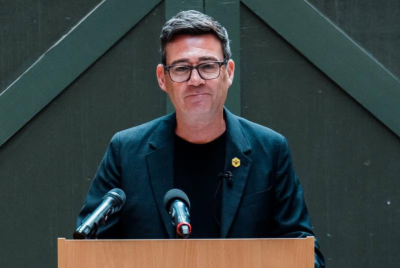
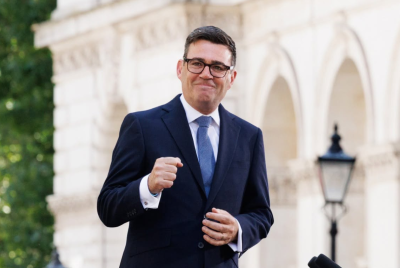
Who Is Andy Burnham? The Frontrunner to Succeed Keir Starmer as Britain's Next Prime Minister
Is the 'King of the North' a unifying leader or a political chameleon on the brink of power?

Andy Burnham has emerged as one of the most talked-about figures in British politics after Keir Starmer announced his resignation, triggering a fast-moving Labour leadership race that could reshape the country's direction.
Once a Westminster insider, now a powerful regional leader, Burnham's story is being read in two very different ways. To supporters, he is a proven election winner with real-world governing experience. To critics, he is a flexible operator who has moved between Labour factions with ease.
That divide sits at the heart of the question now driving headlines: who is Andy Burnham, and can he really become Britain's next prime minister?
🚨 BREAKING: Andy Burnham has announced he is running for Labour Leader pic.twitter.com/gWQxHMDx6C
— Politics UK (@PolitlcsUK) June 22, 2026
Quick Facts
Burnham was born on 7 January 1970 in Aintree, Merseyside, and grew up in a working-class family. He studied English at Cambridge University and joined the Labour Party at 15.
He is currently the Mayor of Greater Manchester, a role he has held since 2017, winning re-election twice. He previously served as MP for Leigh from 2001 to 2017 and held senior cabinet roles, including Health Secretary and Culture Secretary.
He is married to Marie-France van Heel and has three children. His estimated net worth is believed to be in the low millions, largely built through decades of public service salaries, pensions, and property, although exact figures are not publicly disclosed.
Andy Burnham's loyal Dutch-born wife who has starred on ITV show Blind Date https://t.co/PAsJ4kYMoL
— Daily Mail (@DailyMail) June 19, 2026
Political Career And Rise Through Westminster
Burnham entered Parliament in 2001 as MP for Leigh and quickly rose through government ranks under Tony Blair and Gordon Brown. His ministerial roles included positions in the Home Office, the Department of Health, the Treasury, and the Department for Culture.
By the late 2000s, he was part of Labour's senior leadership generation, widely viewed as a future contender for the top job.
After Labour's 2010 defeat, he ran twice for party leader, losing to Ed Miliband and later Jeremy Corbyn. Despite those defeats, he remained a central Labour figure and later served in Corbyn's shadow cabinet, reinforcing his presence across the party's shifting ideological wings.
🚨 PICTURED: Andy Burnham leaves with his wife and daughter after winning the Makerfield by-election pic.twitter.com/tBJ7WdXIKO
— Politics UK (@PolitlcsUK) June 19, 2026
Hillsborough And National Recognition
One of the defining elements of Burnham's career is his role in the Hillsborough justice campaign.
As Culture Secretary, he became closely involved in efforts to uncover the truth behind the 1989 disaster. His advocacy contributed to the creation of the Hillsborough Independent Panel, whose 2012 findings led to a formal apology from the UK government.
This episode cemented Burnham's reputation as a politician willing to challenge institutions and align himself with long-standing public grievances, even when politically sensitive.
Congratulations to Andy Burnham, Labour MP for Makerfield! pic.twitter.com/vfTDBt5RG6
— The Labour Party (@UKLabour) June 19, 2026
Why Critics Call Him A Political Chameleon
His career spans New Labour under Blair and Brown, the Corbyn opposition era, and now a potential return as a unifying figure in leadership. Critics argue that this pattern reflects adaptation rather than consistency.
He has been described by opponents as a 'weather vane', suggesting he adjusts to prevailing party winds rather than holding a fixed ideological stance.
Supporters counter that this is not opportunism but political versatility, arguing that modern Labour politics requires coalition-building across different voter groups and internal factions.
Manchester Mayor Years And The King Of The North Moment
Burnham left Westminster in 2017 to become the first directly elected Mayor of Greater Manchester, arguing that Britain's political system was too centralised and disconnected from regional needs.
He won decisively and was re-elected in 2021 and 2024 with strong majorities, building a separate political identity outside Westminster.
His most visible national moment came during the Covid-19 pandemic, when he clashed publicly with Prime Minister Boris Johnson over funding for Greater Manchester. The dispute turned him into a symbol of northern resistance and earned him the nickname 'King of the North'.
His mayoralty has been defined by transport reform through the Bee Network, housing initiatives, and efforts to reduce homelessness, though some targets have not been fully met.
Return To Westminster And Leadership Bid
Burnham's return to national politics began when he secured selection for the Makerfield seat, signalling a clear intention to re-enter Parliament.
Following Starmer's resignation, he quickly confirmed his intention to stand for Labour leadership, immediately positioning himself as the frontrunner in a rapidly consolidating race.
A key development was the backing of Wes Streeting, widely seen as his main rival, which strengthened perceptions that the contest could narrow quickly around Burnham.
Can He Become Prime Minister
Burnham has executive experience, electoral popularity, and a record of winning in politically competitive environments. He also appeals to voters frustrated with Westminster politics.
But challenges remain. His ideological flexibility continues to divide opinion within Labour, and questions persist over whether regional success can translate into national appeal across the UK.
The leadership debate ultimately comes down to whether Labour members see him as a unifying figure or a political operator shaped by shifting circumstances.
© Copyright IBTimes 2026. All rights reserved.
- Recommended For You