Miranda Priestly vs. The 'Business Bros': Inside the Feminist Battle to Save Runway in 'The Devil Wears Prada 2'
The Devil Wears Prada 2 brings Miranda Priestly back to challenge how we see women's power and ageing in today's fashion landscape

Miranda Priestly is heading back to the big screen on 1 May, when The Devil Wears Prada 2 lands in cinemas worldwide with Meryl Streep and Anne Hathaway fronting a glossy, feminist‑inflected press tour that has already turned the return of 'Runway' into a talking point from Mexico City to Tokyo, Connector reports.
The original The Devil Wears Prada opened in June 2006 and quickly became a cultural shorthand for the ruthless glamour of the fashion world. The film followed aspiring journalist Andy Sachs as she survived and, in some ways, succumbed to the demands of Miranda Priestly, the terrifyingly controlled editor-in-chief of fictional fashion bible Runway.
Nearly two decades later, the sequel arrives in a very different media landscape, and the team behind it appears determined to fold that shift into the story it tells about women, power and the fashion industry.
How The Devil Wears Prada 2 Reimagines Miranda Priestly
The new press campaign has leaned hard into Miranda Priestly as more than just an iconic villain. In a Vogue conversation, Meryl Streep sat down with Anna Wintour and Greta Gerwig and described the film as a consciously feminist narrative about women at work, particularly inside fashion.
That framing matters. The character widely assumed to be modelled on Wintour has, over the years, been read as both a monster and a martyr for ambitious women. Now, the sequel seems intent on grabbing back that narrative and asking who actually gets to be the boss.
The news came after Wintour herself acknowledged that fashion's power structure has been reshaped by the digital age. The first film portrayed a closed world where access was reserved for the rich, well-connected and frighteningly thin.
Since then, the rise of social media, digital magazines and influencer culture has blown a few holes in those marble walls.
The sequel is expected to pick up that thread, using Miranda Priestly and Andy Sachs to explore what happens when a once untouchable print empire faces the scrappy, chaotic democracy of the internet.

The clash that fans are already imagining, the old‑school 'dragon in couture' versus a new breed of business bros and algorithms, is not just a plot device. It is the industry's real existential question, dressed up in Prada and perfect lighting.
Ageing, Power And Who Gets To Be Seen
Another through-line of The Devil Wears Prada 2 campaign is who is allowed to age on screen. The core cast is still led by women, and this time that fact is being treated less as a coincidence and more as a statement.
According to the film's timeline, Miranda Priestly should now be in her mid‑70s, and Andy in her mid‑40s. Their styling on the press tour has leaned into that reality rather than fighting it, favouring sharp tailoring and visible maturity over aggressively 'youthful' reinvention.
The industry those characters inhabit has never been particularly kind to women over 50, on screen or off. Research from the Geena Davis Institute on Gender in Media, cited in coverage of the film, found that only 25.3 per cent of characters aged 50 or older are women. When older women do appear, they are heavily skewed towards negative or diminished portrayals, senile, marginal or the butt of the joke.
Against that backdrop, a studio throwing serious money at a story centred on older women wielding power in fashion is not an insignificant choice. Estimates put the budget for The Devil Wears Prada 2 somewhere between $100 million and $150 million, a sharp climb from the original's $35 million cost.
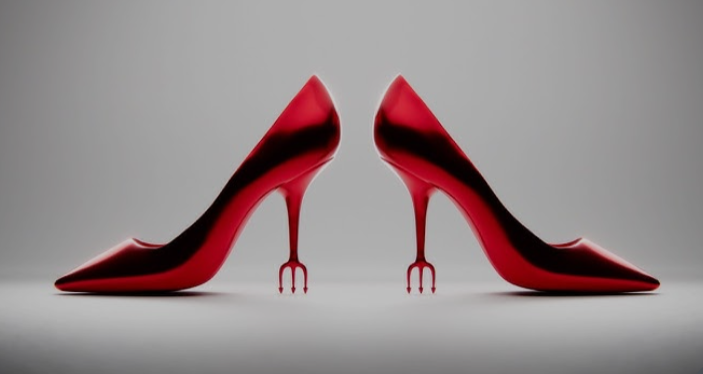
The first film went on to gross $326 million worldwide, far beyond expectations at the time. The sequel's global promotional blitz, with city‑hopping premieres and carefully curated outfits, suggests the studio is betting that audiences will turn out again, not in spite of the characters' ages, but with them as a selling point.
It is not confirmed whether the so‑called 'business bros,' the venture capitalists, platform founders, and data‑driven executives now swarming the media, will appear explicitly as characters or more as looming pressure.
What is plain, though, is the conversation the filmmakers hope to provoke. The press messaging circles the same questions again and again. How should women in charge be judged, by their human cost, their success, or both?
Fans are left to scan red‑carpet looks and interview hints, weighing up whether this sequel will simply trade on nostalgia or genuinely revisit Miranda Priestly and her world with sharper eyes.
When the lights go down on 1 May, the real verdict on who runs Runway, and what that says about the rest of us, will finally begin.
© Copyright IBTimes 2026. All rights reserved.
- Recommended For You