

Does Nancy Guthrie Have Dementia? Arizona Justice Demands Sheriff To Step Down
With a former Arizona justice calling for the sheriff's removal and fears over dementia sharpening concern, the hunt for missing 76-year-old Nancy Guthrie has become a deeply human story of urgency, vulnerability and contested authority.
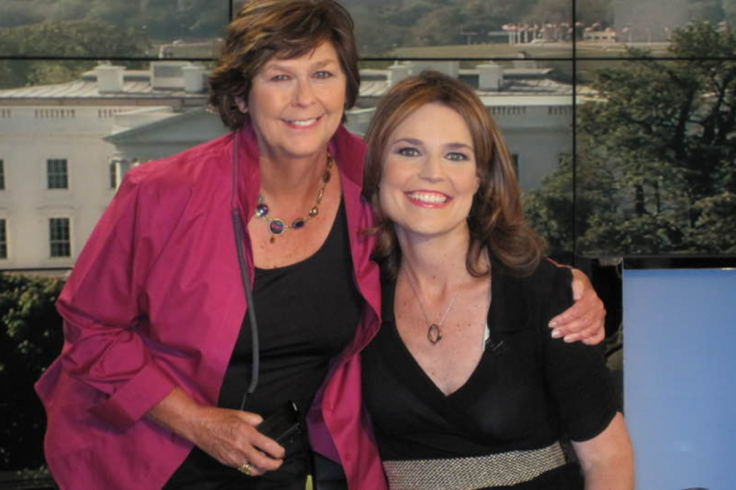
The porch light outside Nancy Guthrie's Tucson home was still on when deputies arrived just after midday. The blood on the front step, later confirmed as hers, had already dried in the Arizona heat. Inside, there was no sign of the 76‑year‑old mother of Today show host Savannah Guthrie. No struggle that anyone could see. No note. Just the unnerving sense that an elderly woman had simply been plucked out of her life and vanished into the dark.
In the days since, a crude question has begun to trail the case online: does Nancy Guthrie have dementia? It is asked with the faux-clinical detachment of the internet age, as if her medical records were a public puzzle to be solved. But beneath it sits something far more human—fear about how vulnerable she may have been, and about how long someone in her condition could realistically survive.
Authorities have, so far, said nothing to support rumours of dementia. What they have confirmed is stark enough. Nancy is 76, a heart patient with a pacemaker, and the circumstances of her disappearance are considered so grave that the FBI is now offering a $100,000 reward for information leading to her location or the conviction of anyone involved. That should be more than sufficient to convey urgency, without turning her health into a spectator sport.
Dementia, Vulnerability And A Night-Time Disappearance
What we do know about that night in Tucson reads less like a missing-person log and more like the opening chapters of a crime novel.
On 31 January, Nancy took an Uber and returned home later that evening, according to the Pima County Sheriff's Department. At around 1.45am on 1 February, someone disabled the doorbell camera. Forty-five minutes later, at 2.30am, the phone that relays data from her pacemaker abruptly stopped transmitting to its monitoring app.
By midday, relatives who could not reach her called 911. Deputies turned up at 12.15pm and found the blood on the porch. Investigators later released stills and footage of a masked figure approaching the property, apparently trying to obscure the door camera before it went dead. The FBI describes the suspect as a man around 5ft 9in to 5ft 10in with an average build, carrying a black 25‑litre 'Ozark Trail Hiker Pack' rucksack.
🚨 BREAKING NEWS: Nancy Guthrie Disappearance Update 🚨
— S Bhardwaj (@skg2269) February 16, 2026
As of February 11, 2026, new details have emerged about the mysterious disappearance of Nancy Guthrie, the 84-year-old mother of NBC’s Savannah Guthrie. 🕵️♂️
🚔 Key Updates:
•A man was detained for questioning following a… pic.twitter.com/6ayGiiomG5
There is, in other words, nothing to support the comforting fantasy that Nancy simply wandered off in a moment of confusion. The trail points towards someone coming to her, not the other way round. A frail or cognitively impaired victim, if that is what she is, would be easier to overpower and infinitely harder to keep alive without regular medication and monitoring. That is why police highlight vulnerabilities in missing-person alerts. It is also why idle speculation about dementia, divorced from any confirmed diagnosis, veers quickly into voyeurism.

The strangeness has not stopped there. Investigators say a person has since come forward claiming to know something about her abductor—and demanding payment in Bitcoin. It sounds almost cartoonish until you remember there is a terrified family at the centre of that message, weighing up whether it is a sick hoax or a real lead they cannot afford to ignore.
Sheriff Nanos Under Pressure As Arizona Justice Wades In
If this were only a story about one woman in peril, it would be grim enough. But the search for Nancy Guthrie has exposed faultlines in local law enforcement too, and those cracks are now widening in public.
Andrew Gould, a former Arizona Supreme Court Justice, has taken the unusual step of calling for Pima County Sheriff Chris Nanos to step aside and let the FBI run the investigation. Appearing on Fox News Live, Gould was blunt.
'I think he has made some mistakes in this case that have impeded the investigation,' he said. 'It is my opinion that he should step out of the way and let the FBI do its job. I think his deputies are doing a very fine job on the ground, but my concern is that the sheriff is becoming more of the story than trying to bring these people to justice and bring Nancy Guthrie home safe and sound.'
Nanos has been accused of initially withholding key information from federal agents, a charge he disputes. Nevertheless, it is rare to see a former state supreme court justice openly suggest a sitting sheriff is now an obstacle to justice while the victim is still missing. That kind of rebuke normally happens quietly, in phone calls and back rooms. The fact it has spilled onto national television suggests confidence in the sheriff's leadership is, at the very least, wobbling.
Gould, for his part, is trying to strike a balance between urgency and due process. 'I'd like to be optimistic and think that we're very close,' he said. 'But we have to keep in mind that not only must we find Nancy Guthrie, we have to make sure that we can prosecute the people that have committed this crime. I wouldn't take anything off the table.'
That line—'I wouldn't take anything off the table'—is the sort of phrase investigators often avoid in public, because it hints at just how wide their horizon has become: abduction, organised extortion, some lone opportunist who spotted an opening. It also acknowledges something people rarely say out loud in these cases: time is not neutral. With every day that passes, the odds grow crueller for a woman in her late seventies with a damaged heart, whatever diagnoses sit in her file.

While the agencies wrangle over jurisdiction, others are left clinging to more ordinary memories. Jack Guthrie—no relation, despite the surname—told Scripps News he had worked with Nancy at the University of Kentucky's student newspaper in the 1960s. She was, he recalled, 'a very polite young woman... a very good writer,' forever in the newsroom, turning up copy as if the world depended on it.
On hearing she had disappeared half a century later, he admitted it rattled him. 'It's sad, the whole thing,' he said. 'You almost shed a tear when you see it, of knowing anybody that's got to go through what that family's going through.'
That is the part of the story that gets smothered when the online chorus reduces Nancy Guthrie to a list of symptoms: dementia or not, pacemaker or not, famous daughter or not. Somewhere behind the grainy security footage, the Bitcoin demand and the political sniping sits one unbearable, stubborn hope—that she is still alive, and that someone, somewhere, is ready to tell the truth about what happened on that porch in Tucson.
© Copyright IBTimes 2026. All rights reserved.