It's Like Negotiating With Iran': Why an FBI Expert Fears the Nancy Guthrie Ransom Notes are a Deadly Bluff
In a kidnapping case fought in full public view, faith, fear and forensic scepticism are colliding over a handful of anonymous emails.

A former FBI special agent has warned that the ransom notes sent in the disappearance of 84-year-old Nancy Guthrie bear the hallmarks of a bad-faith bluff. Speaking to a US news programme, he said dealing with the sender was 'like negotiating with Iran'.
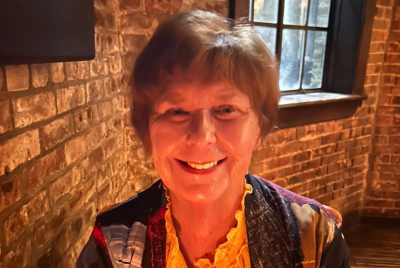
Nancy Guthrie, the mother of Today anchor Savannah Guthrie, vanished from her home in Tucson, Arizona, on 1 February. Investigators believe she was the victim of a targeted kidnapping. In the days that followed, media outlets began receiving ransom demands for millions of dollars in Bitcoin, creating a parallel drama over whether the notes were genuine and whether Guthrie was still alive.
FBI Expert Questions Integrity Behind Nancy Guthrie Ransom Notes
Speaking on the 20 April episode of NewsNation's Brian Entin Investigates, retired FBI special agent Steve Moore said the behaviour of whoever sent the ransom notes had been troubling from the start.
'They would provide no proof of life,' he told host Brian Entin. 'They didn't take Nancy's safety into consideration, according to physical evidence at the scene.'
Moore said the conduct of the supposed kidnappers had undermined their credibility at every stage. 'Everything they did was in bad faith. So it's like negotiating with Iran,' he said. 'They can say they're going to do something, but we sure don't trust them to do anything because they've never demonstrated any bit of integrity or good faith in the investigation.'
The physical evidence he referred to includes blood found at Guthrie's Tucson home, which authorities later confirmed was hers. That finding shifted the tone of the case from a missing persons search to something far more serious.
Not long afterwards, the FBI released surveillance footage of a masked man appearing to tamper with Guthrie's doorbell camera around the time she disappeared. Investigators have not publicly identified the man or linked him by name to the ransom messages.
Moore also said the decision to send the demands to media organisations, including TMZ, rather than deal directly with law enforcement or the family, weakened any claim that the sender was seriously trying to negotiate. 'They wanted the negotiations public,' he said, suggesting the move was more about leverage or spectacle than a credible exchange.
Public Pleas, Media Pressure And Doubts Over The Ransom Notes
Within the first week of the investigation, the Guthrie family found themselves drawn into that public spectacle. Savannah Guthrie and her siblings recorded direct video appeals after ransom notes began arriving at newsrooms.
In an Instagram video posted on 4 February, Savannah Guthrie addressed the person believed to have taken her mother directly. 'We too have heard the reports about a ransom letter in the media. As a family, we are doing everything that we can. We are ready to talk,' she said.
She also voiced a concern that has hovered over the case from the start. 'We live in a world where voices and images are easily manipulated,' she said. 'We need to know, without a doubt, that she is alive and that you have her. We want to hear from you and we are ready to listen. Please, reach out to us.'
Her insistence on proof of life echoed standard kidnapping response practice and underscored Moore's core concern. Without verifiable evidence that Guthrie is alive and in the sender's custody, the notes could just as easily have come from an opportunist exploiting a family's panic.
Later messages only deepened the uncertainty. On 6 April, TMZ reported receiving two more emails demanding Bitcoin payments, the same day Savannah Guthrie, 54, returned to Today after a two-month absence. The timing may have been coincidental, but it added another layer of unease to a case already tangled up with celebrity, media attention and online speculation.
Savannah Guthrie Separates 'Real' Demands From Cruel Imitations
In an emotional interview aired on Today last month, Savannah Guthrie tried to distinguish between the original ransom communications and what she suggested were later copycat messages.
'There are a lot of different notes, I think, that came,' she said. 'And I think most of them, it's my understanding, are not real. And I didn't see them. But a person that would send a fake ransom note really has to look deeply at themselves. To a family in pain.'
She added that she still believed the first two notes the family responded to were probably authentic. 'I believe the two notes that we received that we responded to, I tend to believe those are real,' she said.
That view sits uneasily alongside Moore's scepticism, but it reflects the position the family is in. They are weighing the danger of ignoring a genuine demand against the risk of responding to a fraud. Law enforcement has not publicly confirmed which, if any, of the ransom messages it considers legitimate.

A reward for information leading to Nancy Guthrie's return has been raised to $1 million, showing that investigators and relatives are still relying on public tips rather than the ransom channel to move the case forward.
For now, the central question remains unanswered. The notes may be part of a real kidnapping, a deception, or a mixture of both, but without proof of life or a confirmed suspect, every message adds pressure without bringing certainty.
© Copyright IBTimes 2026. All rights reserved.
- Recommended For You