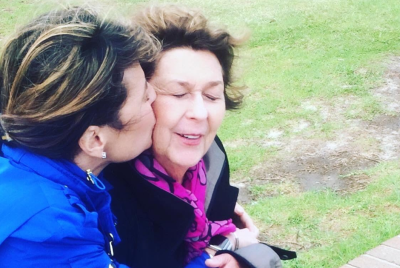
Nancy Guthrie Kidnapping New Plot Twist, 'Retribution'—Expert Claims Abduction Meant to 'Hurt Others'
Profiler says Guthrie kidnapping was revenge, targeting her family and fueling fears about motive and suspects

A new theory in the Nancy Guthrie case suggests the abduction of the 84-year-old was never about her — but about inflicting pain on those closest to her.
The disappearance of the mother of US television presenter Savannah Guthrie has taken a new dimension, as former FBI Behavioural Analysis Unit researcher Dr Ann Burgess proposes the motive may have been retribution rather than random violence.
Retribution Theory Emerges in Nancy Guthrie Kidnapping
According to a New York Post article, Dr Ann Burgess, a former researcher with the FBI's Behavioural Analysis Unit, claimed that the Nancy Guthrie kidnapping may have been driven by a personal motive. Speaking on NewsNation's 'Brian Entin Investigates,' she suggested the crime could have been intended to 'hurt others' rather than the victim herself.
'I think something went very wrong inside the house ... because you know, there was blood,' Burgess said, pointing to signs that the situation escalated unexpectedly.
More strikingly, she questioned whether Nancy Guthrie was even the intended target. 'Who in her orbit, let's call it family, could be friends, would be hurt the most [by her kidnapping]?' she asked, implying that the abduction may have been an act of retaliation against someone close to her.
A Crime Meant to Send a Message
Burgess described the act as 'a very mean, angry, horrible thing to do', reinforcing the idea that emotional motive — rather than financial gain — may have been central to the crime. If correct, it suggests the perpetrators intended to cause maximum psychological harm.
She also raised the possibility that law enforcement may have reviewed Savannah Guthrie's public profile for prior threats.
'I am sure that law enforcement talked with her about that,' Burgess said, referencing the possibility of prior incidents such as threatening letters or messages that might establish a motive.
Multiple Suspects and a Case That May Break
Another key development in the Nancy Guthrie kidnapping investigation is the suggestion that more than one person may have been involved. Burgess stated that the complexity of the crime points towards multiple perpetrators, a factor that could ultimately aid investigators.
She expressed cautious optimism that the case would be solved 'at some point', noting that crimes involving more than one individual increase the likelihood of mistakes or leaks that could lead to arrests.
At the same time, she does not believe the incident signals a broader threat. 'If it's what we call a personal cause... it's not like you have a serial offender that he's going to go out and do this to someone else,' she explained, suggesting the risk of repeat attacks may be limited.
© Copyright IBTimes 2026. All rights reserved.
- Recommended For You