

Netizens Brand Trump a 'Compulsive Liar' Over Inflation Claim as New Tariffs Target 14 Economies
Rising prices and renewed tariff proposals challenge Trump's declaration of victory over inflation
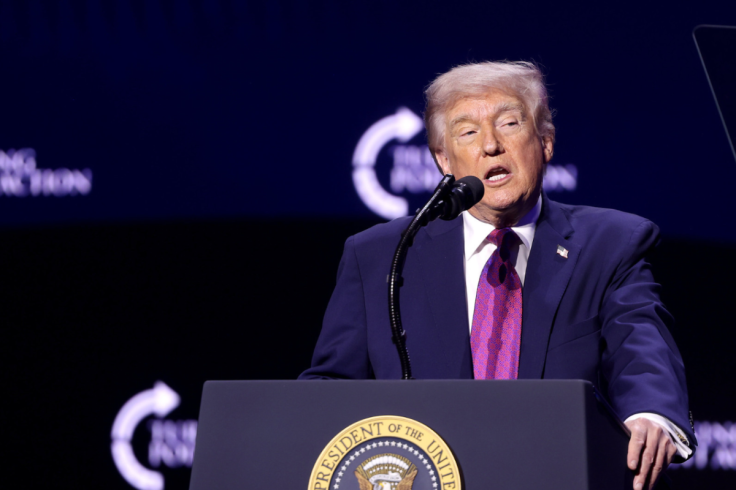
US President Donald Trump's claim that he has defeated inflation has drawn criticism after official figures showed annual US inflation rose to 3.8% in October. The figures were released on Wednesday, 25 November, the same day his administration proposed tariffs targeting 14 economies.
Three days earlier, Trump had shared a graphic on Truth Social listing his administration's purported achievements. Among them was the claim, 'Defeated inflation inherited from the Biden administration,' according to the American Presidency Project.
The developments have renewed questions about household affordability and the potential consequences of additional import duties, particularly following Republican losses in November's midterm elections.
Donald Trump's Inflation Claim Draws Criticism as Prices Continue to Rise
The US Bureau of Economic Analysis reported that annual inflation, measured by the Personal Consumption Expenditures (PCE) price index, reached 3.8% in October, up from a revised 3.7% in September.
Core PCE inflation, which excludes food and energy prices, stood at 3.3%. Overall PCE inflation remained considerably above the Federal Reserve's longer-term target of 2%.
The political account Republicans Against Trump highlighted the discrepancy between the latest economic figures and the president's declaration of victory over inflation.
BREAKING: U.S. inflation rose to 3.8% in October, up from 3.6% in September. Core inflation also climbed to 3.3%, well above the Fed’s 2% target.
— Republicans against Trump (@RpsAgainstTrump) November 25, 2026
Just days ago, Trump claimed he had “defeated inflation.” pic.twitter.com/hDtp66GFK5
An archived version of the discussion showed criticism of Trump's economic policies. However, IBTimes UK could not independently authenticate the original thread or individual replies.
Separate figures from the Bureau of Labor Statistics showed that food prices increased by 0.5% in October compared with September, while energy prices rose by 0.7%.
Concerns about affordability were already widespread before the latest tariff announcement. A Pew Research Center survey of 5,062 US adults found that 73% were very concerned about food and consumer goods prices.
Conducted between 28 September and 4 October, the survey also found that 56% expected Trump's tariff policies to have mostly negative consequences. Another 20% anticipated predominantly positive effects, while 22% expected mixed results.
Donald Trump's Tariff Proposals Target 14 Economies
US Trade Representative Jamieson Greer announced the proposed measures following investigations launched on 11 March under Section 301 of the Trade Act of 1974.
The administration determined that industrial policies across 14 economies contributed to excess manufacturing capacity and restricted US commerce.
Greer defended the proposed measures, arguing that addressing unfair trade practices would improve competitive conditions for American workers and manufacturers.
Vietnam faces a proposed tariff rate of up to 35%, while India's could reach 25%. Proposed rates for China and Singapore reach 20%.
Bangladesh, Cambodia, Indonesia, Malaysia and Thailand face proposed rates of up to 18%. The European Union, Japan, South Korea, Taiwan and Switzerland face rates of 15% or up to that level.
Existing duties, product exemptions and trade agreements could affect the final charges. Investigations involving Mexico and Norway remain ongoing.
© Copyright IBTimes 2026. All rights reserved.