Nigerian Military Blamed for Killing Over 200 at Yobe Market While Targeting Boko Haram Militants
Nigerian Air Force's Operation HADIN KAI under scrutiny after deadly market strike

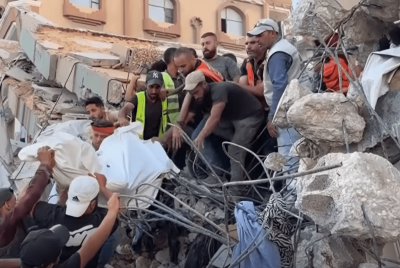
At least 200 people are feared dead after Nigerian military jets struck a packed weekly market in the northeast of the country on Saturday night, with the strike occurring as troops pursued Islamist militants in the area. The attack hit Jilli Market, a busy trading post situated along the border between Yobe and Borno states — a region already scarred by more than 15 years of armed insurgency.
Lawan Zanna Nur Geidam, the councillor and traditional head of Fuchimeram ward in Yobe's Geidam district, confirmed the scale of the tragedy. 'It's a very devastating incident at Jilli Market. As I'm speaking to you, over 200 people have lost their lives from the air strike at the market,' he said by telephone. Three other residents and an official from an international humanitarian agency separately confirmed both the strike and its likely death toll.
Air Force Claims Militant Strike, Silent on Market
Nigeria's Air Force acknowledged carrying out operations in the Jilli axis of Borno State on 11 April 2026, but made no reference to striking a civilian market. In a statement signed by Air Commodore Ehimen Ejodame, the force said it conducted 'precision follow-up mop-up airstrikes on identified terrorist locations,' describing the mission as part of a coordinated air-ground operation targeting 'fleeing remnants and regrouping cells' linked to Boko Haram under Operation HADIN KAI. The Air Force did not respond to further requests for comment from Reuters regarding civilian casualties.
The Yobe State government later acknowledged in a statement that the strike had been conducted near a market. Brigadier General Dahiru Abdulsalam, military adviser to the Yobe state government, said 'some people from Geidam LGA bordering Gubio LGA in Borno state who went to the Jilli weekly market were affected,' though he provided no further detail on the death toll. The Yobe State Emergency Management Agency (SEMA) also confirmed it had received reports of an incident at Jilli Market 'which reportedly resulted in casualties affecting some marketers' and said it had activated an emergency response.
🇳🇬 JUST IN: Up to 200 Feared Dead After Nigerian Air Force Airstrike Hits Busy Market on Borno–Yobe Border
— BSN (@Barristerstreet) April 12, 2026
As many as 200 people are feared dead, with dozens injured, after a Nigerian Air Force (NAF) airstrike mistakenly struck a crowded weekly market on Saturday.
The incident… pic.twitter.com/AHHFlMLfpv
'We Have Their Pictures and They Include Children'
Amnesty International confirmed from survivors that at least 100 people were killed in the strike, with its Nigeria director, Isa Sanusi, telling the Associated Press, 'We have their pictures and they include children... We spoke with the person in charge of casualties, and we spoke with the victims.' A worker at Geidam General Hospital, speaking anonymously as he was not authorised to speak to the media, said at least 23 injured persons were already receiving treatment at the facility. The rights group has since called for an independent investigation, accusing the military of being 'fond of' labelling civilian casualties as combatant kills.
Ahmed Ali, a 43-year-old resident who sells medical consumables at the market, described the chaos from his hospital bed. 'I became so scared and attempted to run away, but a friend dragged me and we all lay on the ground,' he told Reuters. Abdulmumin Bulama, a member of a civilian security group working with the Nigerian military in the northeast, told the Associated Press that intelligence had suggested Boko Haram fighters had gathered near the market ahead of a planned attack on nearby communities, and that the Air Force had acted on what was described as 'credible information.' Former Vice President Atiku Abubakar condemned the incident as a 'devastating failure' that 'should outrage all Nigerians,' lamenting that civilians were once again 'caught in the crossfire and reduced to collateral damage.'
A Pattern of Deadly Misfires
The Jilli Market strike is not an isolated incident. Nigerian military air raids have killed at least 500 civilians since 2017, with security analysts consistently pointing to failures in intelligence gathering and insufficient coordination between ground forces, air assets, and local stakeholders as contributing factors. Jilli Market, though remote, sits in a location long known to be frequented by Boko Haram fighters seeking food supplies, complicating the distinction between militant and civilian presence.
The Nigerian Air Force carried out a precision airstrike on a confirmed terrorist enclave and logistics hub situated near the abandoned village of Jilli in Gubio Local Government Area of Borno State.
— Defense News Nigeria (@DefenseNigeria) April 12, 2026
The successful operation, carried out on 11 April 2026, was the result of… pic.twitter.com/4XH8atIlWs
The broader insurgency in northeast Nigeria, led by Boko Haram and its splinter faction the Islamic State West Africa Province (ISWAP), has killed tens of thousands and displaced more than two million people since 2009, according to the Global Centre for the Responsibility to Protect. In 2025 alone, both groups escalated attacks across Yobe and Borno states, including drone strikes on Nigerian military installations and mass abductions. The security situation in the region had already been described as severely deteriorating in the months leading up to the Jilli strike.
The deaths at Jilli Market raise urgent questions about the Nigerian military's rules of engagement and the safeguards — or lack thereof — in place before airstrikes are authorised in populated areas. With Amnesty International calling for an independent investigation and no credible accounting yet from the Nigerian Air Force, the civilian cost of the country's counter-insurgency campaign is once again in sharp focus.
© Copyright IBTimes 2026. All rights reserved.
- Recommended For You