What Is Hidden in the Exploding Fireball Reports From Pentagon UFO Leak
Newly opened defence files show pilots and troops grappling with mysterious lights they still cannot fully explain.


The Pentagon has released hundreds of pages of previously unseen UFO material in Washington DC, publishing decades of reports on 'unidentified anomalous phenomena' that include vivid accounts of exploding fireballs, glowing discs and 'countless orange orbs' swarming a US military helicopter.
The new cache brings together documents, audio files and 51 videos from as far back as 1948 to as recently as 2023, all now posted under the Pentagon's UAP transparency drive. Much of it comes from military sensors and first-hand testimony on American soil, particularly over test ranges and sensitive airspace in the western United States and around the Great Lakes.
Exploding Fireball Reports and Pentagon UFO Leak
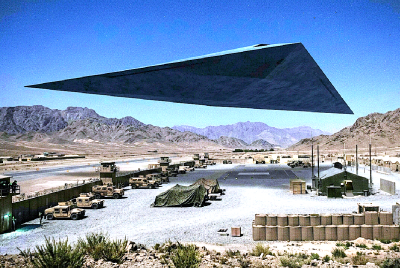
The most striking case in the Pentagon UFO leak material centres on a senior US military intelligence officer, whose report describes a series of encounters during a flight over a test range in the western US last year. Tasked with checking out strange, unexplained sounds in nearby mountains, the officer says he saw 'countless orange orbs' moving rapidly around the helicopter for more than an hour.
According to the written account, the objects appeared extremely hot on sensors, sat unnervingly close to the ground and cast light in all directions. At one point, they reportedly arranged themselves into a large triangular formation, hung there and then vanished. There is no public explanation in the newly released files for what they were, what generated the heat signature or how they disappeared.
The files also revisit much older 'exploding fireball' reports from the American south‑west in the late 1940s. Several witnesses in New Mexico and elsewhere described glowing orbs and disc‑shaped objects that darted about, changed direction sharply and then seemed to vanish. In some of those early reports, objects were said to reappear moments later and appear to explode, though the documents do not show evidence of recovered debris or physical damage on the ground.
There is a repeated pattern in the paperwork. Pilots, radar operators and ground observers see something bright or fast‑moving, often described as an orb, disc or fireball. It moves in ways they insist do not match conventional aircraft. Sensors register an object, sometimes with an intense heat profile. Then, abruptly, it is gone.
Lake Huron and Pentagon Admissions
The Pentagon's new UAP records are not limited to historic curiosities. Multiple videos were captured by military infrared cameras between 2018 and 2023, often during routine operations. One short clip, filmed in 2023, shows an unidentified object over Lake Huron at a moment when the US military was on edge after the Chinese spy balloon incident.
In that region, the atmosphere was already tense. Fighter jets were scrambled several times that month to inspect and, in at least one case, shoot down objects that officials said did not respond to radio calls. Among the newly posted footage is video of an unidentified object being shot down by a US fighter, though the Pentagon's documentation offers no clear description of what it was or where it fell.
Pressed on what, if anything, the leak proves, Pentagon officials insist there is no confirmed evidence of extraterrestrial life or alien technology in these files. The stated purpose, they say, is to 'increase transparency' and let the public see the raw material that underpins years of rumour and speculation.
The documents themselves are careful with language. They refer to 'unidentified anomalous phenomena' rather than UFOs, and repeatedly note that many cases suffer from limited data, sensor glare or incomplete logs. Several entries end with almost the same conclusion: the event is 'unresolved' or 'unidentified' because there is simply not enough information to classify it.
That lack of certainty cuts both ways. It stops anyone credibly arguing that the Pentagon has just admitted to alien visitors. It also leaves room for suspicion among those who think the full story still is not being told. The files do not settle the argument over UAPs so much as move it onto firmer documentary ground.
What is clear from reading through the material is how long officials have been gathering and quietly filing away these reports. From the late 1940s, through the Cold War and into the drone era, service members have filled out forms on glowing discs, darting lights and fireball‑like objects that do not fit standard aviation manuals.
The current release follows an order, signed during Donald Trump's presidency, pushing US agencies to declassify more of their UAP‑related holdings. The Pentagon now says additional files should be made public over the coming months. None of that guarantees more dramatic evidence. At this stage, very little about the more spectacular claims can be independently verified, and nothing in the documents confirms an off‑world origin.
What the new leak does reveal, unmistakably, is just how many trained observers have seen something they could not explain — and how keen the US military now is to be seen letting the rest of us look over its shoulder.
© Copyright IBTimes 2026. All rights reserved.
- Recommended For You