What Is the 25th Amendment? A Look at Presidents Who Faced This Constitutional Check After Trump's Latest Meltdown
Invoking Section 4 requires vice president, Cabinet, and congressional approval

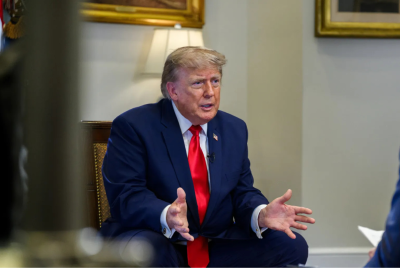
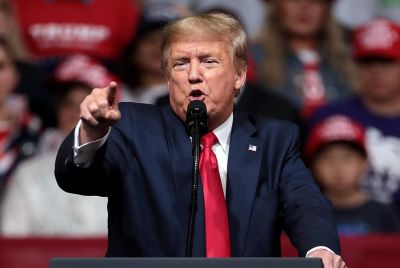
Calls for the 25th Amendment have surged in the United States after President Donald Trump issued a profanity‑laden social media post threatening Iran. Trump's post on Truth Social reignited debate over presidential incapacity and constitutional safeguards.
The 25th Amendment is the key constitutional mechanism that governs presidential succession and incapacity, and while its provisions have been used historically for medical transfers of power, no president has ever been removed involuntarily under its most contested section.
What the 25th Amendment Is and How It Works
The 25th Amendment to the US Constitution was ratified on 10 February 1967 to clarify procedures for presidential succession and to address situations in which a president might be unable to fulfil the duties of the office. It consists of four sections.
Section 1 codifies that the vice president becomes president in the event of the president's death or resignation. Section 2 provides for the appointment of a new vice president with congressional confirmation if that office is vacant. Section 3 allows a president to voluntarily transfer power by declaring an inability to perform duties. Section 4, the most controversial, allows the vice president and a majority of the Cabinet to declare the president incapable of performing presidential duties, triggering a transfer of power to the vice president as acting president.
Historical Use of the 25th Amendment
While Sections 1 and 2 have been widely used for succession and vacancy filling, and Section 3 has been invoked for temporary medical reasons, Section 4 has never been formally activated.
Examples of past usage include:
- 1973‑1974: Vice President Spiro Agnew resigned and Gerald Ford was appointed vice president, later becoming president after Richard Nixon's resignation amid Watergate.
- 1985: President Ronald Reagan invoked Section 3 when he transferred authority to Vice President George H.W. Bush while undergoing surgery.
- 2002 and 2007: President George W. Bush briefly appointed Vice President Dick Cheney as acting president during medical procedures.
- 19 November 2021: President Joe Biden invoked Section 3 to transfer power to Vice President Kamala Harris during a colonoscopy under anaesthesia, making Harris the first woman to hold presidential powers.
Despite these examples, Section 4 has never been used, and its controversial nature reflects the high legal and political barriers to its application.
Trump's Recent Social Media Meltdown and Renewed Debate
On Easter Sunday, 5 April 2026, President Trump issued a profane post on Truth Social in which he threatened Iran with severe retaliation if it did not reopen the Strait of Hormuz by a specified deadline. The message included violent imagery and curse words, drawing wide domestic and international criticism.
The post, which referenced attacks on power plants and bridges in Iran, prompted public concern from lawmakers on both sides of the political divide about the president's judgment and fitness to lead. Some Democratic senators and representatives publicly questioned Trump's mental acuity and urged his Cabinet to consider invoking Section 4 if they believe he is incapable of performing his duties.
Why Section 4 Is Unprecedented and Difficult to Invoke
Legal experts note that Section 4's high threshold makes it unprecedented in American history. It requires the vice president and a majority of the Cabinet to agree that the president is unable to discharge the duties of office. If the president disputes this declaration, Congress must vote, with a two‑thirds majority in both houses required to sustain the transfer of power.
In practice, the combination of political loyalty, institutional caution, and legal complexity means that Section 4 is very difficult to activate, even amidst controversy.
Ongoing Public and Political Attention
As tensions continue to rise both internationally and within US political discourse, the 25th Amendment remains in the spotlight as a constitutional safety net for presidential incapacity. Lawmakers and analysts continue to monitor developments closely, placing renewed focus on an amendment that was designed to protect the functioning of the executive branch during times of crisis.
© Copyright IBTimes 2026. All rights reserved.
- Recommended For You