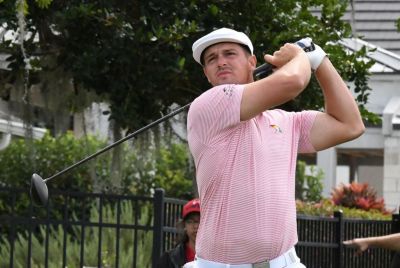
The 15-Foot Savior: How Rory McIlroy Escaped an Embarrassing Post-Masters Record at the Last Minute
Rory McIlroy's 15-foot birdie at Quail Hollow rescued him from a rare 'Faldo' round and capped a grind of 17 straight pars at the Truist Championship.

Rory McIlroy needed a 15-foot birdie putt on his final hole at Quail Hollow on Thursday to avoid an unwanted piece of golfing trivia at the Truist Championship, salvaging a one-under-par 70 after 17 straight pars in his first competitive round since winning the Masters.
The Truist Championship marks McIlroy's return to action after his victory at Augusta National last month, a win that completed back-to-back Masters titles and reignited questions about how far he can push his era-defining career. Quail Hollow in Charlotte, North Carolina, has long been a happy hunting ground for him, with four previous wins around the tree-lined layout. This time, though, the world No. 2 spent much of the opening round stuck in neutral, watching chance after chance slip by.
The Near-Miss 'Faldo' at Truist Championship
The number that defined McIlroy's day was not his 70, but the 17 consecutive pars that preceded his closing birdie on the par-four ninth, his final hole. For keen golf anoraks, that raised the prospect of what players and commentators have nicknamed a 'Faldo' — 18 straight pars in a single round.
The term is a nod to Sir Nick Faldo's famously controlled closing round at the 1987 Open Championship at Muirfield, where he won his first major with what looked on paper like a procession of routine pars. In the mythology of the game, it is a kind of anti-highlight reel, pure steadiness, no birdies, no bogeys, nothing to circle or square on the card.
McIlroy came closer than he probably ever expected to joining that club. Across his first 17 holes at the Truist Championship, he repeatedly gave himself chances only to watch the putts refuse to drop. According to analytics site Data Golf, he lost 0.7 strokes to the field on the greens alone, a small but telling measure of how often he was on the wrong side of the hole.
The tee-to-green work, by his own account, was not the issue. From 194 yards out on the ninth, McIlroy fired an iron to around 15 feet and, with one last roll of the ball, finally saw a putt disappear.
Fleetwood's Joke and McIlroy's Relief at Truist Championship
Walking off the course, McIlroy ran into fellow European Ryder Cup player Tommy Fleetwood, whose four-under-par 67 left him tied for eighth. The PGA Tour cameras captured their brief exchange, which quickly did the rounds on social media.
'I would have missed that putt on purpose,' Fleetwood joked, laughing about how close McIlroy had come to the full Faldo. 'You could have missed it on purpose.'
McIlroy, still fresh from the mild shock of finally seeing a putt drop, replied, 'Well, I was thinking, I can't remember my last time on tour that I had a round of golf that I didn't make a birdie in.' Later, speaking to reporters, he made clear he had no appetite for joining any Faldo-themed subculture.
When one journalist asked whether he had wanted to become part of the so‑called Faldo club, McIlroy was blunt, 'I didn't. Yeah, I was thinking more like I knew that I made so many pars, but I was thinking I can't remember the last time I played a round of golf and didn't have a birdie.'
He admitted that by the time he reached his final hole, he was beginning to wonder if the chance had gone. 'I think I was just trying to make one. I didn't make birdie at seven, didn't make birdie at eight, so then I thought my chance had passed me by, but nice to see one putt go in there at the last.'
Statistically, the putter did not co-operate. Emotionally, he sounded almost stubbornly calm about it.
Putting Woes, Quiet Confidence and the Road Ahead
If there was frustration at how the Truist Championship opened for him, McIlroy kept it carefully under wraps. He insisted the surface-level story of a flat day with the putter did not match how he felt over the ball.
'I wasn't frustrated; I was hitting good putts. Some days they just don't want to go in,' he said. 'No, I wasn't, I was just trying to stay patient because it felt like I was hitting good putts.'
He broke down the problem in clinical fashion. 'I over-read a couple on the front side, then I under-read a couple as a reaction to the over-reads. It was more of a read thing. I was starting the ball on my line and hitting good putts.
'I just needed to figure out the reads a little bit better. But sort of felt like I got into it by the end of the round.'
It is a familiar McIlroy stance: trust the process, trust the stroke, trust that variance will eventually tilt back in his favour. The birdie on the ninth, modest as it was in the wider scheme of a four-round event, gave him at least a small sense that the dial was starting to move.
After day one of the Truist Championship, McIlroy sits in a tie for 30th, seven shots behind early leader Matt McCarty. It is not the kind of opening statement many expected from a player fresh off another green jacket, nor does it carry any real alarm. For all the talk of Faldos and flat spells, McIlroy's round was one clean line of pars, a single circle at the end, and no damage.
Fleetwood, meanwhile, is better placed to challenge at four under, and his teasing suggests that, within the locker room at least, McIlroy's biggest concern on Thursday was not an implosion but the faintly comic prospect of a birdie‑less card.
© Copyright IBTimes 2026. All rights reserved.
- Recommended For You