

Putin Could Be in Rotterdam Before We Decide: Rutte Warns Against Separate European Army
The NATO secretary general says Europe should strengthen its defence within the alliance rather than create a separate military command structure
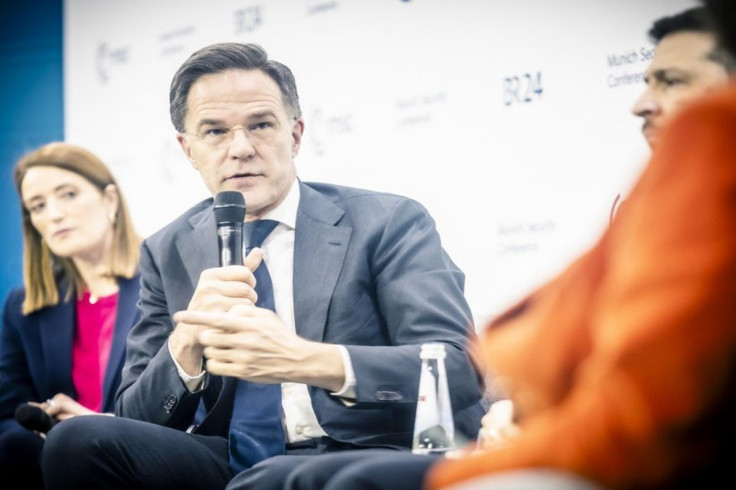
NATO Secretary General Mark Rutte has warned that creating a separate European army could leave the continent vulnerable during a Russian attack, arguing that an additional military command structure could delay decisions when a rapid response is needed.
Speaking at the 72nd annual session of the NATO Parliamentary Assembly in Berlin on Monday, 23 November, Rutte said he was concerned about a scenario in which national militaries continued operating within NATO while a separate European force was established alongside them.
'If Putin attacks, we will first need two or three weeks to agree who will do what, and then he will probably end up in Rotterdam before we have decided,' he said.
His warning comes amid growing debate over Europe's ability to defend itself and calls for the European Union to develop greater military independence. Rutte's position, however, is that Europe should strengthen its defence capabilities within NATO rather than create another layer of military command.
Rutte Says a Second Military Structure Could Slow NATO
Rutte said he was not fundamentally opposed to the idea of a European military. However, he argued that establishing one while retaining individual national armed forces would risk duplicating responsibilities and complicating coordination.
'My point has always been that if you have a European military, you cannot also have national militaries,' he said.
He pointed to the United States as an example of an integrated force, noting that individual states such as New York and California do not have separate armies or navies.
'If Europe is able to pull that off, fine,' Rutte said, although he expressed doubt that such an arrangement would happen any time soon.
He added that the division of responsibilities between NATO and the EU was currently 'in very great shape'.
Europe Faces Pressure to Take Greater Defence Responsibility
Rutte has previously argued that the existing balance of responsibility within NATO is unsustainable, with the United States carrying too much of the burden for defending Europe. He has called on European allies to invest more in their militaries and assume a greater share of the alliance's conventional defence responsibilities.
The proposal for a European army has also received public support. A survey found that 71 per cent of Europeans wanted the EU to have its own army. In March, European Commissioner for Defence and Space Andrius Kubilius also argued that the bloc needed a joint military force.
Rutte Warns Russia Remains a Long-Term Threat
Rutte's comments came as he warned that Russia's military capabilities would remain a threat even if the war in Ukraine eventually ended.
He said Moscow's military production was expanding and highlighted its cooperation with China, Iran and North Korea.
'Russia's war machine at the moment is running at full speed. Its war economy keeps growing, and it won't stand still when the war against Ukraine hopefully will end one day,' he said.
The NATO chief also cautioned against assuming that only countries bordering Russia or Ukraine faced a direct threat. He said Russian missiles could reach cities across Europe, including Lisbon, Rome and The Hague, only minutes later than Tallinn, Warsaw and Helsinki.
© Copyright IBTimes 2026. All rights reserved.