

Ryanair Engine Logged Four Suspected Bird Strikes Before Passenger Was Partly Sucked Out
Investigators probe engine failure after multiple bird strikes and a terrifying window breach on Ryanair flight
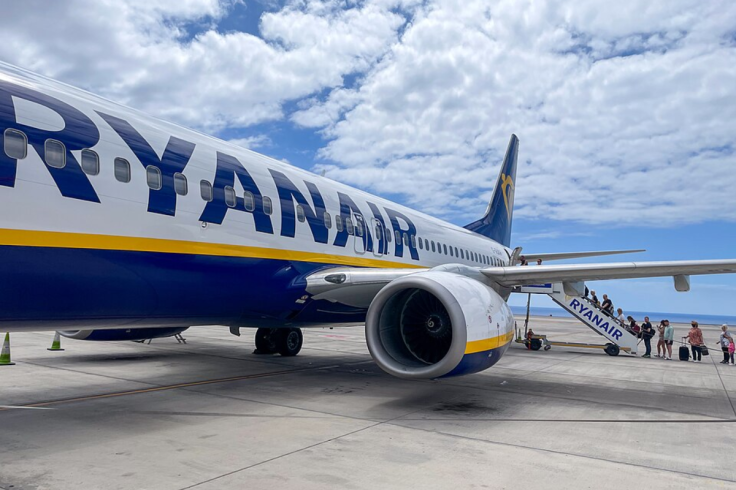
A Ryanair-operated plane involved in a terrifying mid-air window breach had recorded four suspected bird strikes affecting the same engine during the previous 12 months, investigators have revealed.
Bird remains were discovered after two of those earlier incidents, but subsequent maintenance checks found no damage. Investigators also recovered feathers from the engine following the latest failure, although they have not concluded that a bird strike caused it.
The findings raise questions about whether previous incidents weakened the engine and whether existing inspections were capable of detecting the developing danger.
What Happened to Ryanair Flight 1879?
The Boeing 737-800, operated by Malta Air under the Ryanair brand, departed Thessaloniki in Greece for Memmingen in Germany on 10 July.
As the aircraft climbed through approximately 16,000 feet, the pilots received a warning showing unusually high vibration in the right engine. They reduced its power and began following the required emergency checklist.
The vibration initially decreased, allowing the aircraft to continue climbing. However, it soon intensified before the crew heard a loud bang. The autopilot disconnected and a cabin-altitude warning sounded as the plane rapidly lost pressure.
A fan blade had fractured inside the engine, sending fragments into the fuselage and right horizontal stabiliser. One fragment destroyed the entire window beside seat 11F.
Passengers Pulled Injured Man Back Inside
The passenger sitting next to the destroyed window became partially lodged in the opening as air rushed from the pressurised cabin.
Other passengers managed to pull him back inside while oxygen masks dropped from the ceiling. Cabin crew reported hearing continuous vibration and seeing smoke or fog inside the aircraft.
The 61-year-old man suffered serious neck and shoulder injuries, along with friction burns. He was moved to another row, where a doctor travelling on the flight treated him using the aircraft's first-aid equipment.
Another passenger asked cabin crew for something heavy enough to cover the opening. A metal box was taken from the galley and brought to row 11 while the pilots performed an emergency descent.
The flight returned safely to Thessaloniki, where first responders were waiting. It was carrying 149 passengers, including a child travelling on an adult's lap, as well as two pilots and four cabin crew members.
Why the Four Previous Bird Strikes Matter
Maintenance records examined by the US National Transportation Safety Board (NTSB) showed that flight crews had reported four suspected bird strikes involving the aircraft's right engine during the preceding year.
Bird remains were reportedly discovered after two incidents. However, the maintenance work performed afterwards found no signs of engine damage.
The fan blades also passed ultrasonic examinations in November 2025 and again on 24 May 2026, only 253 flight cycles before the accident.
Investigators recovered feathers and other bird remains from several parts of the engine after the July failure. The material was taken to the Smithsonian Institution's Feather Identification Laboratory for further analysis.
However, the NTSB's preliminary investigation also found fatigue features covering part of the fractured blade. Officials have therefore not determined whether a bird strike, metal fatigue or another factor caused the failure.
Required Safety Improvements Had Not Been Installed
The aircraft had not yet received several engine-covering modifications ordered by the US Federal Aviation Administration following previous fan-blade failures.
The improvements are designed to prevent pieces of an engine covering from breaking away and striking an aircraft's fuselage when a blade fails.
Airlines have until July 2028 to complete the work, meaning the Ryanair-operated aircraft was still within the permitted compliance period. The latest incident could renew questions about whether that deadline should be brought forward.
Investigators will also examine whether the four earlier suspected bird strikes caused damage that existing checks failed to identify.
The investigation remains ongoing, and its preliminary findings may change. Ryanair has said it will not comment further until the inquiry is completed, while Boeing and engine manufacturer CFM International are assisting investigators.
© Copyright IBTimes 2026. All rights reserved.
- Recommended For You


