

Boeing 737 Fan Blade Failure Echoes 2018 US Crash. Here's the Fix Airlines Have Until 2028 To Make
Roughly 2,000 US jets carry the same unreinforced engine cowls that failed over Greece
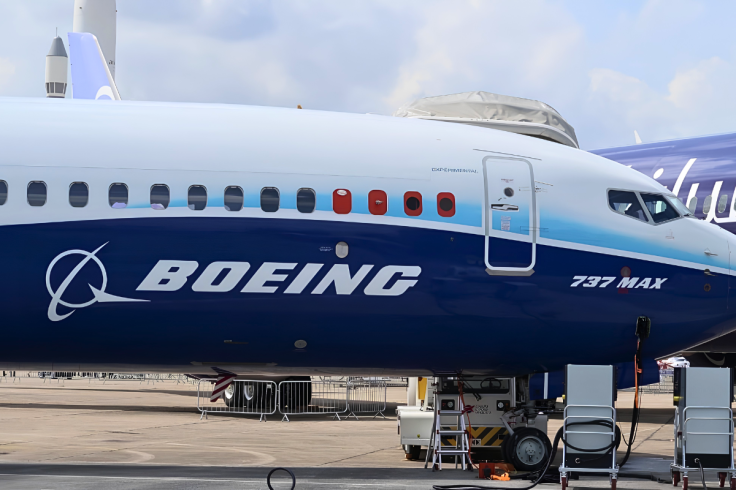
A Boeing 737 fan blade that blew out a passenger window on a Ryanair flight last month has exposed the same failure that killed a US traveller in 2018, and the mandated fix is not required until 2028.
The US National Transportation Safety Board (NTSB) said in a preliminary report on 13 August that a fan blade in the right engine of a 737-800 broke loose on 10 July, sending fragments through the fuselage after takeoff from Thessaloniki, Greece. The jet was bound for Memmingen, Germany.
Of the 155 people on board, one was seriously hurt. Ljubisa Karovic, a 61-year-old Serbian passenger in seat 11F, was partially pulled through the shattered window before other passengers dragged him back inside. He suffered neck and shoulder injuries and friction burns.
An Echo of the 2018 Southwest Tragedy
For US flyers, the sequence is grimly familiar. In April 2018, a CFM56 fan blade snapped on Southwest Flight 1380 out of New York, and cowl debris smashed a window. Jennifer Riordan, a 43-year-old bank executive, was partly sucked out and died. It was the first passenger death on a US airline since 2009.
The NTSB traced that crash, and a near-identical 2016 Southwest failure, to the same weak point. When a blade lets go, the engine's inlet and fan cowls can break apart and strike the aircraft, turning a contained engine problem into a breached cabin.
The Fix Boeing Built, and the 2028 Deadline
In March 2025, the Federal Aviation Administration (FAA) finalised three airworthiness directives ordering that fix across the Boeing 737 Next Generation (NG) fleet. Operators must fit reinforced inlet and fan cowls, replace crushable spacers and cowl fasteners, and add brackets to hold exhaust nozzles in place during a blade failure.
The rules cover roughly 2,000 US-registered 737 NGs, including the -600, -700, -800, and -900 that Southwest, United, American, Alaska, and Delta fly every day. The catch is the timeline. The FAA gave airlines until 31 July 2028 to comply, and jets without the hardware can keep flying until then.
Why US Passengers Are Still Exposed
That is the uncomfortable answer to the question every window-seat flyer is asking. The reinforced cowls designed to contain a blade-out are not yet mandatory on the exact jets millions of Americans board. Ryanair's aircraft had not received the upgrades, the NTSB noted, and it did not have to.
The fix is meant to stop the outcome seen over Greece and over New York, debris breaching the fuselage, whatever breaks the blade in the first place.
Bird Strike or Fatigue, NTSB Weighs Both
What broke this blade is still unresolved. Investigators found the failed blade had fractures 'consistent with fatigue', the same flaw behind the Southwest failures. They also recovered bird remains deep in the engine and sent them to the Smithsonian's Feather Identification Lab in Washington.
The engine had four suspected bird strikes in the previous year, and its blades were last inspected on 24 May, about seven weeks before the accident. Ryanair chief executive Michael O'Leary had blamed a foreign object in July, a claim NTSB Chair Jennifer Homendy publicly rebuked.
Until the 2028 deadline arrives, the reassurance for US travellers is only partial. The safeguard exists. It just is not required in the sky yet.
© Copyright IBTimes 2026. All rights reserved.
- Recommended For You


