

Newsom Accused Of Massive Hypocrisy For Demanding National Billionaires Tax While Actively Fighting One at Home
California Governor's federal tax proposal clashes with state tax opposition, raising questions of political strategy.
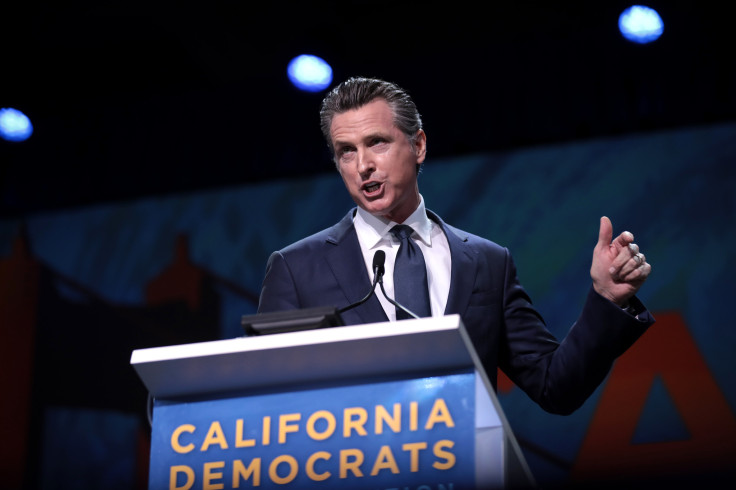
Gavin Newsom has called for a national tax on the ultra-rich on the very same week he is working to defeat a billionaires' tax in his own state, drawing accusations of hypocrisy from the left.
The California governor unveiled his federal plan in a lengthy Substack post on 26 June 2026, a day after a state wealth tax secured its place on the November ballot over his objections. Newsom insists the two positions are consistent, arguing the fight against concentrated wealth belongs in Washington rather than Sacramento.
His critics, including the union behind the state measure, say he is trying to have it both ways as he eyes a 2028 presidential run.
A Federal Pitch With Presidential Timing
Newsom laid out his national agenda in a post titled 'It's time for a national billionaires' tax and a new social compact.' He proposed a minimum tax on anyone worth more than £79 million ($100 million), framed as a modern Buffett Rule so that, in his words, the people at the very top pay at least the tax rate their own workers pay.
He paired it with calls to close the so-called tax-free lifestyle loan, rewrite inheritance rules and restore pre-2017 corporate tax rates.
It's time for a national billionaires tax and a new social contract.
— Gavin Newsom (@GavinNewsom) June 26, 2026
10% of Americans own two-thirds of the wealth. Wages have stagnated. The cost of living has skyrocketed.
The system is fundamentally broken.
The federal tax code, a corporate code, and an inheritance code… pic.twitter.com/tLRbUId6yi
The governor cast the stakes in sweeping terms. He warned that over the next two decades roughly £98 trillion ($124 trillion) will change hands in the largest intergenerational wealth transfer in human history, which he said could 'lock in a permanent American aristocracy of inherited wealth'.
Don’t worry, we’ll be taxing trillionaires even more.
— Gavin Newsom (@GavinNewsom) June 27, 2026
Time to cough up after all that California corporate welfare! https://t.co/TaOzDNzw7C
He also called for a national public equity fund to give every American a stake in the wealth generated by artificial intelligence. Aides have openly described the rollout as part of his consideration of a White House bid. He argued that nearly 50 years of trickle-down economics had failed, sending record corporate profits into share buybacks and executive pay while workers' real wages stagnated.
The State Measure He Is Working To Defeat
The proposal Newsom opposes at home is a one-time 5 per cent tax on the total wealth of Californians worth more than £790 million ($1 billion), levied on those resident in the state as of 1 January 2026. Its backers, led by the Service Employees International Union-United Healthcare Workers West, gathered more than 870,000 signatures to put it before voters.
The campaign, branded Billionaire Tax Now, says the revenue would shore up California healthcare and help fund public education and food assistance.
In his post, Newsom said he would personally vote no. He argued the measure earmarks almost all its revenue for a single category of spending, ignoring schools, housing, childcare and public safety, and said the state's budget should not be written by one advocacy group.
He also leaned on the threat of capital flight, writing that billionaires can simply move to Texas or Florida and that 'wealth is movable, and it shops for the state with the lowest taxes.' He rejected an earlier union offer to swap the ballot measure for a smaller 2 per cent tax through the Legislature.
Supporters of the measure reject the flight argument as overstated. The economist Gabriel Zucman, who has championed the California plan, has noted that the state's billionaires now hold around £1.8 trillion ($2.3 trillion) in wealth, a sum he frames as more than able to bear a one-time levy.
Charges Of A Calculated Misdirect
The backlash from the left was immediate and pointed. Dave Regan, who leads the union driving the state measure, said on 25 June that Newsom 'has made it perfectly clear that he is in lockstep with the 250 billionaires in California.' Critics framed the timing of the national announcement, landing barely a day after the ballot measure was confirmed, as an attempt to seize the populist branding while opposing the concrete tax in front of him.
Others zeroed in on the substance. David Sirota, editor-in-chief of The Lever, urged readers to read the post carefully, arguing Newsom was proposing an income tax and a few closed loopholes rather than a national version of California's wealth tax.
The distinction matters, critics say, because billionaires draw little of their fortune from taxable income, which is the gap a wealth tax is designed to capture. That difference is the heart of the dispute over whether Newsom's stance is principled or convenient.
The clash also reflects a wider shift in Democratic politics, with the party's base increasingly demanding action on inequality. Progressives including Senator Bernie Sanders and Representative Ro Khanna back the California measure, putting Newsom at odds with figures he may face in a 2028 primary.
© Copyright IBTimes 2026. All rights reserved.
- Recommended For You


