Bunia Locals Reveal How Ebola Fear Is Destroying Livelihoods as Bars Empty and Incomes Collapse in Congo's Outbreak Zone
Economic and public health challenges arise as Ebola spreads in Bunia
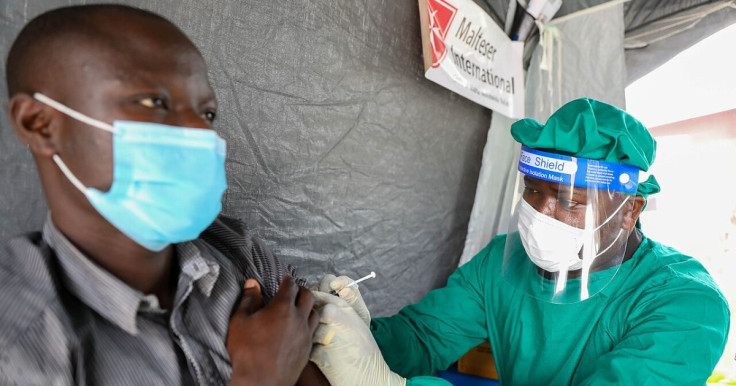
The latest Ebola outbreak in eastern Democratic Republic of the Congo is creating economic hardship across Bunia, where many residents are limiting social activities and avoiding crowded places. The change in behaviour is affecting businesses that depend on daily customer traffic, leaving workers and small business owners struggling to maintain their incomes.
Bunia, the capital of Ituri province, has become the centre of the current Ebola outbreak. According to the World Health Organisation (WHO), the city has recorded more confirmed Ebola cases than any other affected health zone, placing it at the heart of efforts to stop further transmission of the disease.
Businesses Feel the Impact
As concern about infection grows, entertainment venues and hospitality businesses are seeing fewer visitors. Residents are increasingly choosing to stay home or reduce unnecessary outings, leading to a noticeable decline in activity at bars, restaurants, and other gathering spots throughout the city, per a report by The Guardian.
The economic effects are especially severe for people who rely on daily earnings. Traders, transport operators and service workers depend on regular customer demand, and may have reported sharp drops in income as public caution spreads through the community.
Sylvie Guilaine, who was running a clothing store, had to close her doors as the situation worsened. She attributed the decision to her customer-facing business that can easily spread contamination. 'Someone comes, touches a shirt, tries it on, throws it away. Another picks it up, That can contaminate. I stopped completely,' she told The Guardian.
Instead, Sylvie has opted to work as an assistant for a bricklayer and ensures soaking her garments in bleach before making her way into her home, especially before interacting with her children. 'They can cry but will have to wait until I have washed. [Ebola] does not want dirt. It wants cleanliness. But it kills entire families – five, six, seven people. That is what I fear,' she said.
For families living from one day's income to the next, even a brief slowdown can have serious consequences. Reduced business activity is making it harder for households to pay for food, school expenses, and other basic needs, ultimately adding financial stress to an already difficult situation.
Fear Changes Daily Routines
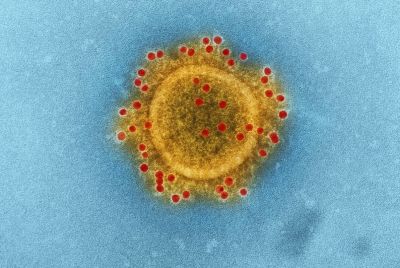
Health officials say the outbreak involves the Budibugyo strain of Ebola, or the Bundibugyo virus disease (BVD), a variant for which there is currently no approved vaccine for widespread use. The lack of a dedicated vaccine has increased public anxiety as authorities work to contain the disease.
As part of prevention efforts, communities have adopted stricter hygiene practices and reduced close contact in public spaces. These precautions are intended to slow transmission, but they have also altered daily routines and contributed to the decline in local business activity.
The WHO reports that a large share of confirmed infections remains concentrated in Ituri province. Health teams continue to monitor thousands of contacts connected to known cases as part of the response effort aimed at preventing further spread.
A Health and Economic Crisis
The outbreak is placing pressure on both public health systems and local economies. Reuters reported that response teams have faced challenges linked to shortages affecting testing operations and disease surveillance efforts, creating additional obstacles for health authorities.
According to WHO, laboratories in Bukavu and Lwiro in South Kivu province and Goma in North Kivu ran out of testing supplies last week. Testing was delayed in the labs in the midst of the outbreak as they waited for the reagents to arrive.
Containment efforts have also been complicated by misinformation and skepticism in some communities, as reported by AP News. Health officials and aid organisations continue to encourage cooperation with tracing programs and medical teams in order to identify infections and break chains of transmission.
For many residents of Bunia, however, where 90% of the cases were recorded, the most immediate concern is how to earn enough money to support their families. As customer numbers continue to fall and businesses remain quiet, many workers face growing uncertainty about how long they can withstand the economic downturn.
The WHO has recorded 676 confirmed cases of the BVD in the Democratic Republic of Congo. The disease has claimed 136 lives.
© Copyright IBTimes 2026. All rights reserved.
- Recommended For You