China Nostradamus Claims US Alien Disclosures Labelled Cynical Political Stunt
Jiang Xueqin criticises US alien disclosures, suggesting they distract from pressing issues.

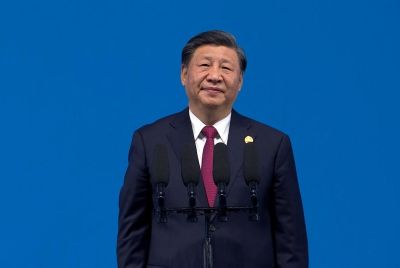
China Nostradamus Jiang Xueqin has dismissed the latest US alien disclosures as a 'cynical political stunt,' telling a YouTube audience last month that the release of declassified UFO files under Donald Trump's administration is 'complete nonsense' designed to distract the public.
The news came after Washington ordered agencies, including the Pentagon, to publish records tied to extraterrestrial life and so-called unexplained anomalous phenomena following a February 2026 directive. The disclosures were framed as part of a transparency push, but they have quickly fed a familiar split between believers and sceptics, with Xueqin placing himself firmly in the latter camp.
China's Nostradamus issues disturbing warning over Trump's UFO files with ominous prediction https://t.co/xWZKZZIa4P pic.twitter.com/w8JflH80VO
— UNILAD (@UNILAD) June 3, 2026
Jiang Xueqin Rejects US Alien Disclosures Narrative
In an interview uploaded to YouTube by controversial creator Nico Ken De Balinthazy, known online as Sneako, Xueqin rejected the premise outright. 'Everyone knows it's complete nonsense. It's complete BS,' he said, adding that there are 'no aliens' and no hidden technology behind the files.
His argument hinges less on what is in the documents and more on what he believes is happening around them. According to Xueqin, the attention lavished on UFOs reflects a wider fragmentation in public thinking, with different groups drawn into competing narratives about reality. Some fixate on extraterrestrial life, others on artificial intelligence or shadowy government activity.
China's Nostradamus issues chilling warning about Trump's UFO file release: 'Atrocities are coming' https://t.co/rUAkljBdQk
— Daily Mail (@DailyMail) June 2, 2026
He suggested that this drift into separate belief systems is not accidental. While he offered no evidence to support a coordinated effort, he characterised the surge in interest as a convenient diversion at a time of heightened political and social strain. The Daily Mail reported similar remarks, noting his claim that public focus is being deliberately steered away from more pressing issues.
'Cynical Political Stunt' Claim Tied to Broader Warnings
Xueqin's critique did not stop at the UFO files. He used the moment to sketch a more unsettling picture of where he thinks global society is heading. 'People retreat into their own bubble,' he said, warning that future 'atrocities' could emerge from deepening divisions and a shared inability to confront uncomfortable realities.
There is a familiar historical echo in his reasoning. He pointed to past empires that faltered under internal strain, arguing that distraction and denial can weaken societies long before any external threat materialises. In his telling, fascination with aliens is simply the latest iteration of that pattern.
The conversation then veered into more contentious territory. Xueqin questioned the scale of investment in major scientific projects, singling out CERN and the Large Hadron Collider. 'You have to ask yourself, why are they investing a trillion dollars to find particles?' he said, though he did not provide figures or evidence to substantiate that claim.
From there, he alluded to long-running online theories suggesting such research might have undisclosed aims, including speculative ideas about interdimensional access. These claims remain unverified and are widely disputed within the scientific community, but they form part of the broader narrative he appears to be building about hidden motives among powerful institutions.
He extended similar suspicion to artificial intelligence, referencing remarks attributed to an unnamed OpenAI employee cited in a New Yorker article. Again, no direct evidence was presented, and the context of those comments remains unclear.
🚨🇨🇳 CHINA'S NOSTRADAMUS DROPS BOMBSHELL ON TRUMP'S UFO FILES: "ATROCITIES ARE COMING" 👽💥
— OVERCLASSIFIED (@overclassifiedx) June 2, 2026
As the Trump administration ramps up its historic UFO/UAP declassifications under the PURSUE program, China's Nostradamus, Professor Jiang Xueqin is sounding the alarm.
Jiang, the… pic.twitter.com/vmf40IjfkR
What emerges from Xueqin's remarks is less a coherent alternative explanation and more a worldview shaped by distrust of official narratives. He repeatedly suggested that elites, both historical and modern, may be interested in forces beyond conventional understanding, including theories about consciousness interacting with unknown entities. These assertions were presented without corroboration.
While his criticisms of political distraction tap into a broader public scepticism, many of his wider claims rest on speculation rather than verifiable fact. At present, there is no confirmation that the US alien disclosures serve any coordinated purpose beyond the stated transparency initiative, and no credible proof supporting the more extraordinary ideas he raised.
Still, the reaction to his comments underlines how quickly the conversation around UFOs can expand beyond official documents into something far more diffuse and contested, where belief, suspicion and interpretation collide in ways that are difficult to disentangle.
© Copyright IBTimes 2026. All rights reserved.
- Recommended For You