Files Reveal China and Russia Retrieved Downed UAPs: It's a Race to See Who Can Reverse Engineer First
As competing powers are accused of picking over the wreckage of unexplained craft, the UFO debate is shifting from science fiction to hard‑edged geopolitics.

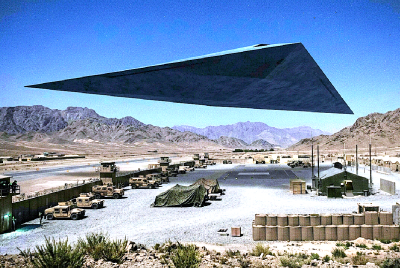
China and Russia have recovered crashed UFOs and attempted to reverse engineer them, according to newly released US government files and a leading disclosure campaigner speaking in Washington this week. Jordan Flowers, executive director of the UAP Disclosure Foundation, said documents made public on 12 June suggest that foreign adversaries are not only tracking American UFO programmes but may also be working on their own recovered craft.
The third tranche of what US officials classify as Unidentified Anomalous Phenomena, or UAP, files was released, adding another layer to a disclosure process that has moved from the fringes of politics to Capitol Hill hearings in just a few years. These latest papers, which include a once-secret CIA cable from 2008, follow testimony from whistleblowers and former intelligence officers who allege that the United States has long run covert crash retrieval and reverse‑engineering projects.

Flowers told 'NewsNation Prime' that one of the most striking threads in the new material is not what the US might have, but who else might be in the game. Referring to claims drawn from the documents and prior classified briefings, he said: 'We also have reason to believe that the Chinese and the Russians may have retrieved their own objects related to this and may have tried to reverse engineer them.'
He linked those assertions to earlier warnings from UAP whistleblower David Grusch, a former Air Force intelligence officer, who has publicly claimed that the US is aware of Russian and Chinese efforts to monitor American UFO activities. At a recent press conference, Grusch alleged that US officials have tracked foreign surveillance directed at what he described as legacy UAP programmes. None of these allegations has yet been independently verified, and neither Moscow nor Beijing has publicly acknowledged any such retrieval operations.
Jonathan Caplan KC on UFO's: "The UFO Phenomena is a very real. Some are interdimensional & others extraterrestrial aliens. The truth is the US & China both don't fully understand that is why we have not had disclosure"
— Interstellar (@InterstellarUAP) June 16, 2026
The Barrister & UFO researcher appeared on GB News to… pic.twitter.com/oYEujhyo0R
'A Race To See Who Can Reverse Engineer First' As UFO Claims Escalate
The term UAP has been adopted by the Pentagon and US intelligence agencies in place of UFO, partly to steer the subject away from decades of cultural baggage and fringe speculation. Yet the language shift has done little to cool the temperature of the debate. If anything, the tone has hardened as officials talk more openly about 'unknowns' in restricted airspace and potential risks to military assets.
Flowers framed the emerging picture in starkly competitive terms. 'This is a global phenomenon, and it's really a race to see who can reverse engineer this first, and it has extreme national security implications that we really need to get our hands around,' he said. The implication is clear enough. If any state has indeed managed to extract usable technology from something it cannot fully explain, the strategic balance could shift in ways that conventional defence planning is ill‑equipped to handle.
At this stage nothing in the public domain confirms that such technology exists, let alone that it has been successfully copied. The released files are heavy on observation and internal debate, and light on hard conclusions. The US government has repeatedly said there is no clear evidence of extraterrestrial craft, while also conceding that a number of incidents remain unexplained.
Flowers nevertheless argued that the way the files are being handled signals a change in political priorities. He claimed the latest disclosures show that putting UFO information into the public record is now a 'high‑priority topic' for Trump's administration. That characterisation, it should be said, is his interpretation rather than an official White House line.
His organisation plans to press the issue further. The UAP Disclosure Foundation is hosting a forum in Washington DC on 25 June, intended to explore what full‑scale UFO disclosure might mean not just for defence and technology but also for religion and broader social stability. 'We really want to understand the impact of this across all of these disciplines,' Flowers said.
CIA Zimbabwe Sighting Adds Weight To UFO Mystery
The suggestion that Russia and China are aggressively pursuing UAP research is not the only foreign angle in the new release. Buried in the tranche is a cable from the Central Intelligence Agency describing a UFO sighting over Zimbabwe's main airport in 2008 that was taken seriously enough to put US assets in the country on alert.
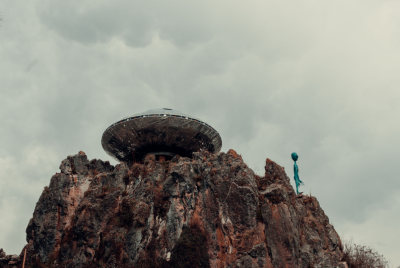
Dated 2 July 2008 and circulated inside the US government and military in the final months of the George W Bush administration, the cable details reports of an object that 'hovered at an undetermined altitude directly over the Harare airport.' Observers quoted in the document described a 'disc-like' craft with a hollow centre and 'a series of rotating lights on the underside of the airframe'.
The account notes that at one point 'beams' were seen emanating from the object. Shortly afterwards, the lights reportedly changed colour and the craft 'quickly ascended to higher altitudes and out of visual range.' There is no indication in the cable that radar data or physical evidence corroborated the visual reports, but the tone is notably sober. Analysts debated whether the object might have been 'an advanced reconnaissance device belonging to a foreign government, or whether the object was an unidentified flying object of extraterrestrial origins.'
The document does not reach a firm conclusion. A redacted passage records that 'this incident ... had resulted in the decision to place the Zimbabwe [redacted] on high alert'. If nothing else, the cable undercuts the notion that serious people inside the national security system always laugh these things off.

Taken together, the new files show a bureaucracy struggling to categorise what it does not fully understand, while campaigners such as Flowers argue that other powers may be further along than the public realises. Very little of it is settled, most of it is contested, and the evidence capable of ending the argument remains, for now, out of sight.
© Copyright IBTimes 2026. All rights reserved.
- Recommended For You