CIA Files Prove Military Secretly Tracked Antigravity Tech While Mocking UFO Witnesses
Behind the dry language of CIA files, a decades-long struggle over truth, secrecy and our place in the cosmos is starting to show through the redactions.

CIA files suggesting the US military secretly tracked antigravity technology while publicly dismissing UFO witnesses have been thrust back into the spotlight in Washington, after the Pentagon released a third batch of UAP records days after a disclosure rally on the steps of the US Capitol. The newly declassified material, which includes videos of mysterious 'orbs' and decades-old intelligence assessments, is being seized on by UFO researchers as evidence that officials were quietly investigating exotic propulsion and 'non-human intelligences' even as they mocked the subject in public.
This latest release follows years of halting transparency on unidentified anomalous phenomena and comes as whistleblowers press Congress to expose alleged secret crash retrieval and reverse-engineering programmes. The files, published by the Pentagon shortly after campaigners demanded a full accounting of US knowledge on UAPs, are the third major tranche to be made public and have immediately been woven into a broader narrative of cover-up, curiosity and quiet panic within the national security establishment.

On NewsNation's Prime programme, UFO commentator Joshua Golembeske argued that the new CIA files and associated documents present 'a very clear picture' of sustained, covert interest in UAPs stretching back roughly 80 years. In his view, the material dovetails closely with claims made in recent months by retired intelligence officer David Grusch, who has accused the US government of running long-standing crash retrieval operations. None of those claims has been independently verified, and no physical evidence has yet been placed in the public domain, so all of this should still be treated with prudent scepticism.
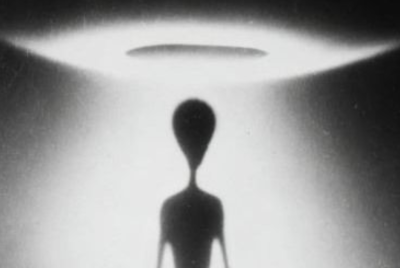
One of the most striking overlaps, Golembeske said, lies in how both the CIA-linked records and Grusch's testimony describe non-human intelligences. Grusch, speaking at a Capitol Hill press event this week, referred to two distinct types of entities, including what he called 'plasmoid sentient beings.' The newly public files, according to Golembeske, contain video and documentary references to orb-like intelligences that track eerily close to that description.
New stunning UFO-related videos released by Pentagon.
— TMZ (@TMZ) June 12, 2026
🎥: The Department of War pic.twitter.com/b5ixElxIWj
The 'smoking gun' for many enthusiasts is a declassified CIA-linked document informally dubbed 'number 19.' Golembeske describes it as an assessment prepared by the Australian Department of Defence that critiques how Washington has handled the UFO question. The paper, he says, argues that the famous US Air Force study Project Blue Book was less a neutral inquiry and more a public-relations exercise designed to make UFO sightings look ridiculous while more serious work went on in the shadows.
According to Golembeske's reading, the assessment suggests there were classified crash retrieval efforts and attempts to reverse engineer 'exotic technology,' including antigravitic propulsion systems. If accurate, that would imply US defence scientists were experimenting with antigravity concepts half a century ago. 'If we were trying to reverse engineer these technologies 50 years ago, where are we today?' he asked, voicing a suspicion shared by many in the UFO community that game-changing technology may already be sitting behind classified doors. None of those conclusions is confirmed by the US government, and the relevant agencies have not released corroborating technical data.

CIA Files Feed Claims Of Long-Running UAP Obsession
Jordan Flowers, executive director of the UAP Disclosure Foundation, told NewsNation that the latest CIA files and Pentagon records underscore how deeply embedded UAP concerns now are inside official Washington. In his account, this is not a fringe preoccupation but a 'high-priority topic' for the current administration, with the US Air Force, the Director of National Intelligence and the FBI all running multiple inquiries in parallel.
Flowers argues that the documents show the Air Force has 'been taking this issue extremely seriously since 1948, at least,' despite decades of public statements suggesting the opposite. He points to hard data tables and investigative memos in the new releases as evidence that UAP reports are being logged, cross-checked and escalated, not swept aside. At the same time, he acknowledges that the public still sees only fragments, with key sections redacted and many underlying systems still classified.
His organisation plans to convene a forum in Washington on 25 June, bringing together policymakers, technologists, theologians and philosophers to pick over the implications. Flowers insists the phenomenon cannot be ring-fenced as a niche defence issue. He frames it as a question that touches national security, innovation, and even humanity's place in the universe, though, again, nearly all of that rests on unproven assumptions about what UAPs actually are.
Scientists Push For Evidence Behind The CIA Files Mystique
Alongside the cascade of CIA files and defence paperwork, the White House quietly announced a new UAP Science Advisory Council, tasked with helping federal agencies make sense of the growing pile of sightings and sensor data. The council will be led by Harvard astrophysicist Professor Avi Loeb, who has become a prominent, and at times divisive, voice calling for rigorous study of anomalies often dismissed as science fiction.
Speaking to NewsNation, Loeb said it was 'the duty of scientists' to help government distinguish between misunderstood natural or human-made phenomena and something genuinely beyond current understanding. He is sharply critical of what he calls 'storytelling' around UAPs, arguing that only high-quality, reproducible data will settle whether any of these objects are non-human in origin.
Feds left baffled by sighting of 'orbs launching other orbs' in Western US, new UFO files reveal https://t.co/pgpCMsoaAF pic.twitter.com/E4lL2sYpOk
— New York Post (@nypost) June 12, 2026
Loeb's position is blunt. If UAPs behave in ways that resist conventional explanation, then either our assumptions about adversary technology and natural phenomena are badly incomplete, or 'we're dealing with something that is not human made'. For him, both possibilities are worth chasing. He likens the process to a detective story in which the crucial evidence has yet to surface and argues that better instruments, not louder claims, will determine whether the latest CIA files represent a historic breakthrough or just another layer of intrigue.
© Copyright IBTimes 2026. All rights reserved.
- Recommended For You