

How Did Jason Collins, NBA's First Openly Gay Player, Die? Net Worth, Husband and Life Beyond Basketball
Jason Collins broke barriers in American sport and became a leading voice for inclusion in the NBA

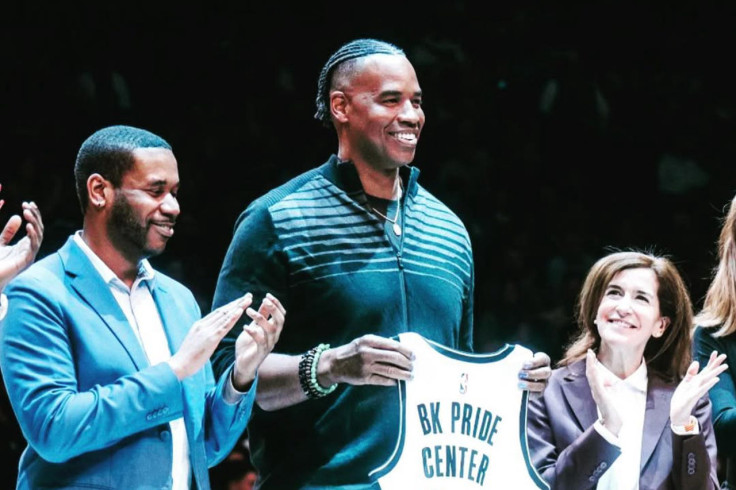
The death of Jason Collins at the age of 47 has prompted tributes from across the sporting world and LGBTQ+ community. Collins, who became the first openly gay active athlete in a major American professional team sport, died after battling glioblastoma, an aggressive form of brain cancer. His family confirmed his death on Tuesday, describing his fight against the disease as courageous and determined.
In a statement released by the NBA, Commissioner Adam Silver said Collins' influence extended far beyond basketball. 'Jason Collins' impact and influence extended far beyond basketball as he helped make the NBA, WNBA and larger sports community more inclusive and welcoming for future generations,' Silver said. He added that Collins would be remembered for 'the kindness and humanity that defined his life.'
How Jason Collins Died
Collins died following an eight-month battle with Stage 4 glioblastoma, one of the most aggressive forms of brain cancer. He publicly revealed his diagnosis in December 2025 after experiencing difficulty concentrating and processing information. Doctors later discovered an inoperable tumour.
Despite the severity of the diagnosis, Collins continued speaking publicly about his illness and encouraged others facing serious health battles to remain open and hopeful. According to his family's statement, Collins received extensive medical care throughout his treatment. 'We are heartbroken to share that Jason Collins, our beloved husband, son, brother and uncle, has died after a valiant fight with glioblastoma,' the family said. 'Jason changed lives in unexpected ways and was an inspiration to all who knew him and to those who admired him from afar.'
We are heartbroken to learn of the passing of Jason Collins.
— Brooklyn Nets (@BrooklynNets) May 13, 2026
Jason spent eight seasons in a Nets uniform, helping define an era of our franchise and playing a vital role on our back-to-back Eastern Conference championship teams in 2002 and 2003. He was a constant in our locker… pic.twitter.com/9Qo1JRbLkU
What Is Glioblastoma?
Glioblastoma, also known as GBM, is a fast-growing brain cancer that begins in astrocytes, cells that support nerve tissue in the brain. According to the Mayo Clinic, symptoms can include seizures, speech difficulties, memory problems, balance issues, and changes in thinking or behaviour.
The disease is considered the most common malignant brain tumour in adults. Although treatment can slow progression, there is currently no known cure.
Jason Collins' NBA Career and Net Worth
While Collins was never regarded as one of the NBA's biggest stars, he built a respected career across 13 seasons in the league. The California-born centre played for several franchises, including the New Jersey Nets, Boston Celtics, Atlanta Hawks, and Washington Wizards.
He was known for his defensive ability, physical presence, and leadership inside the dressing room. Collins also played an important role during the Nets' consecutive NBA Finals appearances in 2002 and 2003. At the time of his death, Collins had an estimated net worth between $14 million and $16 million. Most of his earnings came through NBA contracts during his 13-year playing career.
In 2004, Collins reportedly signed a contract extension worth around $25 million with the Nets. Following retirement in 2014, he remained involved with basketball through community outreach programmes and ambassador work connected to the NBA.
This one hurts. Jason Collins was a pioneer. He had courage like you've never seen. He was an incredible teammate. And having him in Brooklyn at the start of my coaching journey meant so much. Those who knew him were blessed to call him a friend. You are already missed my… pic.twitter.com/gG2jWoGRIF
— Jason Kidd (@RealJasonKidd) May 12, 2026
Collins' Historic Announcement
In April 2013, Collins made history through a first-person essay published in Sports Illustrated. The opening line quickly became one of the defining moments in modern American sport.
'I'm a 34-year-old NBA centre. I'm Black and I'm gay.' At the time, Collins was a free agent, and uncertainty surrounded whether an openly gay player would continue receiving opportunities in one of America's major professional sports leagues.
Same-sex marriage had not yet been legalised across the US, and openly gay male athletes remained rare in elite team sport. Collins later returned to the NBA with the Brooklyn Nets, becoming the first openly gay active player across the four major American men's sports leagues. His announcement marked a major cultural moment in US sport and drew praise from athletes, civil rights organisations and political leaders. In 2014, Time named Collins among the world's 100 most influential people.
A Legacy Beyond Basketball
For many fans and athletes, Collins' legacy extended far beyond his statistics or achievements on the court. He became a symbol of visibility and inclusion during a period when few openly gay male athletes competed in major professional sports.
In the years following his announcement, Collins continued supporting LGBTQ+ athletes and advocacy efforts across American sport. Tributes following his death have highlighted not only his historic role in the NBA, but also the dignity and openness with which he approached both his career and personal life.
© Copyright IBTimes 2026. All rights reserved.