

Donald Trump Says 'We Spy on China, They Spy on Us' as He Claims US Intelligence Work Is More Effective
Donald Trump admits the US spies on China and claims Washington does it better, ahead of historic talks with Xi Jinping and Vladimir Putin
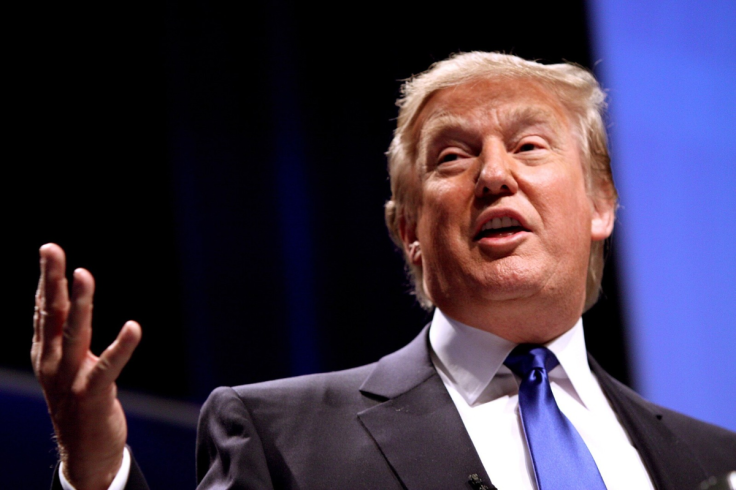
Donald Trump acknowledged American espionage against China during a Fox News interview in Shenzhen on Thursday, 19 November. He claimed Washington was better at intelligence gathering than Beijing, hours before joining Chinese President Xi Jinping and Russian President Vladimir Putin for talks.
Trump made the remarks during the Asia-Pacific Economic Cooperation (APEC) summit, where the leaders were preparing for a meeting. The interview also covered nuclear weapons, intelligence-sharing, advanced technology and Washington's relationship with Beijing.
Trump Says US Spies on China Better Than Beijing Does
Speaking to Fox News correspondent Jacqui Heinrich, Trump discussed the prospect of nuclear inspections involving the United States, China and Russia. He then turned to allegations about intelligence-sharing concerning Iran and Ukraine.
'We spy on China, they spy on us,' Trump said during the interview.
The president also asserted that American intelligence operations were more effective than China's.
'I think we spy better than they do,' he added.
Trump offered no evidence to support the comparison and disclosed no operational details. The claim was his assessment of American intelligence capabilities, rather than an independently established finding. The interview, as described, provided no further information about the activities he was referring to.
Heinrich then asked whether he intended to request that China stop spying on the United States.
'They'll ask me to stop doing it, and I don't know if I'd do that,' Trump replied.
His answer put the two countries' intelligence activities in the same frame: he acknowledged that both spy on the other, while suggesting he might not agree to stop. He did not set out a proposal for addressing the issue or describe any change in US intelligence policy.
The exchange did not establish whether the subject had featured in diplomatic discussions, or whether either government had raised specific intelligence concerns. Trump did not say what information he had in mind, and the interview included no details about particular operations.
Trump's China Remarks Extend to Trade and NVIDIA Chips
Trump also emphasised the importance of maintaining economic relations with China, despite the rivalry between the two countries.
'We do a lot of business with China,' he said, describing his relationships with foreign leaders as beneficial.
The interview subsequently turned to restrictions on advanced semiconductor exports and questions involving NVIDIA. Trump defended allowing some chip sales to China while opposing access to the most sophisticated technology. .
The remarks reflected his position on balancing trade with limits on China's access to advanced chips; no details of a new policy were given in the account of the interview.
Heinrich also questioned him about allegations involving a woman accused of Chinese espionage and her reported connection to NVIDIA's former chief executive.
Trump said he had not received confirmation that the woman was a spy. Reuters separately reported that it could not independently verify the espionage allegation. The interview account does not provide further detail about the woman or the reported connection, so those allegations remain unconfirmed in the material cited here.
The questions about NVIDIA and the espionage allegation came after Trump's remarks about mutual intelligence-gathering. They did not prompt his initial acknowledgement that the United States spies on China.
Trump, Xi and Putin Issue Joint Declaration After Shenzhen Summit
Hours after the interview, Trump joined Xi and Putin for a trilateral meeting in Shenzhen on 19 November. CBS News reported that the discussions lasted approximately 90 minutes.
In a joint declaration published by the White House, the leaders pledged to maintain strategic stability, pursue United Nations reform and reduce nuclear risks. They also reaffirmed that nuclear war could not be won and must never be fought.
The declaration, as described, contained no agreement to restrict espionage or establish reciprocal intelligence limits. It also did not indicate whether Trump's earlier comments about spying had been discussed at the meeting.
The reported summit outcome therefore offers no further detail on how the three governments might address intelligence activity between them.
© Copyright IBTimes 2026. All rights reserved.