

'You Cannot Be Both': Trump Launches Explosive 'Patriot vs. Communist' Ultimatum Ahead of Midterms
Trump's speech at Mount Rushmore highlights ideological divides as midterm elections approach.
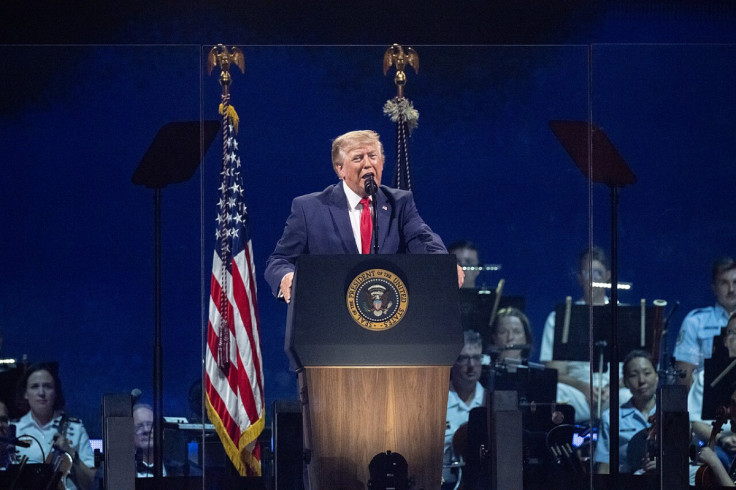
President Donald Trump has intensified his attacks on Democrats ahead of next year's midterm elections, declaring that Americans must choose between being 'a communist' or 'a patriot' during a speech marking the United States' 250th anniversary celebrations at Mount Rushmore.
Set against the backdrop of the granite faces of four of his predecessors, President Trump said Friday night that American identity was under attack from communist ideals, taking aim at what he called "radicals" and "extremists" who attack American history.…
— CBS News (@CBSNews) July 4, 2026
The remarks formed part of a broader warning about what Trump described as a growing 'communist menace' within the United States, as Republicans continue to frame ideological differences with Democrats as a defining issue heading into the 2026 campaign.
The speech also drew a swift response from former Labour Secretary Robert Reich, who argued that Trump's renewed focus on anti-communist rhetoric reflects political strategy rather than the issues voters care about most.
Trump Revives Familiar Anti-Communist Messaging
Addressing supporters during the anniversary event, Trump linked communism to what he described as threats facing America's identity and values. 'There is now a resurgence of the communist menace in our land, including from newcomers to our country who embrace ideas totally opposed to our way of life and our great success,' Trump said.
He added: 'You can be a communist, or you can be a patriot. You cannot be both.'
The comments continue a long-running theme of Trump's political messaging, with the president frequently describing progressive Democratic policies as socialist or communist while arguing they would fundamentally reshape the role of government in American life.
As campaigning ahead of the midterm elections gathers momentum, Republican messaging has increasingly focused on contrasting conservative policies with what party leaders portray as a more progressive Democratic agenda.
Reich Argues Trump Is Redirecting the Debate
Reich, who served as US labour secretary under President Bill Clinton, dismissed Trump's latest remarks as an attempt to shift attention away from issues he believes present greater political challenges for the administration. Writing after the speech, Reich argued that Trump could no longer rely on the economy, foreign policy or immigration as his strongest campaign themes.
With the economy, foreign policy and immigration all going poorly for Trump, he’s scrambling before the midterms.
— Robert Reich (@RBReich) July 7, 2026
But he has run out of cards to play, which is why he’s now talking about the “communist menace."
Oh please... https://t.co/pPJi9g5meN
'He can't talk about the economy because prices continue to rise faster than wages, which means most Americans are getting poorer,' Reich wrote.
'He can't talk about foreign policy because his war in Iran has been a debacle, his tariffs an utter failure, and he obviously hasn't settled the war in Ukraine on "day one." He can't talk about immigration because his raids and mass deportations have become so unpopular.'
Reich concluded that Trump's latest rhetoric represented a return to familiar campaign tactics. 'So, facing the midterm elections, what's left?' he wrote. 'He's resorted to the oldest of rightwing tropes – accusing Democrats (especially a rising generation of new, young, vigorous Democratic politicians) of being communists.'
Competing Narratives Over Democratic Policies
Reich also challenged Trump's characterisation of progressive policy proposals, arguing that many continue to enjoy broad public backing. 'For years, Trump has been trying to scare Americans about Democrats who advocate Medicare for All, universal childcare, free public higher education and higher taxes on the super-wealthy to pay for them,' Reich wrote.
'But he hasn't gotten anywhere because these initiatives are supported by most Americans. So now he's throwing scary labels at the wall and seeing what sticks.'
Republicans have long argued that many progressive Democratic proposals would significantly expand the size and influence of the federal government. Democrats, meanwhile, reject descriptions of their agenda as communist, arguing their proposals are intended to expand access to healthcare, education and other public services rather than replace America's market-based economic system.
The exchange reflects a broader political divide that has shaped national debate for years, with both parties offering sharply different visions of government's role in addressing economic and social issues.
Ideological Divide Set to Shape Midterm Campaign
Trump's latest remarks also come as several progressive Democrats and democratic socialist candidates have attracted growing national attention, giving Republicans fresh opportunities to highlight ideological divisions within the Democratic Party.
Political analysts expect questions surrounding socialism, government spending and the size of the federal government to remain prominent campaign themes as both parties compete to define the stakes of the 2026 midterm elections.
Whether Trump's renewed emphasis on anti-communist messaging resonates with voters remains to be seen. However, the exchange between the president and Reich illustrates how ideological arguments are once again becoming a prominent feature of American political debate, even as economic conditions, inflation and foreign policy continue to rank among voters' most pressing concerns.
© Copyright IBTimes 2026. All rights reserved.