

Trump's 'Mr Veto' Threat Sends Chilling Message as Democrats Close in on Midterm Power Grab
Trump vows to block Democratic legislation if Republicans lose Congress in a potential midterm upset
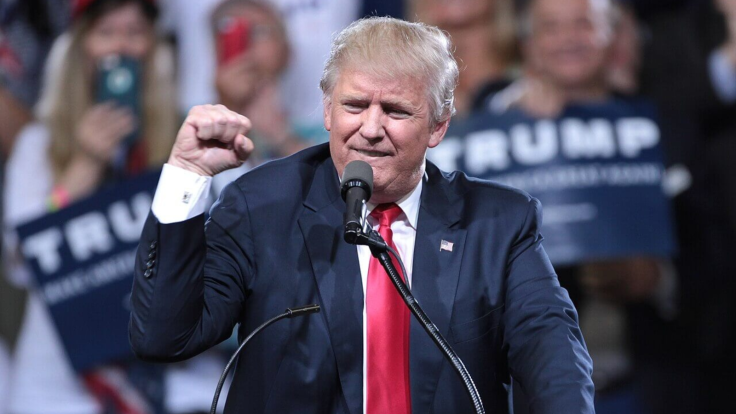
Donald Trump has warned that if Democrats capture Congress in the 3 November midterm elections, he will use his veto pen to shut down their legislative agenda, declaring he is ready to become 'Mr Veto' rather than allow their plans to pass.
In an interview with New York Post columnist Miranda Devine for her Pod Force One podcast, Trump laid out how he would respond if Republicans lose their congressional majorities. His proposed strategy? Become 'Mr Veto'.
'Well, if that happens, I guess I'll become Mr. Veto. I'm not going to let them through,' Trump told Devine.
🚨🇺🇸 President Trump sends a warning to the Democrats ahead of the midterm election.
— Jesse Cohen (@JesseCohenInv) November 1, 2026
"I guess I'll become Mr. Veto."
"They'll be sending stuff up. You veto it."
Get your popcorn ready.
pic.twitter.com/4UwpDjvEDY
He went further, suggesting that repeatedly rejecting Democratic legislation could eventually force lawmakers to negotiate with him.
'They'll be sending stuff up. You veto it, and eventually, after a month or two of getting all vetoed,' he said, before predicting that deals would eventually be made.
It was not a promise of bipartisan cooperation. Instead, Trump's remarks outlined the confrontation that could follow if Democrats take control of Capitol Hill.
Democrats Are Closing In, Forecast Suggests
Decision Desk HQ's latest forecast gives Democrats an 84 per cent probability of winning the House and a 64 per cent chance of taking the Senate.
The organisation describes these figures as model probabilities rather than predictions of final results, but they indicate the potential for a shift in control of Congress shortly before voters head to the polls.
If Democrats gain majorities, they would control key levers of congressional oversight, including the ability to initiate investigations, scrutinise spending and block or delay legislation. A Democratic-controlled Senate could also vote on and, if it chose, reject presidential nominees.
In that scenario, Trump would continue to hold one of the presidency's central legislative tools: the power to veto bills passed by Congress.
White House Already Preparing for a Democratic Congress
Reuters reported on 1 November that senior officials, including deputy chief of staff Stephen Miller and budget director Russell Vought, have been working with the White House Counsel's Office to identify policies President Trump could pursue without new congressional approval.
According to the report, the plans cover areas such as immigration, tariffs, housing costs and federal spending. White House counsel Will Scharf and his team have also been examining the legal limits of presidential authority and how the administration could defend unilateral actions in court.
Reuters further reported that White House lawyers have been briefing political appointees and agency leaders on how to respond to potential congressional investigations, subpoenas and document requests. Officials have also looked at whether executive privilege could be used to protect communications with private advisers.
Trump's Veto Record Shows What Could Follow
The Constitution allows a president to reject legislation passed by Congress. Lawmakers can override a veto with a two-thirds majority of members voting in both the House and Senate.
Trump used that power ten times during his first administration. His vetoes included legislation challenging his 2019 national emergency declaration for the US-Mexico border wall, a resolution seeking to end US involvement in the Yemen conflict and a 2020 measure restricting military action against Iran.
He also vetoed the National Defense Authorization Act for fiscal year 2021. Congress overrode that veto.
During his second administration, Trump has vetoed two bills, both on 29 December 2025: the Finish the Arkansas Valley Conduit Act and the Miccosukee Reserved Area Amendments Act. The House sustained both vetoes on 8 January 2026, meaning lawmakers did not secure the votes needed to overturn them.
A Showdown Could Leave Washington Gridlocked
If Democrats win control of Congress, President Trump could use his veto power to block legislation while pursuing parts of his agenda through executive authority. Democrats would be able to launch investigations, scrutinise spending and use their control of congressional committees to request documents and testimony.
Repeated vetoes would not automatically cause a government shutdown. However, disagreements over spending and budget legislation could make negotiations more complex.
Trump has said he is prepared to veto Democratic proposals, suggesting that sustained opposition from the White House could be used to bring lawmakers to the negotiating table. The outcome of this approach would depend on the results of the 3 November elections.
© Copyright IBTimes 2026. All rights reserved.