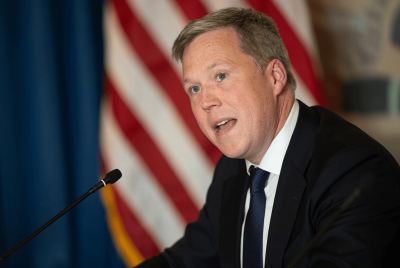
Why Navy Secretary John Phelan Left Trump's Pentagon — and Who Now Leads the Fleet
John Phelan's abrupt exit as Navy Secretary leaves Pentagon facing questions, with Hung Cao stepping in as acting secretary.

The Pentagon has announced the abrupt departure of Navy Secretary John Phelan, ending his tenure as the service's top civilian official with immediate effect on 22 April 2026. The move closes a closely watched chapter for an administration figure who entered the post from high finance and spent much of his time in office talking up shipbuilding, fleet growth and budget discipline.
Chief Pentagon spokesman Sean Parnell disclosed the change in a statement posted on X, saying, 'Secretary of the Navy John C. Phelan is departing the administration, effective immediately,' and adding that Under Secretary Hung Cao would become acting Navy secretary. The statement thanked Phelan for his service but did not provide any explanation for his departure, leaving the Pentagon facing questions over a sudden leadership shift at the top of the Navy.
Why John Phelan's Exit Raises Fresh Pentagon Questions
The timing of Phelan's departure has drawn particular attention because it came only a day after he appeared at the Navy's annual conference in Washington, where he addressed sailors, industry figures and reporters about his agenda. That appearance gave no public sign that a change at the top of the department was imminent, which made Wednesday's announcement more striking.
So far, the administration has released no further details about the reason for Phelan's exit. Parnell's statement was limited to noting that the departure was effective immediately and that the Pentagon was grateful for Phelan's service to both the department and the Navy.
Phelan took office after the Senate confirmed him by a 62–30 vote in March 2025, giving bipartisan backing to a nominee whose background stood out from many of his predecessors. Before entering government, he was known as a career financier and as the co‑founder and co‑managing partner of MSD Capital, the firm established to manage Michael Dell's family fortune.
His appointment drew notice because he did not come from a traditional military or naval policy background. At his confirmation stage, however, he argued that his private‑sector experience could help address persistent Navy problems, especially around shipbuilding delays, budgeting pressure and long‑running management issues.
How Hung Cao Steps In As Acting Navy Secretary
With Phelan out, Hung Cao now moves into the role on an acting basis, giving the Navy an immediate replacement rather than leaving the post vacant. Cao had already been serving as under secretary, the department's second‑highest civilian position, after his Senate confirmation in October 2025.
Cao brings a different background to the office. He is a former military officer, a Naval Academy graduate and a decorated combat veteran, and his under secretary portfolio already placed him over a department that includes nearly one million Navy, Marine Corps and civilian personnel.
That experience may now prove important as the Navy continues to face pressure on procurement, readiness and long‑term fleet planning. Earlier this year, Phelan had spoken publicly about the administration's ambitions for naval expansion and a larger shipbuilding programme, underscoring the scale of the policy workload Cao inherits in an acting capacity.
STATEMENT:
— Sean Parnell (@SeanParnellASW) April 22, 2026
Secretary of the Navy John C. Phelan is departing the administration, effective immediately.
On behalf of the Secretary of War and Deputy Secretary of War, we are grateful to Secretary Phelan for his service to the Department and the United States Navy.
We wish…
What The Navy Leadership Change Means For The Fleet
For now, the clearest fact is that the Pentagon has sought to ensure continuity by naming Cao immediately rather than waiting to announce a later handover. That decision gives the department a defined civilian leader at a sensitive moment, even as the reason behind Phelan's abrupt departure remains publicly unanswered.
The unanswered question is likely to keep attention on the leadership change in the days ahead, particularly because Phelan had entered office with a mandate to bring a results-focused management approach to the sea service. A broader look at recent coverage on the handover tracks the same basic sequence, with Phelan leaving immediately and Cao stepping in as acting secretary without a public explanation for the departure.
© Copyright IBTimes 2026. All rights reserved.
- Recommended For You