

Who Is Bill Pulte? Donald Trump Stuns Congress With Radical Pick for America's Top Spy Chief
Bill Pulte's appointment sparks debate over experience and intent.
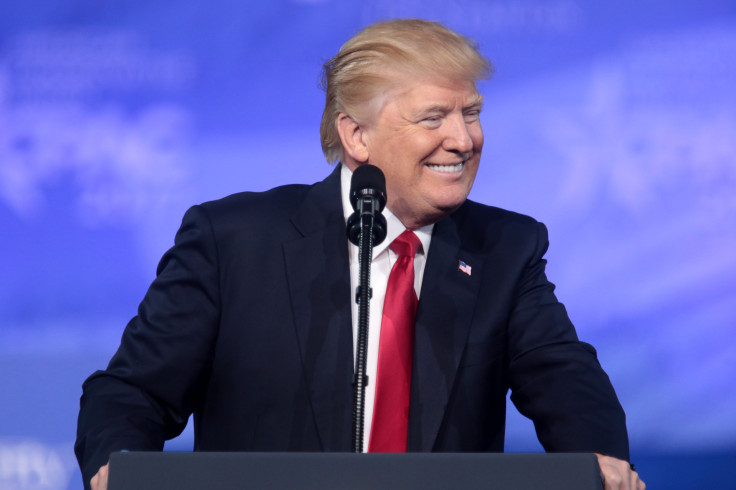
President Donald Trump has appointed Bill Pulte as acting director of National Intelligence, placing the Federal Housing Finance Agency (FHFA) chief in charge of the US intelligence community on Tuesday in Washington, a move that immediately unsettled lawmakers and raised questions about experience and intent.
The role of America's top intelligence chief was created after the 11 September 2001 attacks to coordinate US intelligence agencies and prevent future failures. The position carries responsibility for overseeing counterterrorism, foreign threats and the president's daily intelligence brief. By law, it is expected to be filled by someone with extensive national security expertise.
Trump's Unconventional Top Spy Chief Choice
Trump's decision to elevate Pulte, who has no known background in intelligence or espionage, drew swift bipartisan confusion. Republican Senator Susan Collins said she did not know whether Pulte had ever held a security clearance. Democrats were more direct. Senator Mark Warner, vice chair of the Senate Intelligence Committee, warned that Americans had 'every reason to worry' about an appointment driven by political loyalty rather than experience.
The president, however, framed Pulte's credentials differently, citing his stewardship of Fannie Mae and Freddie Mac and oversight of roughly $10 trillion in mortgage assets as evidence of his ability to handle sensitive matters. According to CNN, Trump's reasoning was more straightforward behind the scenes. He wanted a loyalist he trusts, with sources also suggesting Pulte could play a role in election-related oversight.
Bill Pulte — who took charge at FHFA/Fannie Mae/Freddie Mac then accused Trump opponents (Schiff, NYAG James, Fed Board’s Cook) of alleged mortgage fraud — to now be entrusted with nation’s most closely held secrets and most intrusive surveillance abilities. pic.twitter.com/2xBgJ71s6T
— Jake Tapper 🦅 (@jaketapper) June 2, 2026
That suggestion has sharpened concern among Democrats, particularly as Trump continues to argue, without substantiated evidence, that upcoming elections could be vulnerable to fraud. Critics point to Pulte's record at the FHFA, where he referred several of Trump's political adversaries to the Justice Department over alleged mortgage fraud, as a sign of how he might wield federal authority in a more powerful post.
Senator Jack Reed went further, calling Pulte 'the most unqualified official in the history of the intelligence community' to assume such responsibilities. His criticism reflects a broader anxiety that the intelligence apparatus could be pulled deeper into partisan battles at a moment of global instability.
Why Pulte Fits Trump's Political Playbook
If the appointment startled Washington, it also followed a familiar pattern. Trump has long favoured loyalists over traditional qualifications, particularly in his second term, where there has been little appetite for internal dissent. Earlier picks such as FBI Director Kash Patel and Defence Secretary Pete Hegseth signalled a clear preference for ideological alignment over conventional expertise.
Pulte fits squarely within that mould. A regular presence in Trump's Mar-a-Lago circle and a vocal defender on television, he has demonstrated a willingness to act on the president's grievances. In Trump's political ecosystem, a lack of establishment credentials can be reframed as proof of independence from what supporters describe as a resistant bureaucracy.
That framing has been echoed by allies. Vice President JD Vance said on X that the intelligence community 'must respond to the elected leadership,' reinforcing a long-standing argument within Trump's base that unelected officials wield too much influence. Right-wing commentator Jack Posobiec, speaking on Steve Bannon's podcast, praised Pulte as someone who 'gets stuff done.'
The timing of the appointment is difficult to ignore. Trump has faced mounting political pressure in recent weeks, including discontent within his own base tied to foreign policy tensions and renewed scrutiny surrounding Jeffrey Epstein-related issues. Installing Pulte allows the president to reassert his outsider credentials and shift the conversation back to a familiar target: the so-called 'deep state.'
Yet the mechanics of the appointment matter as much as the politics. Because Pulte is serving in an acting capacity, he does not require Senate confirmation and could remain in the role for up to 210 days under the Federal Vacancies Reform Act. That window stretches across November's midterm elections, a detail that has not gone unnoticed on Capitol Hill.
Senate Majority Leader John Thune signalled unease, saying the country needs 'professionals' in such roles and noting that any permanent nomination would face scrutiny. Privately, several senators have suggested Pulte would struggle to secure confirmation.
There is also the comparison with the outgoing intelligence chief, Tulsi Gabbard, whose tenure was already controversial but whose background includes military service and congressional experience on national security committees. Pulte's expertise lies in finance, not intelligence.
The deeper concern among critics is less about résumé lines and more about intent. The intelligence community has long been a source of friction for Trump, dating back to disputes over Russian election interference findings in 2016. Some of his allies have even questioned whether the Office of the Director of National Intelligence should exist at all.
Pulte's appointment reads less like a conventional staffing decision and more like a statement of control. Warner argued that the choice reflects 'eagerness to use the authorities of government to pursue political retribution,' a claim that underscores how sharply divided opinion remains.
Whether Pulte's tenure proves consequential or merely symbolic will depend on how actively he exercises the powers of the office in the months ahead, particularly as election season intensifies and scrutiny of federal authority deepens.
© Copyright IBTimes 2026. All rights reserved.