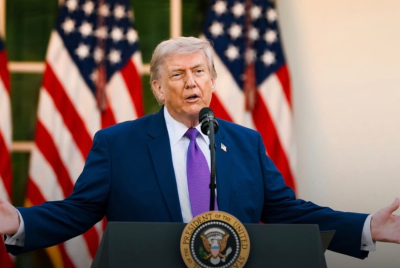
'Unfit' Trump Faces 25th Amendment Pressure As Critics Slam 'Unhinged' Pope Leo Tirade
Trump's remarks on Pope Leo lead to political and legal scrutiny

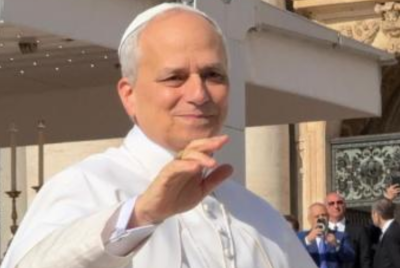
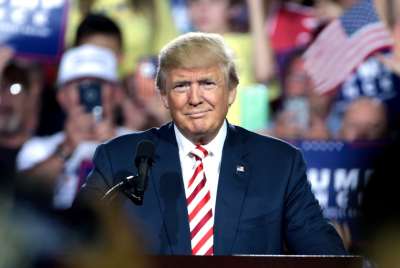
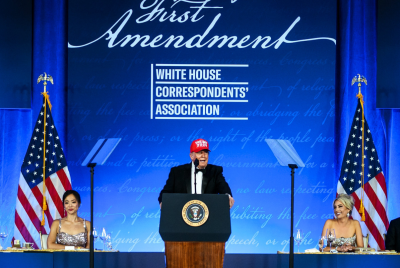
Donald Trump is facing intensifying calls for removal under the 25th Amendment after a blistering and deeply personal attack on Pope Leo sparked alarm across political and legal circles.
The controversy erupted late on Sunday, 12 April 2026, when Trump publicly criticised the pontiff in remarks that critics described as erratic and inflammatory. The president accused Pope Leo of being 'WEAK on Crime, and terrible for Foreign Policy' and claimed personal credit for his rise to the papacy.
The episode has triggered a surge of concern about presidential conduct, with renewed scrutiny of constitutional mechanisms designed to address potential incapacity.
Trump's Pope Leo Tirade Ignites Political Firestorm
Trump's remarks were first issued in a lengthy post on his Truth Social platform, where he accused the Catholic leader of undermining law enforcement and aligning with political opponents.
'Pope Leo is WEAK on Crime, and terrible for Foreign Policy,' Trump wrote, before alleging that the pontiff 'talks about 'fear' of the Trump Administration' while ignoring restrictions on religious gatherings during the COVID-19 pandemic. He further claimed that Pope Leo's position was, in part, attributable to his own influence, asserting that the pontiff would not hold office without him.
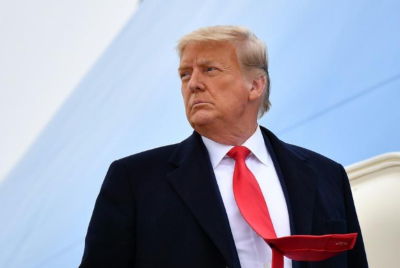
The president doubled down on his comments hours later while speaking to reporters at Joint Base Andrews after returning from Florida. 'I don't think he's doing a very good job. He likes crime I guess,' Trump said, adding, 'I am not a fan of Pope Leo.'
The remarks prompted swift backlash online and among political observers. Critics characterised the comments as a personal and diplomatic escalation, particularly given the Vatican's status as a sovereign entity and the pope's global religious authority.
Growing Calls For 25th Amendment Intervention
In the immediate aftermath, calls to invoke the 25th Amendment resurfaced across social media and political commentary. Some critics argued that Trump's statements reflected a pattern of increasingly erratic behaviour.
'I wish they would just invoke the 25th Amendment. He has lost it completely,' one user wrote in response to footage of Trump's remarks. Another added, 'Do we really need more evidence to conclude that he lost his mind?'
The debate was amplified by comments from former CIA Director John Brennan, who reiterated concerns about Trump's fitness for office. 'This person is clearly unhinged. I think the 25th Amendment was written with Donald Trump in mind,' Brennan said during an interview on MSNBC.
Brennan's remarks echo earlier discussions among national security officials and lawmakers who have previously questioned whether the constitutional provision could apply in cases of perceived mental or behavioural instability.
Former CIA director John Brennan:
— Brian Krassenstein (@krassenstein) April 11, 2026
‘The 25th amendment was written with Donald Trump in mind’ pic.twitter.com/Llt25yt9zu
Trump attacks the Pope. The first American Pope.
— JoeSchmuckatelli™️ (@timber001) April 13, 2026
25th amendment now. https://t.co/V7MC0K9mMW
In the last 12 hours, Trump has attacked the Pope, the Catholic Church and depicted himself as Jesus Christ. #25thAmendment.
— ThePatrioticBlonde🇺🇸 (@ImBreckWorsham) April 13, 2026
Legal Thresholds And Constitutional Constraints
Despite the surge in public commentary, constitutional experts caution that invoking the 25th Amendment remains an extraordinarily high bar.
Ratified in 1967, the amendment allows the vice president and a majority of the Cabinet to declare a president 'unable to discharge the powers and duties of his office'.
The process requires a formal written declaration to Congress and can be contested by the president, triggering a vote requiring a two-thirds majority in both chambers.
According to the Congressional Research Service, the term 'inability' is deliberately undefined, leaving its interpretation to political actors. Legal scholars note that the provision has historically been understood to apply to clear cases of physical or cognitive incapacity, rather than controversial or inflammatory speech alone.
In a House Judiciary Committee hearing on presidential capacity, constitutional experts emphasised that the amendment was designed as a last resort for extreme scenarios. As a result, political will within the executive branch, not public pressure, is the decisive factor in any potential invocation.
Diplomatic And Political Implications
Trump's remarks also carry significant diplomatic implications, particularly given the longstanding relationship between the United States and the Vatican.
The Holy See functions as both a religious authority and a sovereign entity, and public disputes between American presidents and popes are rare. While Pope Leo has not issued a direct response to Trump's latest comments, Vatican officials have historically avoided engaging in overt political confrontations.
Domestically, the episode risks further polarising an already divided electorate. Religious leaders in the United States have previously urged political figures to maintain respectful discourse, warning that inflammatory rhetoric can erode public trust and social cohesion.
At the same time, Trump's supporters have largely dismissed the backlash as politically motivated, framing the criticism as part of a broader effort to undermine his presidency. This divergence underscores the challenge of building consensus around any constitutional remedy, particularly one as consequential as the 25th Amendment.
The latest controversy has once again thrust questions of presidential fitness, constitutional limits and political accountability into the centre of American public life.
© Copyright IBTimes 2026. All rights reserved.
- Recommended For You