

Trump Breaks 50-Year Military Tradition With South Korea Over Costs and 'Good Relationship' With Kim Jong-Un
Trump says US-South Korea military drills should be reduced as he points to his 'very good relationship' with North Korea's Kim Jong Un
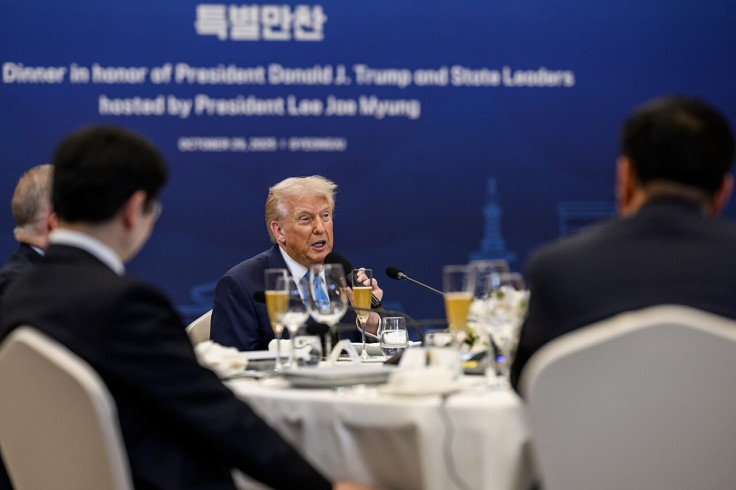
US President Donald Trump has ordered the Pentagon to 'substantially reduce' joint military exercises with South Korea, just as the annual Ulchi Freedom Shield drills began on Monday, 17 August 2026. Trump cited the cost of the exercises and his 'very good relationship' with North Korean leader Kim Jong Un.
The exercises are not a new arrangement. Their modern lineage stretches back to the post-Korean War period, with the US and South Korea repeatedly adapting the drills as the security environment changed. The current Ulchi Freedom Shield format was introduced in 2022, combining military training with a wider government readiness exercise.
Trump's announcement came just hours before this year's drills were due to begin. South Korea said the exercise would proceed as scheduled, while its presidential office expressed hope that Trump's relationship with Kim could help reopen dialogue between Washington and Pyongyang.
Trump And South Korea Face a New Test Over Military Drills
In his social media post, Trump said he was 'not happy' that the United States had agreed to participate in the exercises and argued that they were costly and sent an 'inappropriate and hostile' signal to North Korea. He also directly linked the decision to Kim.
'Based on my very good relationship with Kim Jong Un, of North Korea,' Trump wrote, he had instructed Defence Secretary Pete Hegseth to substantially reduce the joint exercises.

Trump also criticised Seoul for refusing a separate request involving Iran. He said he had recently asked South Korea's president whether the country wanted to join the United States in the 'Denuclearization of the Islamic Republic of Iran', but claimed Seoul responded, 'No thanks!'
The comments put two separate disputes into the same message. One concerns the longstanding military relationship between Washington and Seoul. The other is South Korea's unwillingness to take part in US actions involving Iran.
For South Korea, however, the immediate issue is the defence posture on its own doorstep.
The Ulchi Freedom Shield exercise began on 17 August and is scheduled to run until 27 August. Around 18,000 South Korean troops are participating, with the training designed around modern threats including drones, cyberattacks and disruptions to GPS systems. The US military describes the exercise as a combined, joint and all-domain operation intended to strengthen the allies' ability to respond to a range of security threats.
North Korea launched a ballistic missile from the Wonsan area on 11 August, sending it roughly 700 kilometres towards the Sea of Japan, according to South Korean and Japanese authorities. It was reported as the country's 11th suspected missile test of 2026.
Pyongyang has also condemned the latest US-South Korean drills, describing them as a provocative rehearsal for war and threatening a stronger response. The exercises have long been a source of tension with North Korea, which routinely portrays them as preparation for an invasion.
Trump Revives His Unusual Approach to Kim Jong Un
Trump's latest move also revives an approach he used during his first presidency. He previously suspended major US-South Korean exercises following his 2018 summit with Kim, describing the drills as expensive and provocative. The exercises later resumed as diplomatic efforts stalled.
The difference now is the security environment.
North Korea has continued developing its nuclear and missile capabilities since talks with Washington broke down in 2019. It has also deepened military ties with Russia, with US and South Korean officials warning that North Korean involvement in the Ukraine war has given its forces valuable battlefield experience.
That has made Trump's decision particularly contentious. The US military continues to describe the exercises as essential to maintaining readiness, while critics argue that reducing them could weaken deterrence and complicate the ability of American and South Korean forces to operate together in a crisis.
Yet Seoul has not responded by openly rejecting Trump's approach. Instead, the South Korean presidential office said on Monday that it hoped the friendship Trump repeatedly highlights with Kim could contribute to renewed US-North Korean dialogue. It also stressed the importance of maintaining coordination between Washington and Seoul.
For critics, this means the United States is scaling back an exercise designed to prepare for a North Korean attack while North Korea continues expanding its military capabilities and testing missiles. At the same time, Trump is betting that his personal relationship with Kim can achieve something years of military pressure and diplomacy have failed to deliver.
For now, the drills are going ahead. What changes within the exercise after Trump's order, and whether Pyongyang responds with diplomacy or another demonstration of military power, remain to be seen.
© Copyright IBTimes 2026. All rights reserved.