UFO Shock Claim as Whistleblower Says South Korea Used Energy Weapon to Down Giant Craft
Dr Steven Greer's explosive allegation reignites old theories while critics say the story shows all the signs of a familiar UFO myth
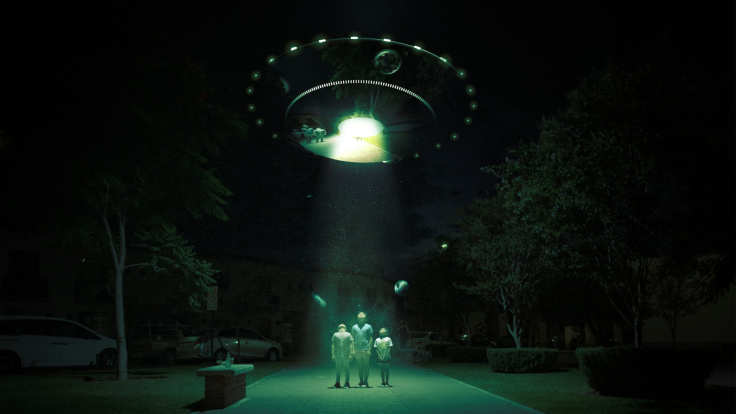
A fresh wave of UFO controversy has erupted after whistleblower Dr Steven Greer claimed South Korea secretly downed a massive alien craft using an advanced energy weapon and hid it inside a carved out mountainside.
Dr Greer alleges that South Korean forces brought down an enormous extraterrestrial vehicle using some form of electronic or energy based warfare. According to his account, the object was so vast it could not be transported, forcing authorities to carve out part of a mountain outside Seoul to contain it. He claims the craft remains there to this day, hidden beneath a purpose built facility.
The Claim
Supporters argue the specificity of the claim makes it easy to verify or debunk. South Korea is a relatively small and heavily mapped country, and large scale mountain excavation projects would be difficult to conceal. That argument has fuelled online attempts to match Greer's story to satellite imagery, including speculation around coordinates linked to military installations controlled by the Korean Army.
Greer has also suggested the story aligns with long standing claims by figures such as Ross Coulthart and the late John Lear, both of whom spoke of enormous alien vehicles that were supposedly too large to move and instead buried under custom facilities.
Why Critics Say the Story Sounds Too Familiar
Scepticism has been swift and loud. Critics point out that Greer has been making similar disclosure promises for decades, often tying them to imminent political events that never deliver. Many argue the South Korea story fits a familiar pattern where dramatic claims emerge without documents, photographs or corroborating witnesses.
Some question how such an event could remain hidden in one of the most technologically advanced and densely populated countries in the world. They argue that a crash, military response and massive excavation would almost certainly leave a trail of images, leaked records or eyewitness accounts.
Others offer a more nuanced critique, suggesting Greer's passion may have overtaken his judgement. Former supporters acknowledge his early role in pushing UFO discussion into mainstream political spaces but believe he has increasingly blurred the line between verified testimony and rumour.
The Geography Argument and Satellite Speculation
Defenders of the claim counter that not all of South Korea is densely populated. Mountainous regions and military controlled zones have far fewer residents, making secrecy more plausible. They point to satellite images showing unusual structures and installations that some argue do not resemble typical water or storage facilities.
One set of coordinates frequently shared online appears to show a secured site controlled by the Korean Army, leading some to question why the military would oversee what is officially described as mundane infrastructure. For believers, this feeds into a broader theory that similar hidden facilities exist worldwide, housing technology recovered from unknown origins.
Sceptics respond that extraordinary claims require extraordinary evidence. Military bases often have restricted areas and unusual layouts for entirely conventional reasons, and interpreting satellite images without insider confirmation can easily lead to false conclusions.
For now, there is no confirmed evidence that South Korea downed a giant UFO or carved a mountain to hide it. The story remains an allegation, fiercely debated and deeply polarising. It may reinforce belief for some and scepticism for others, but it ultimately underscores the same unresolved question that has defined UFO lore for decades. Where is the proof?
© Copyright IBTimes 2026. All rights reserved.
- MOST POPULAR IN Trending