

Speaker Mike Johnson Defends $350 Billion Pentagon Request: 'Fighting Communism on Our Own Shores' — Who's Paying?
Mike Johnson argues for increased military spending to combat domestic and global threats.
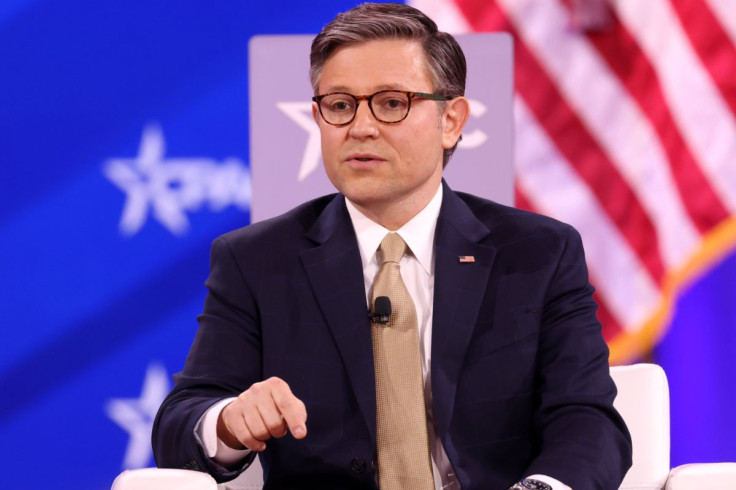
US House Speaker Mike Johnson has defended a £270 billion ($350 billion) Pentagon funding request, insisting the huge sum is needed to 'fight Communism on our own shores' and confront foreign enemies, as Congress prepares for a bruising battle over who will foot the bill.
The Republican leader used a tense press conference in Washington on Wednesday to frame the package as a national security imperative in an era of mounting domestic and global risks, arguing that the additional money is urgently required even as the country faces significant financial pressures at home.
The Ideological Rationale Behind The £270 Billion ($350 Billion) Pentagon Request
The scale of the proposed military expenditure is significant, even by the traditionally large standards of American defence budgets.
When pressed by a reporter on the urgency and itemised breakdown of the request, Johnson described the sum as 'transformational' funding designed to alter the internal dynamics of the armed forces.
He referred to the military apparatus as the 'Department of War', an archaic term that highlighted his framing of the proposal.
Johnson maintained that the United States already possesses a leading fighting force, yet he insisted that the new financial injection would make the military more efficient and effective. The Speaker avoided specific questions about where the money would be allocated across various departments.
He instead offered broad justifications, stating that the nation lives in dangerous times. This type of rhetoric is common during budget negotiations, but the size of the legislative request has prompted scrutiny across the political spectrum.
'Look, we live in dangerous times,' Johnson told reporters at the briefing. 'We're fighting Communism on our own shores, and we're fighting evil terrorists and tyrants around the world, and we have to be able to protect our national security'.
His language pointed to a dual focus on perceived domestic ideological opponents and overseas adversaries, combining internal political concerns with international military strategy.
Mike Johnson says that the Pentagon is requesting an additional $350,000,000,000 for things like "fighting Communism on our own shores" pic.twitter.com/3s3HH8E4eH
— Headquarters (@HQNewsNow) July 14, 2026
Scrutiny, Secrecy And The £270 Billion ($350 Billion) Price Tag
The financial appeal surfaced as lawmakers examined the contents of the upcoming reconciliation bill.
The request reflects an ambition within Donald Trump's administration to increase the national defence budget, with Johnson backing the president's objective to expand military spending. Lawmakers and the public are now asked to weigh the cost of a larger military against domestic financial constraints.
As taxpayers are expected to bear the cost during a period of economic scrutiny, they have limited detail on how the money would be used. The Speaker declined to set out the figures in depth, telling the press that the podium was not the place to unpack the numbers.
This reluctance to provide a line-by-line accounting leaves questions over Capitol Hill. Lawmakers must determine how the sums would materialise, which specific programmes would receive funding and which sectors would benefit from the expansion.
The push to authorise the spending highlights security threats, but the lack of transparency regarding itemised costs has drawn concern from legislative watchdogs. Congress must now decide whether to approve a major increase in the military budget without detailed oversight or insist on stronger accountability from the executive branch.
The political stakes around the proposal are clear, but the immediate financial implications for the American public remain less defined.
© Copyright IBTimes 2026. All rights reserved.