Proposal to Dismantle DHS Gains Momentum as Lawmaker Says Department Has Been 'Weaponised'
Rep. Delia Ramirez drafts legislation to dismantle DHS, aiming to protect critical agencies from political influence.

A proposal to dismantle the US Department of Homeland Security (DHS) is gathering momentum after Rep. Delia Ramirez confirmed she is drafting legislation to break apart the department, saying she has already discussed the plan with several Democratic colleagues ahead of introducing a bill next year.
Ramirez, the top Democrat on the House Homeland Security Committee's cybersecurity subcommittee, said preliminary legislative language is being prepared for what would become the most significant overhaul of DHS since it was established after the September 11 attacks.
While the proposal faces major political hurdles, she said discussions with fellow lawmakers mark the first step towards advancing the measure in Congress.
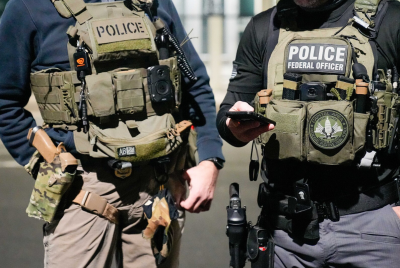
The Illinois congresswoman argues that DHS has been 'weaponised' under the Trump administration by placing immigration enforcement at the centre of the department's mission, while agencies responsible for cybersecurity, disaster response, transport security and maritime operations have been deprived of resources.
Her proposal would remove the Cybersecurity and Infrastructure Security Agency (CISA), the Federal Emergency Management Agency (FEMA), the Transportation Security Administration (TSA) and the US Coast Guard from DHS, allowing them to operate as independent agencies or under new departmental structures.
Lawmaker Outlines Overhaul
Ramirez said she has consulted several Democratic lawmakers, including Reps. Mark Pocan, Greg Casar, Seth Magaziner, Robert Garcia, Emily Randall and Pramila Jayapal, as she develops the legislation.
'Obviously this is going to be a pretty comprehensive bill,' she said. 'Dismantling DHS would have to then have the specifics of what happens to all of these agencies. Do they end up becoming their own agency? Do they become their own department? How do we make sure that we put policy in place to protect their mission and the public?'
She acknowledged the scale of the proposal, saying lawmakers would need to decide where each agency would ultimately sit while preserving its legal authorities and responsibilities.
Although the legislation remains in its early stages, Ramirez said restructuring DHS would better protect agencies from shifting political priorities and future funding cuts.
According to Ramirez, DHS has become increasingly dominated by Immigration and Customs Enforcement (ICE) and US Border Patrol, leaving agencies such as CISA, FEMA, TSA and the Coast Guard with fewer resources despite their central roles in protecting critical infrastructure and public safety.
Cybersecurity Drives Proposal
Ramirez said CISA best illustrates why she believes DHS should be restructured.
She argued that staffing reductions, programme cuts and proposed budget reductions have weakened the agency's ability to defend government networks and critical infrastructure against increasingly sophisticated cyber threats.
Although acting CISA Director Nick Andersen has announced plans to recruit around 330 employees, Ramirez warned rebuilding the agency would take much longer because of federal hiring procedures and security clearance requirements.
'I am grateful that the interim director is really trying to move towards making those 330 hires as quickly as possible,' she said.
'These hires don't happen overnight. We think it's going to take us at least a year, year and a half, to be able to get to the level that is necessary to keep up with the needs of CISA.'
Ramirez also said she hopes to work with Republican cybersecurity subcommittee chairman Rep. Andy Ogles on strengthening cybersecurity funding, arguing that protecting critical infrastructure should remain a bipartisan priority as artificial intelligence rapidly reshapes the threat landscape.
As part of that broader effort, she plans to seek briefings from the National Security Agency, CISA and the Commerce Department on how export controls affect government access to advanced AI models.
She has also introduced legislation to formally establish the Common Vulnerabilities and Exposures (CVE) programme in federal law after it narrowly avoided a funding disruption earlier this year.
Looking ahead to the 2026 midterm elections, Ramirez warned that phishing attacks, credential theft, AI-generated misinformation and foreign influence campaigns continue to threaten election infrastructure.
She argued that giving CISA greater independence would better position the agency to protect critical systems from evolving cyber threats.
Although dismantling DHS would require broad congressional support before becoming law, Ramirez said drafting legislation and consulting Democratic colleagues are important first steps.
She maintains that separating CISA, FEMA, TSA and the Coast Guard from DHS would strengthen their long-term missions while insulating them from the political priorities she believes have increasingly overshadowed their work.
© Copyright IBTimes 2026. All rights reserved.
- Recommended For You