

Ontario Wildfire Creates Giant Smoke Plume Seen Thousands of Feet Above Ground
Air quality warnings issued as smoke from Ontario wildfires spreads
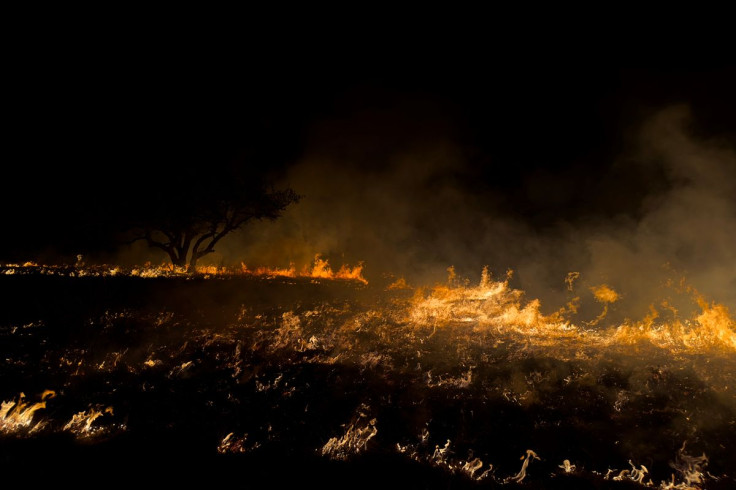
A massive plume of smoke from wildfires burning across northwestern Ontario spread across Canada and the northeastern United States this week, prompting air quality warnings and reducing visibility across much of southern Ontario. The plume was visible from satellite imagery and aircraft thousands of feet above the ground as smoke drifted eastwards.
NASA Earth Observatory said smoke from the fires streamed over Ontario, Quebec and parts of the US Midwest and Northeast. Citing figures from the Canadian Interagency Forest Fire Centre, NASA said almost 850 fires were burning across Canada by mid-July, including more than 180 in Ontario.
Environment Canada issued air quality warnings across parts of southern Ontario on Wednesday as smoke reached ground level in several areas. Toronto briefly recorded the poorest air quality among major cities tracked by Swiss air quality company IQAir. Smoke also prompted health alerts in parts of Michigan, Minnesota and Wisconsin as forecasters warned conditions could spread further east later in the week.
Smoke Spreads Across Canada and US
NASA imagery captured by the NOAA-21 satellite on 14 July showed smoke spreading eastwards across Canada and into the United States. The agency said the smoke's impact depended largely on altitude, with little effect on air quality where it remained high in the atmosphere but increasingly hazardous conditions where it descended closer to the ground.
Environment Canada advised people to limit strenuous outdoor activity as air quality deteriorated and warned that children, older adults, pregnant women and people with existing heart or lung conditions were among those most at risk.
Thicker smoke was forecast to move towards New York, Washington and other parts of the eastern seaboard later in the week.
Communities Forced to Evacuate
The fires have forced evacuations across northwestern Ontario, including several First Nations communities. Residents of Namaygoosisagagun First Nation said they had only minutes to leave before fleeing across Collins Lake by boat. Sol Mamakwa, an Ontario New Democratic Party MPP, described the destruction as a tragedy, while local MPP Lise Vaugeois said the community of Collins had been destroyed after residents escaped safely.
Mamakwa shared footage on social media showing a freight train travelling through intense flames near Armstrong. Canadian National later confirmed that crew members were safely evacuated.
Heatwave Compounds Health Risks
The wildfire smoke arrived as southern Ontario experienced an intense heatwave, creating additional health risks for residents. Environment Canada meteorologist Kate Leclerc told CBC News that increasing smoke concentrations would raise health risks and urged people to reduce outdoor activities where possible. She said those without air conditioning might have to balance keeping homes cool with limiting smoke exposure, depending on local conditions.
Ontario Premier Doug Ford said the province would deploy all available resources to fight the fires. Professor Laura Chasmer, an environmental geographer at Western University, said hotter and drier conditions associated with climate change had contributed to longer and more intense wildfire seasons.
NASA said about 1.9 million hectares had burned across Canada by mid-July, well below the totals recorded during the severe wildfire seasons of 2023 and 2025. Forecasters said elevated fire conditions could continue through the summer as firefighters worked to contain the blazes.
© Copyright IBTimes 2026. All rights reserved.