Yu Menglong's Ghost? The Chilling Spirit Box Session Claiming the Actor Was 'Wrongfully Killed'
In the vacuum left by official silence over Yu Menglong, faith, fear and the internet are writing their own uneasy version of the truth.
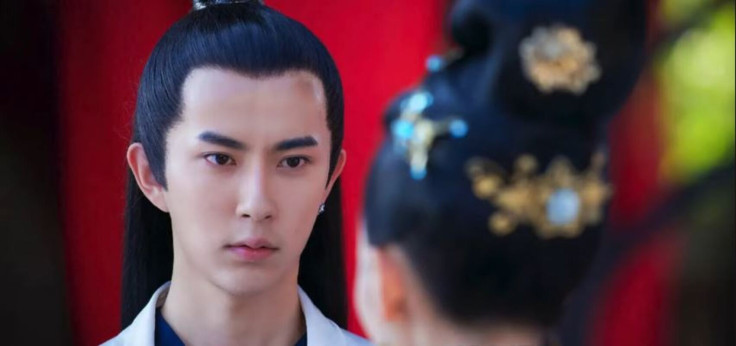
Yu Menglong's name returned to the spotlight in December 2025, when an American psychic claimed during a livestreamed 'spirit box' session that the late Chinese actor had been 'wrongfully killed' and was trying to communicate from beyond the grave.
The session, broadcast online and quickly clipped for social media, is now feeding an already dense web of rumours around Yu's unexplained death, which Chinese authorities have still not formally clarified.
In the absence of an investigation on record, his case has travelled offshore. Among overseas Chinese audiences and diaspora communities already wary of state narratives, the actor has become a symbol of something larger: the suspicion that what happens to stars in China's entertainment system is less an individual misfortune than a structural risk.
Two unlikely figures have emerged as focal points for those trying to make sense of that risk. One is Li Jingwei, a Taiwanese blogger who practices Nadi astrology, a South Asian divination tradition said by adherents to preserve people's life records on palm leaves. The other is Kandis Starr, an American psychic medium whose YouTube channel features live interactions with a device her followers describe as a spirit box, which they believe picks up voices from the dead. Their methods are worlds apart from forensic investigation, but they share one blunt assumption: if there is a truth about Menglong, they do not expect it to come from Beijing.

Yu Menglong, Nadi Astrology And A Vision Of A Machine
On the 100th day after Yu's death, Li Jingwei carried out a second Nadi reading focused on the actor. She has repeatedly insisted she does not see this as fortune-telling, but as consulting what she calls an 'archival system of fate', a kind of metaphysical ledger that tracks lives rather than predicts headlines.
What she says emerged is less a scene than a symbol. Li described a figure with the upper body of a fish and the lower body of a snake. Within her interpretive system, the fish represents public visibility and the appearance of harmlessness; the snake stands for hidden entanglement, control and pressure operating out of view.
Li is explicit that she does not believe this fish-snake hybrid points to a single mastermind. To her, it looks like a system: an apparatus that presents itself as orderly while relying on diffuse coercion and asymmetrical dependence. She links it to the astrological constellation Ashlesha, associated in that tradition with power exercised through contracts, psychological leverage and obligations rather than blunt, physical force.
In this reading, Menglong's death is not a lone, decisive act of violence, but the endpoint of 'distributed complicity.' Li claims her reading suggests instructions were given obliquely, duties were split, and lines of accountability were blurred to the point of disappearance. By the time the situation became impossible to reverse, she argues, no one could be cleanly held responsible.

Li also claims that any evidence accessible to official institutions was removed early on, making a thorough state investigation both unlikely and, in practical terms, impossible. It is a serious allegation offered without publicly verifiable proof, but it resonates with long-standing scepticism about how politically sensitive cases are handled inside China. Nothing in her account has been confirmed, and she has repeatedly warned that her statements should be treated as interpretive, not evidentiary.
Instead of expecting answers from inside the system, Li points her followers to the margins. She suggests that fragments of what happened to Yu might surface outside China's information controls, via diaspora social media, sidelined industry insiders and independent researchers. She singles out YouTube and X as platforms where those fragments could coalesce, especially in a period she repeatedly places between March and June 2026. Even then, she does not predict neat closure, only a pattern that might become harder to ignore.
Her readings are peppered with loaded terms: drugs, poisoning, organs, population trafficking, underground transactions. Li is careful, at least in her own telling, to frame these as symbolic indicators of a broader illicit ecosystem rather than line-by-line charges in Yu's case file. She has also warned that, according to the same readings, three to five other individuals may be caught in similar circumstances, with their situations unresolved or simply not yet public. None of this has been corroborated independently.
Spirit Box Claims Pull Yu Menglong Into The Paranormal
Running parallel to these astrological narratives is a more overtly paranormal one. In a livestream on 19 December, American medium Kandis Starr told her audience she had contacted Menglong using a spirit box and that the 'responses' suggested he died on 10 September, a date that does not match earlier online conjecture.
Starr went further, claiming the session indicated Yu knew of videos depicting his alleged mistreatment. According to her summary, the device suggested that some people who shared these videos were not directly responsible for his death. When viewers asked about supposed dark‑web footage, Starr reported a series of strong affirmative signals from the device. That segment was quickly clipped and reposted, taking on a life of its own in Chinese- and English-language corners of the internet.
One of her bolder claims concerned surveillance. Asked whether Yu's phone had been fitted with tracking or monitoring software, Starr told viewers that the spirit box responded immediately and continued to do so, which she interpreted as a sign of ongoing distress rather than a one-off incident. Again, no external evidence is offered to support this, and it remains entirely unverified.

The session then veered into even more combustible territory. Viewers raised actress Dilraba Dilmurat, a major star in her own right. When asked if Dilraba was in danger, Starr reported another affirmative response. A follow‑up question about possible links between her and a so‑called Chinese elite or royal lineage produced the same sustained signals, according to Starr, who floated the possibility of family, social or institutional proximity rather than direct involvement. No documents, images or independent testimony were produced to back any of these suggestions.
Starr's claims sit far outside any legal or journalistic standard of proof. Yet in an online ecosystem already primed to distrust official statements, they land with considerable emotional force. Clips from her broadcast circulate alongside Li's posts, fan edits of Yu's dramas and angry comments about the risks faced by entertainers in China. Everything remains, at this point, allegation, divination or paranormal conjecture, and nothing has been confirmed by verifiable sources, so all such claims need to be treated with considerable caution.
Beneath the occult language, however, runs a more familiar story. Over the last twenty years, Chinese entertainment has seen a string of public figures vanish from screens, citing sudden illness, breakdowns, legal troubles or nothing at all. Explanations drift, disappear or conflict. In that vacuum, some turn to spiritual specialists for protection, while others look to them for answers they no longer expect from courts or state media.
The case of Yu Menglong now sits uneasily at that intersection of fear, faith and unresolved death, with his image pulled into a tug of war between silence on one side and unverifiable revelation on the other.
© Copyright IBTimes 2026. All rights reserved.
- Recommended For You