

Adele's 'Unrecognisable' New Look at F1 Grand Prix Goes Beyond 100lb Weight Loss, Cosmetic Experts Claim
Experts weigh in on Adele's striking appearance at the British Grand Prix, sparking renewed speculation about her transformation.
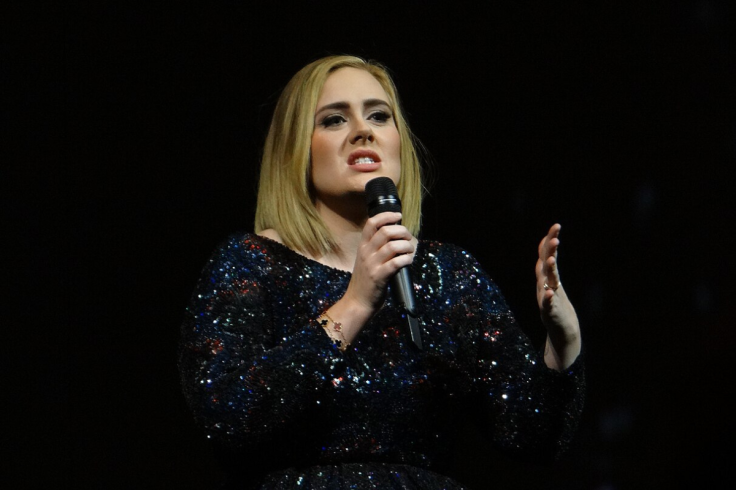
Adele's appearance at the British Grand Prix at Silverstone on Sunday has reignited discussion over her striking new look, with cosmetic experts saying that her face may reflect more than her widely reported 100lb weight loss.
The singer, who made a rare public outing at the Formula 1 event, was described by fans online as looking 'completely different,' but the doctors quoted in the report stressed that no one can confirm whether she has had any aesthetic procedures.
The chatter did not come from nowhere. Adele's transformation has been under the microscope since 2020, when she first showed off her slimmer frame in an Instagram post marking her birthday, and she later addressed the reaction in interviews, saying the change grew out of a desire to get stronger and manage anxiety rather than chase a number on the scales.
Adele's Unrecognisable Look At Silverstone
The British Grand Prix appearance mattered because it was a rare public outing for a star who has long preferred to disappear between albums, and because the photos travelled fast. Social media does what social media always does, it zooms in, compares, speculates, and then compares again.
By Sunday evening, the conversation had shifted from simple surprise to a much more familiar celebrity obsession, namely whether a changed face is the product of age, weight loss, makeup, lighting, or some mix of the lot.
Dr Alma Kamenica said that 'significant weight loss alone can dramatically change the face,' but added that Botox may also have played a part in Adele's appearance. She said subtle treatments such as Botox, small amounts of dermal filler or collagen-stimulating injectables are commonly used to soften lines and restore volume, though she was clear that these were only possibilities and not confirmation of any treatment.
Kamenica also pointed to non-surgical skin tightening procedures such as Morpheus8 Burst, saying they are often chosen to stimulate collagen and improve firmness without changing natural features. Her overall assessment was notably restrained, which is not always how the online conversation behaves.
What Cosmetic Experts Actually Said About Adele
Cosmetic surgeon Dr Paul Banwell took a broader view, saying changes in facial contour, skin quality and overall facial harmony can come from natural ageing, weight fluctuations, expert skincare, makeup, lighting and, in some cases, non-surgical or surgical treatments.
He listed anti-wrinkle injections, conservative dermal fillers, skin-boosting injectables, collagen-stimulating therapies, laser resurfacing and radiofrequency skin tightening as common options in subtle rejuvenation.

Banwell also underlined the effect of major weight loss, explaining that facial fat pads can diminish and make a face appear more hollow or drawn. In his view, Adele's well-publicised weight loss is a textbook example of how substantial body changes can alter facial proportions, making the face look leaner and sometimes older even without cosmetic intervention.
The experts quoted in the report were not claiming to have proof of any procedure. They were describing what might explain the visual change, and there is a difference, a fairly important one. The internet, naturally, tends to collapse those distinctions into one mad, confident verdict.
Adele's Own Account Of The Weight Loss
Adele first drew widespread attention for her changing shape in 2020, when her birthday post made the transformation impossible to miss. Her former personal trainer Camila Goodis later said that the change was largely down to a major cut in calorie intake, saying the singer was working out but that '90 per cent of it is diet.'
Goodis added that the first week was intense, involving green juices and only 1,000 calories.
Adele herself told British Vogue the next year that the weight loss was not the point. She said it came from a two-year effort to become strong and healthy, explaining that the gym became her time and helped ease anxiety.
She said she began exercising two to three times a day, doing weights in the morning, hiking or boxing in the afternoon, and cardio at night, while stressing that the regime was not realistic for everyone because she had trainers and was 'basically unemployed' at the time.
She also said she was not dieting. 'Ain't done that. No intermittent fasting. Nothing,' she told the magazine, adding that she ate more than before because she trained so hard.
The Public Reaction Still Lingers
The backlash that followed was something Adele has already addressed. Oprah Winfrey, said she was not shocked or fazed by the scrutiny because her body had been objectified throughout her career. 'I was body positive then and I'm body positive now,' she said, adding that it was not her job to validate how other people felt about their bodies.
She also said she felt bad if her weight loss made anyone feel badly about themselves, but insisted she was trying to sort out her own life. In other words, the story has never really been just about weight.
It has been about anxiety, control, image and the strange, relentless public appetite for a woman who has spent much of her career refusing to perform on cue.
The British Grand Prix moment simply dragged all of that back into view. One rare outing, one cluster of photographs, and suddenly the old arguments were live again, with fans insisting she looked different and experts warning that appearances can be deceptive.
Adele, for her part, has previously said she does not care if she loses or gains weight, and that she likes lifting weights, boxing and hiking.
© Copyright IBTimes 2026. All rights reserved.