Did Anne Hathaway Undergo Plastic Surgery? Before and After Photos Spark New Rumours
When every red carpet is archived and replayed, Anne Hathaway's changing face says as much about society's obsession with youth as it does about her own reflection.
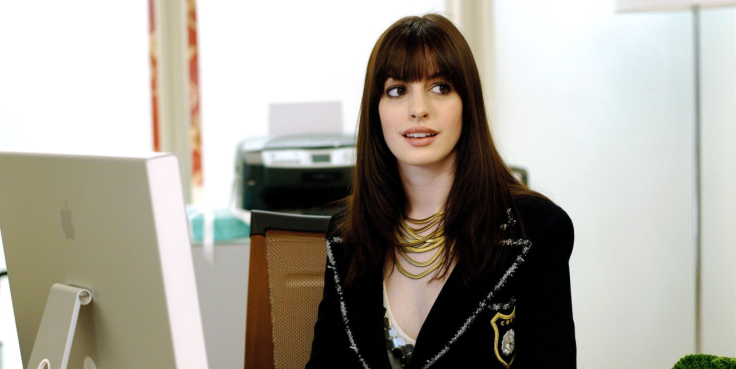
Anne Hathaway's appearance is under fresh scrutiny this week as before-and-after photos circulated online, prompting a new round of plastic surgery rumours about the Hollywood star who first broke out in The Princess Diaries in 2001.
After a series of images spanning more than two decades of red-carpet events and premieres resurfaced and were laid out side by side, fans poring over the timeline have zeroed in on what they see as subtle changes to Hathaway's face and figure, with some insisting she must have had cosmetic work, while others argue her transformation reflects nothing more than ageing, styling and professional grooming. Nothing has been confirmed, and all social media speculation should be treated with caution.
Inside Anne Hathaway's Transformation as Plastic Surgery Rumors Swirl: Before and After Photos https://t.co/4OgYvzHGGS pic.twitter.com/bvCiAmKkLG
— OK! Magazine USA (@OKMagazine) May 23, 2026
Early Red Carpet Evolution Fuels Questions
Hathaway's public image has been shaped in full view of cameras since she attended the world premiere of The Princess Diaries in Hollywood in 2001. Then in her late teens, she arrived with the open, fresh-faced look that would define her early career, the film itself later credited as her breakthrough in the industry.
By the 2002 MTV Movie Awards she appeared more composed, leaning into a sleeker, more polished style. A year later, at the Los Angeles premiere of 2 Fast 2 Furious in June 2003, she projected the kind of red-carpet presence that suggested a young actress learning quickly how to manage the spotlight. The features were the same, but the styling was sharper: more defined brows, more deliberate hair and make-up choices.
At the Princess Grace Foundation's 2004 Awards Gala, Hathaway chose a classic black strapless floor-length gown with a thigh-high slit. The dress drew attention to her legs and posture, rather than any facial change, although online sleuths now comb those photos for early hints of cosmetic work. In 2005, at the Mr. Abbott Awards, she appeared in a chocolate brown gown that echoed Greek goddess imagery, the sort of costuming that can easily be misread as a physical transformation when, in reality, it is largely fabric, lighting and contour.
Anne Hathaway just clapped back hard — she finally addressed the nonstop facelift rumors!
— Paul A. Szypula 🇺🇸 (@Bubblebathgirl) May 22, 2026
In her new Elle interview, the actress flat-out confirmed she has not had a facelift. The speculation got so loud she had to set the record straight.
I never actually heard the rumors or… pic.twitter.com/Uo4xutVtRl
By 2006, promoting The Devil Wears Prada in New York, Hathaway had shifted firmly into high-fashion territory, wearing a scarlet gown with a dramatic V-neckline. Again, that leap from ingénue to fashion player is often where plastic surgery rumours start: audiences mistake wardrobe and make-up evolution for something more permanent.

Anne Hathaway's Look Over Two Decades
The questions around Hathaway's appearance intensify as the years roll by in the photo timeline. At a 2007 Oscar party, she wore a strapless gown with a mermaid skirt and bold bow detailing, which framed her shoulders and jaw. Commenters now point to these images as a 'before' reference, comparing them with more recent, ultra-glam shots.
Anne Hathaway, 43, addresses facelift speculation after baffling fans with her new look https://t.co/rTOkl0cexH
— Daily Mail US (@Daily_MailUS) May 22, 2026
An entry for 2008 notes Hathaway's 'remarkably unlined and vibrant' look, though the caption is paired with the world premiere of Ocean's 8, which actually released years later. The mismatch highlights one of the pitfalls of internet-driven comparisons: dates and contexts are not always consistent, and that confusion can easily skew perceptions of how fast or how dramatically someone has changed.
Anne Hathaway stuns on the #MetGala carpet.https://t.co/9ahmyXebfO pic.twitter.com/L22n5a1rzS
— Variety (@Variety) May 4, 2026
Her appearances at the 14th Annual Critics Choice Awards in 2009 and a 2011 press day for Rio reinforce the sense of ongoing refinement rather than sudden alteration. Even in casual settings, she presented the same basic bone structure audiences had come to recognise, undercutting the idea of a drastic surgical overhaul.
One of the most dramatic shifts in Hathaway's image came via hair, not scalpels. In 2012, she debuted a classic pixie cut at a New York event, a style she maintained into 2013. The shorter hair threw more focus on her eyes and cheekbones, prompting a new wave of fan theories about fillers and reshaping. Yet the timing coincided with roles that required significant physical change, blurring any clean line between character work and personal aesthetic.
Anne Hathaway sparks plastic surgery speculation with taut face at Ralph Lauren fashion show https://t.co/cEh6isGx3u pic.twitter.com/RkuBiNpGsk
— Page Six (@PageSix) April 18, 2025
Through the mid‑2010s, her red-carpet story is one of steady elevation rather than reinvention. She brought easy charisma to the 86th Academy Awards in 2014, highlighted her figure in lace at a 2015 event, and in 2016 chose a Christopher Kane knee-length dress for the Alice Through the Looking Glass premiere in Hollywood, channelling sophisticated charm rather than youth-chasing reinvention.

At the Colossal premiere in 2017, Hathaway wore an Armani Privé black one-shoulder gown with an open back, a look that put her posture and profile at centre stage. In 2018, she was spotted in retro mode on the New York set of Modern Love, again reminding observers that styling for roles can dramatically alter perception of her face and body.
Anne Hathaway has addressed rumors about her appearance, clarifying that her lifted look is due to a styling trick, not a facelift. She mentioned that while she usually avoids such discussions, it was important to share her truth amid speculation. pic.twitter.com/uefVeJ94NW
— Just Cinema Page (@justcinemapage) May 22, 2026
Recent years have only sharpened the debate. She received a star on the Hollywood Walk of Fame in May 2019, then appeared at the 2020 Critics Choice Awards in a gold embellished dress, exuding an almost ageless glow. Her appearance at the 75th Cannes Film Festival in 2021, in a black-and-white mini dress, triggered fresh claims that she had 'not aged,' a phrase now almost inseparable from plastic surgery chatter.
OBSESSION was America’s #1 movie yesterday for the 2nd straight day, beating again MICHAEL and DEVIL WEARS PRADA.
— Global Box Office (@GlobalBoxOffice) May 20, 2026
It’s the 1st time in almost 20 years that a movie made for less than $1M has topped the domestic box office back-to-back, since Paranormal Activity (2009). pic.twitter.com/VdFTrG8c5y
From the WeCrashed premiere in 2022 to an all-black look at the Versace FW23 show and a headline-grabbing ensemble at the 2024 Film Independent Spirit Awards, Hathaway has leaned into high-impact fashion. An unverified note suggests she 'ruled' the 2025 Costume Institute Benefit Gala in custom Carolina Herrera, and even hints ahead to a 2026 moment, extending the narrative of an actress whose image is treated as public property.
Anne Hathaway Addresses 'Loud' Plastic Surgery Rumors as She Teases Getting Facelift 'Someday' https://t.co/wEKwgyd11z pic.twitter.com/fbbVIZNUUD
— OK! Magazine USA (@OKMagazine) May 22, 2026
What remains missing from all of this is confirmation. Hathaway has not publicly detailed any surgical procedures and, in the absence of medical records or on-the-record admission, the plastic surgery storyline rests on fan comparison and conjecture. For now, that means anyone scrolling those before-and-after galleries is dealing with suggestion rather than proof, however persuasive the side-by-side may feel.
© Copyright IBTimes 2026. All rights reserved.
- Recommended For You