Alan Hale Dead at 68: Astronomer Who Co-Discovered Legendary Hale–Bopp Comet Dies, Tributes Pour In
Tributes pour in for Alan Hale, whose discovery of the Hale–Bopp comet captivated the world.

American astronomer Alan Hale, best known as co-discoverer of the iconic Hale–Bopp comet, has died at the age of 68, prompting tributes from across the global scientific community.
Hale's work helped bring one of the most widely observed comets of the 20th century into public consciousness, with Hale–Bopp becoming a rare celestial event visible to the naked eye for an unusually long period during its 1997 passage.
According to reporting on his death, Hale is being remembered not only for his discovery but also for his long-standing commitment to public astronomy and science education.
The Discovery That Defined A Generation Of Skywatching
Hale co-discovered the comet Hale–Bopp in 1995 alongside amateur astronomer Thomas Bopp, while independently observing the night sky from different locations in the United States.
Hale made his discovery from his driveway in Cloudcroft, New Mexico, while Bopp spotted the comet in the Arizona desert near Stanfield.
The comet would go on to become one of the brightest and most widely observed comets of the modern era, remaining visible to the naked eye for an extraordinary 18 months as it passed through the inner solar system.
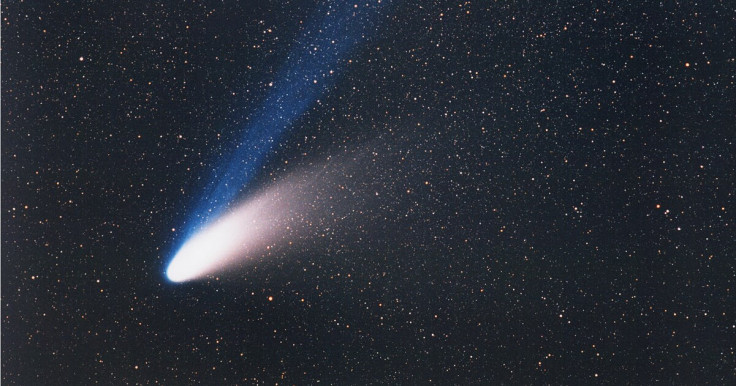
Its brightness and longevity made it a global phenomenon, drawing public interest, media coverage, and scientific study on an unprecedented scale.
Astronomers at the time described it as a once-in-a-generation event, with Hale–Bopp providing valuable insight into cometary composition and long-period orbital dynamics.
A Career Dedicated To Public Astronomy
Beyond the discovery that made his name globally recognised, Hale built a career focused on observational astronomy and public engagement.
He worked extensively in educational outreach, helping amateur astronomers and students better understand celestial observation techniques and planetary science.
Hale was also known for his involvement in the broader amateur astronomy community, where he encouraged participation in scientific observation regardless of formal academic background.
Colleagues often highlighted his ability to bridge the gap between professional astronomy and public enthusiasm, particularly during periods of heightened interest in sky events such as comet appearances and eclipses.
Scientific Legacy Of Hale–Bopp
The Hale–Bopp comet remains one of the most studied comets in modern astronomy, offering researchers detailed data on volatile compounds, dust composition and cometary structure.
Its unusually long visibility allowed both professional observatories and amateur astronomers to collect extensive observational records, contributing significantly to comet science.
The event also helped revive public interest in astronomy during the late 1990s, inspiring a new generation of skywatchers and astrophotography enthusiasts.
Scientists continue to reference Hale–Bopp in comparative studies of long-period comets and solar system formation models.
Tributes From The Scientific Community
Following news of Hale's death, tributes have been shared across the astronomy community, with many highlighting his role in one of the most iconic discoveries in modern observational astronomy.
According to reporting, colleagues and fellow astronomers have described him as a generous and approachable figure who remained active in public science engagement throughout his life.
While formal institutional statements are still emerging, early reactions have focused heavily on his contribution to making astronomy more accessible to the public.
Amateur Astronomy and Its Enduring Influence
Hale's discovery with Bopp is often cited as a landmark moment in the history of amateur astronomy, demonstrating that significant scientific contributions can still be made outside professional observatories.
His work helped reinforce the value of distributed sky observation networks, where independent observers play a key role in identifying transient celestial phenomena.
Many in the field credit Hale–Bopp with inspiring increased participation in citizen science projects and observational astronomy programmes worldwide.
Why Hale–Bopp Still Matters Today
Nearly three decades after its discovery, Hale–Bopp continues to be referenced in both scientific research and public astronomy education.
Its extended visibility and brightness made it a rare opportunity for long-term study, providing a dataset that remains relevant for understanding comet behaviour in the outer solar system.
The comet's cultural impact also extended beyond science, becoming one of the most recognisable astronomical events of the late 20th century.
© Copyright IBTimes 2026. All rights reserved.
- Recommended For You