Astronomers Discover Black Hole With Winds So Powerful They Could Hit Earth Like a 'Category 79 Hurricane'
Extreme black hole winds challenge our understanding of cosmic forces.

Astronomers have identified some of the most powerful winds ever observed coming from a supermassive black hole, with speeds so extreme that scientists say they are difficult to compare with anything known on Earth.
The findings, reported in recent astrophysical analysis, describe outflows of gas driven by matter falling into a black hole at the centre of a distant galaxy. These winds move at a significant fraction of the speed of light, carrying enormous amounts of energy far into surrounding space.
While the 'Category 79 hurricane' comparison is not a formal scientific classification, it is used to illustrate just how far beyond terrestrial weather systems these cosmic forces operate. On Earth, the Saffir-Simpson scale used for hurricanes only runs to Category 5, meaning anything beyond that is purely hypothetical.
What Is Driving These Extreme Black Hole Winds?
Black holes themselves do not emit wind. Instead, the phenomenon comes from the accretion disc — a swirling structure of gas and dust that forms as matter is pulled toward the black hole.
As this material heats up due to intense gravitational and frictional forces, it can be ejected outward in powerful streams. These outflows can extend across vast distances, influencing the surrounding galaxy by regulating star formation and redistributing matter.
Scientists observing these winds say they are among the fastest and most energetic ever recorded, suggesting that black hole feedback mechanisms may be even more violent than previously thought.
Why Scientists Compare Them to 'Impossible Hurricanes'
The 'Category 79 hurricane' analogy is used to help visualise energy scales that are otherwise difficult to conceptualise. In reality, such a classification does not exist, but the comparison highlights how black hole winds vastly exceed the energy of even the most powerful Earth storms.
For context, the strongest hurricanes on record on Earth typically involve wind speeds exceeding 250 km/h. By contrast, black hole winds can reach tens of thousands of kilometres per second, making them millions of times more energetic than terrestrial weather systems.
Researchers emphasise that while the analogy is dramatic, it helps communicate the sheer scale difference between cosmic and atmospheric phenomena.
Impact on Galaxies and Cosmic Development
These winds are not just spectacular; they also play a critical role in shaping galaxies. When black hole outflows interact with surrounding gas, they can either trigger or suppress star formation depending on local conditions.
In some cases, they may blow away the raw material needed for new stars, effectively slowing down galaxy growth. In others, they can compress gas clouds, potentially initiating new star formation regions.
This dual effect makes black hole winds a key factor in understanding how galaxies developed over billions of years.
What This Means for Earth
Despite the dramatic comparisons, scientists stress that there is no direct threat to Earth from these black hole winds. The phenomena occur at distances of millions or even billions of light-years away, far beyond any physical influence on our solar system.
The 'Category 79 hurricane' framing is purely illustrative, designed to help the public grasp the extreme physics involved rather than indicate any real-world danger.
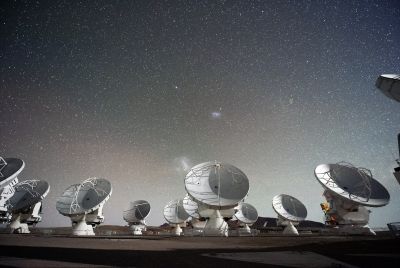
Astronomers continue to study these outflows using advanced telescopes and space observatories, aiming to better understand how supermassive black holes regulate the galaxies around them.
A Window Into Extreme Physics
The discovery adds to a growing body of evidence that black holes are not merely cosmic vacuum cleaners but dynamic engines capable of shaping the universe on a grand scale.
As observational technology improves, researchers expect to uncover even more extreme behaviours, potentially redefining how energy and matter interact in the deepest parts of space.
For now, the record-breaking winds serve as a reminder that the universe still contains forces far beyond anything experienced on Earth, where even hurricanes, by comparison, are gentle breezes in a cosmic storm.
© Copyright IBTimes 2026. All rights reserved.
- Recommended For You