How Did David Clayton-Thomas Die? The Turbulent Life of the Legendary Singer Who Beat The Beatles
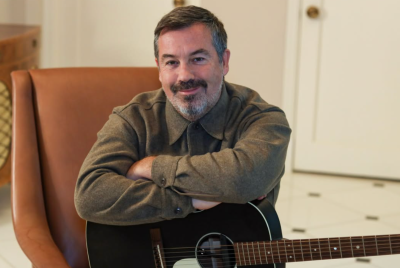
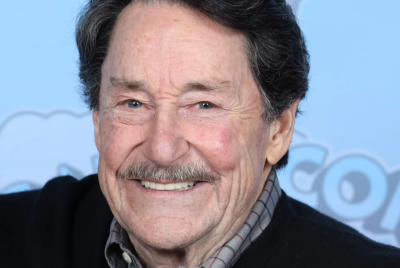
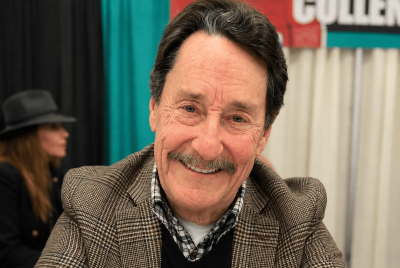
David Clayton-Thomas, famed for leading Blood, Sweat, and Tears to Grammy success over The Beatles, has died aged 84.

David Clayton-Thomas, the legendary singer who helped Blood, Sweat, and Tears eclipse even The Beatles at the height of their fame, has died aged 84. The Canadian frontman passed away 'peacefully' in Toronto on Tuesday, according to a statement, though no cause of death has been disclosed.
Clayton-Thomas was not just another Sixties vocalist riding the wave of brass-heavy rock. At his peak, he led a band whose 1968 album Blood, Sweat, and Tears dominated the charts for seven weeks and went on to win the 1970 Grammy for Album of the Year, beating Abbey Road by The Beatles, as well as releases by Johnny Cash and Crosby, Stills and Nash. It was a result that still raises eyebrows, even now.
His Death And A Voice That Defined An Era
David Clayton-Thomas' death has prompted a wave of tributes online, with fans revisiting hits like 'Spinning Wheel' and 'You've Made Me So Very Happy,' songs that captured his unmistakable baritone and dramatic delivery. A memorial concert is now being planned in his honour, with proceeds benefiting Peacebuilders Canada.
His voice was not subtle. It was big, theatrical, sometimes almost excessive, but it worked. Those songs, sentimental on paper, became something else entirely in his hands. There was conviction there, and perhaps a hint of defiance, that cut through the lush arrangements.
Clayton-Thomas was inducted into the Canadian Music Hall of Fame, received a special Juno Award for his cultural contributions, and earned a star on Canada's Walk of Fame. 'Spinning Wheel' was later recognised by the Canadian Songwriters Hall of Fame, cementing its place in the country's musical canon.
From Homeless Teen To Legendary Singer Who Beat The Beatles
His early life was anything but glamorous. Born David Henry Thomsett in Surrey, England, on 13 September 1941, he moved to Canada as a child and grew up in a Toronto suburb. His relationship with his father, a Canadian soldier, was troubled, and by his teenage years, he had drifted into homelessness.
There is a story, often repeated and never fully verified, that he found a discarded guitar while in jail or a reformatory and taught himself to play. What is confirmed is that he was jailed for vagrancy in 1962, and that music became his way out.
By the mid-1960s, he had embedded himself in Toronto's music scene, adopting the name David Clayton-Thomas and fronting bands including the Fabulous Shays and the Bossmen. His 1966 track 'Brainwashed' brought modest radio success, enough to put him on the radar.
His break came in New York, when singer Judy Collins reportedly heard him perform and recommended him to Blood, Sweat & Tears drummer Bobby Colomby. The band had just parted ways with founding frontman Al Kooper. Clayton-Thomas stepped in at a pivotal moment and, within months, everything changed.
The self-titled album that followed in 1968 was a commercial force, selling more than four million copies. Every major single reached Number Two on Billboard. Then came the Grammy win, a moment that placed the band above The Beatles in one of the most competitive years in music history.
Still, success did not translate into stability. The band's follow-up, Blood, Sweat & Tears 3, also hit Number One in 1970, but by 1971, momentum had begun to slip. Their fourth album peaked at Number 10, respectable but a sign that the sound was losing ground as rival acts like Chicago crowded the charts.
Clayton-Thomas left in 1972 to pursue a solo career, though commercial success proved elusive. His albums struggled to chart, with only minor hits in Canada. He returned to the band in 1974, helping steady the ship briefly, but by the early 1980s, Blood, Sweat, and Tears had dissolved.
He co-owned the band's name and catalogue, worked in A&R and television, and continued performing through various reunions between 1984 and 2004. In 2010, he survived heart surgery and released his autobiography, Blood, Sweat, and Tears, offering his own account of a life that rarely followed a straight line.
One moment from his past still captures that sense of momentum. In a 2013 interview with Rock Cellar, he reflected on the band's early days in New York. 'We were just, holy shit, this is some kind of band, and we knew it,' he said. 'It wasn't arrogance. It was just amazing confidence.'
That confidence carried them from small clubs to Madison Square Garden and the Hollywood Bowl. It also took them behind the Iron Curtain in 1970, when they toured Yugoslavia, Romania and Poland as part of a US State Department initiative. Clayton-Thomas later admitted the experience challenged his assumptions about Communist regimes, describing it as 'scary' in a 1970 interview with Rolling Stone.
There is, perhaps, something fitting in the way his story resists neat closure. A singer who beat The Beatles, lost momentum, found it again, and kept going anyway, long after the spotlight shifted elsewhere.
© Copyright IBTimes 2026. All rights reserved.
- Recommended For You