How Did Alan Greenspan Die? Real Cause of Death Revealed as His Most Famous Regret Resurfaces After His Death
Reflecting on the legacy of Alan Greenspan, particularly his career of influence and controversy.
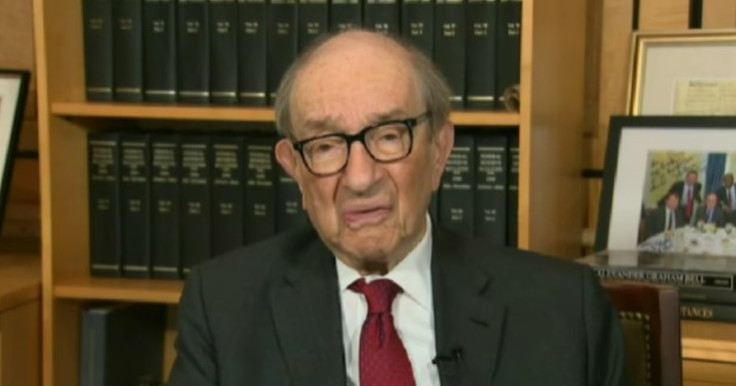
Alan Greenspan, the economist who shaped nearly two decades of American monetary policy, has died at 100. His wife, NBC News correspondent Andrea Mitchell, said he died at their home from complications of Parkinson's disease.
BREAKING: Alan Greenspan, the influential economist who served as Federal Reserve chairman under four presidents, dies at 100. https://t.co/CBpcxndSOs
— NBC News (@NBCNews) June 22, 2026
For almost two decades, Greenspan was one of the most influential figures in global finance, a Federal Reserve chairman whose words could move markets and whose decisions were closely watched by presidents, investors and policymakers.
His death marks the end of a career that was defined by both extraordinary influence and lasting controversy. Greenspan was once celebrated as the architect of economic stability, but his reputation changed after the 2007–08 financial crisis raised questions about the policies and assumptions that shaped his era.
The Economist Who Became a Market Oracle
Mitchell described Greenspan as "a giant of a man who helped shape the U.S. economy for decades under presidents of both parties", while noting that he was also willing to acknowledge his mistakes.
The Federal Reserve said Greenspan's 'contributions to monetary policy and economic thought left a lasting mark' on the institution, the economics profession and the United States.
Federal Reserve notes with deep sadness the passing of Alan Greenspan: https://t.co/wl4Hc95Ogj
— Federal Reserve (@federalreserve) June 22, 2026
Photos of Chairman Greenspan: https://t.co/0prdUvhVaf
That influence came after a long and unusual path into economics. Born on 6 March 1926 in Washington Heights, New York, Greenspan showed an early talent for mathematics but initially pursued music, studying at Juilliard and playing saxophone and clarinet before turning towards economics.
He later studied at New York University and began doctoral work at Columbia University under Arthur Burns, who would eventually become Federal Reserve chairman himself.
Greenspan was also influenced by philosopher Ayn Rand and her belief in individualism and free markets. That connection became one of the defining contrasts of his career, as he later became the official responsible for guiding monetary policy through some of the most turbulent moments in modern finance.
From Washington Insider to Fed Chairman
Greenspan entered government during the Nixon administration and later served as chairman of the Council of Economic Advisers under President Gerald Ford.
President Ronald Reagan appointed him chairman of the Federal Reserve in 1987, and he remained in the role through four presidencies, serving under Reagan, George H.W. Bush, Bill Clinton and George W. Bush.
His influence expanded quickly after the 1987 stock market crash, when the Fed moved to support financial markets and reassure investors. That response helped create expectations that the central bank would intervene during severe downturns, a belief later described as the 'Greenspan put.'
His communication style also became part of his public image. Greenspan was known for carefully worded statements that often required investors to interpret every phrase, helping popularise the term 'Fedspeak.'
During the long economic expansion of the 1990s, he became known as the 'Maestro,' reflecting the confidence many investors and policymakers placed in his leadership.
The Crisis That Changed His Reputation
That reputation shifted dramatically after the 2007–08 financial crisis.
Critics argued that Greenspan's support for deregulation and his confidence in market discipline contributed to an environment where excessive risk-taking was able to grow. The bipartisan Financial Crisis Inquiry Commission later identified failures in regulation and oversight as major factors behind the collapse.
Greenspan himself later acknowledged that the crisis challenged some of his assumptions about how markets behaved. In a 2008 testimony before Congress, he described the financial meltdown as a 'once-in-a-century credit tsunami' and said it had been broader than anything he had expected.
The admission became a defining moment in the debate over his legacy. Supporters argued that the scale of the crisis was difficult for policymakers to foresee, while critics said it exposed the weaknesses of an approach built heavily around market self-correction.
A Legacy Still Under Debate
Greenspan retired in January 2006 after five consecutive four-year terms as Federal Reserve chairman, leaving behind an institution that still carried his influence. His relationships with presidents reflected the unusual position he held in Washington. He supported Reagan's economic philosophy, worked closely with Clinton during the 1990s expansion and later criticised aspects of George W. Bush-era fiscal policy.
Few central bankers have become such recognisable public figures. Greenspan was once viewed as a symbol of economic expertise and stability, but the financial crisis transformed him into a more complicated historical figure.
His career reflected the challenges of managing a modern economy. The difficulty of balancing growth, stability and risk when decisions made during periods of confidence can have consequences years later.
Greenspan helped guide the United States through decades of change and prosperity, but his legacy will remain tied to the question that defined the years after his retirement: whether the policies that helped create an era of growth also helped lay the groundwork for its collapse.
© Copyright IBTimes 2026. All rights reserved.
- Recommended For You