

Awkward White House Moment: Donald Trump Jokes About Pearl Harbour in Front of Japan PM
A wartime analogy, made in a modern crisis, leaves a diplomatic room tense and raises questions about tone in global leadership

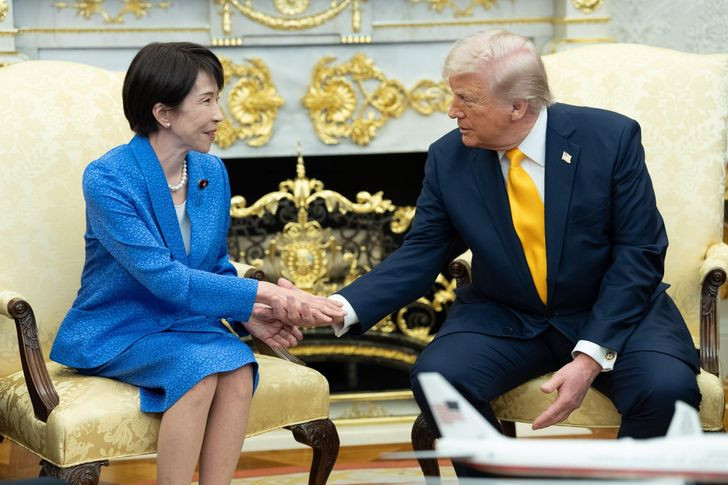
In diplomacy, words carry weight far beyond the room in which they are spoken. That truth was on display during a recent Oval Office meeting between US President Donald Trump and Japan's Prime Minister Sanae Takaichi, where a remark referencing the attack on Pearl Harbour created a moment of visible unease.
The exchange came at a time of heightened global tension, as the US continues military operations against Iran. What followed was not just a political statement but a reminder of how history can echo uncomfortably in present-day diplomacy.
A Question That Led to an Unexpected Answer
Q: "Why didn't you tell U.S. allies...about the war before attacking Iran?"
— CSPAN (@cspan) March 19, 2026
President Trump: "We wanted surprise. Who knows better about surprise than Japan? Why didn't you tell me about Pearl Harbor?" pic.twitter.com/esV9iyvMiV
The moment unfolded when a Japanese journalist asked President Trump why allies, including Japan, had not been informed in advance about the US military action in Iran. It was a reasonable question in the context of international cooperation and alliance expectations. Trump's reply, however, took a surprising turn.
He responded by referencing Japan's historical use of surprise, saying that no one understood surprise better than Japan. He then invoked the events of Pearl Harbour, suggesting that the US had similarly relied on surprise in its recent actions. The comment, delivered with a casual tone, appeared to catch the room off guard.
A Visible Shift in the Room
Sitting beside him, Prime Minister Sanae Takaichi showed a subtle but telling reaction. She shifted in her seat and appeared momentarily uncomfortable. While she did not directly address the remark, her body language spoke volumes.
Moments like these are rare in tightly managed diplomatic settings. Leaders are trained to maintain composure, even when faced with unexpected statements. Yet the sensitivity of the reference made the situation difficult to ignore.
The attack on Pearl Harbour remains one of the most significant and painful moments in US history. It marked the country's entry into the Second World War and led to years of conflict between the two nations. Although relations have long since stabilised, the memory still carries deep historical weight.
Pressing Allies in a Time of Conflict
Trump's comment did not stand alone. It came as part of a broader effort to push allies, including Japan, to offer stronger support for US actions in Iran. During the same meeting, Trump pointed to the presence of approximately 45,000 US troops stationed in Japan.
He stressed the financial and strategic commitments the US has made to the alliance and suggested that such support should be reciprocated.
In response, Takaichi offered measured and careful words. She spoke about the importance of global peace and cooperation but stopped short of making any firm military commitments. Her response reflected a delicate balancing act. Japan maintains a strong alliance with the US, yet its post-war constitution limits its ability to engage in military conflict abroad.
Global Reactions and Media Attention
The exchange quickly gained attention, particularly in Japanese media, where Trump's Pearl Harbour reference became a leading story. For many observers, the issue was not just what was said, but where and how it was said.
Diplomatic language is often shaped to avoid precisely such moments. References to historical conflict, especially those involving present-day allies, are typically handled with caution.
Trump's style, however, has long been characterised by spontaneity and directness. Supporters argue that this approach brings honesty to international relations. Critics contend that it can create unnecessary friction, particularly in sensitive contexts.
The Power of Historical Memory
The incident also highlights the enduring power of historical memory in international politics. Events like the attack on Pearl Harbour are not just facts in textbooks. They are part of national identity and collective memory. Even decades after reconciliation, such references can reopen old sensitivities, especially when made in informal or offhand ways.
For Japan and the US, the post-war relationship has been one of the strongest alliances in modern geopolitics. Built on economic cooperation, security partnerships, and shared democratic values, it stands as a model of reconciliation. Yet moments like this serve as a reminder that history is never entirely distant.
A Diplomatic Tightrope
As tensions in the Middle East continue, the need for unity among allies remains critical. At the same time, maintaining that unity requires careful communication and mutual respect. Trump's remark may not alter the fundamentals of the US-Japan relationship.
However, it underscores the challenges of navigating complex historical legacies while addressing urgent modern crises. In the end, diplomacy is as much about tone as it is about policy. And in a world where every word can travel instantly across borders, even a brief comment can leave a lasting impression.
© Copyright IBTimes 2026. All rights reserved.
- MOST POPULAR IN World


