Churchill Won't Be on UK Banknotes for Long: Hedgehogs and Puffins Could Replace Historic Icons
Public consultation opens to select native wildlife for new banknotes, ending over 50 years of featuring historical figures
Winston Churchill, Jane Austen, and Alan Turing are about to lose their places in British wallets.
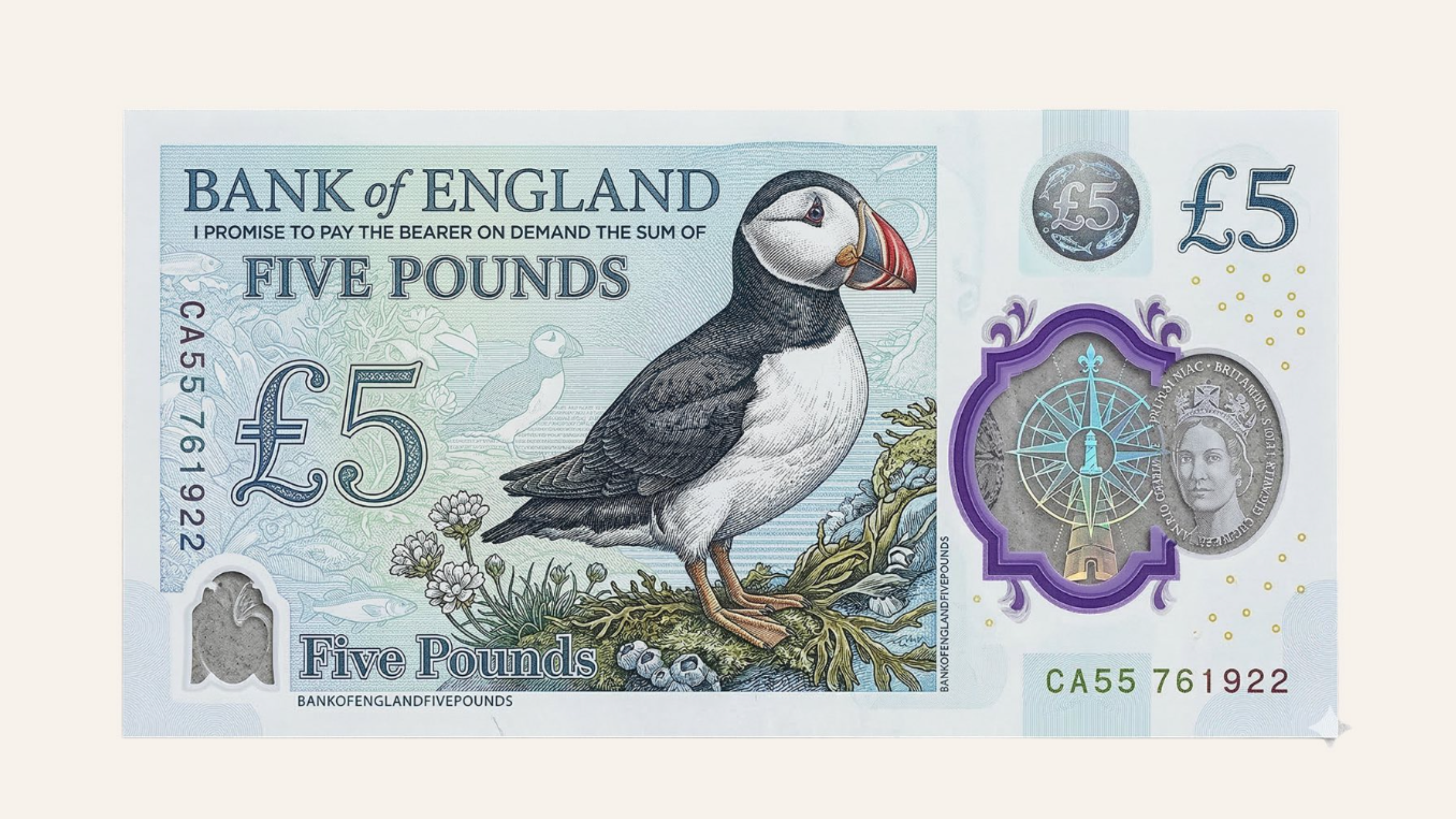
The Bank of England on Tuesday opened a public consultation asking voters to choose which native wildlife should appear on the next series of £5, £10, £20, and £50 notes, ending more than half a century in which the country's currency has carried a famous historical figure on its reverse side.
A shortlist of 18 species, assembled with a six-member panel of wildlife experts, is now before the public until 3 July. Voters can pick up to two animals from each of three categories: mammals, birds, and a combined group of amphibians, insects, and fish.
Governor Andrew Bailey will make the final selection by the end of 2026, though the Bank of England has cautioned that the four most popular animals will not automatically win spots if they look too similar or fail to represent different environments across the four UK nations.
A £91.5 Billion Security Upgrade
The redesign is not, at its core, a branding exercise — it is an anti-counterfeiting measure. The Bank has said that animal imagery lends itself unusually well to security features because recognisable forms and movements can be woven into the notes in ways that a static portrait cannot.
Counterfeiting in the UK has dropped substantially since the shift to polymer notes, with fewer than 0.0019% of banknotes identified as fakes in 2024. That amounts to roughly one in every 52,600 notes. Still, nearly 100,000 counterfeits were pulled from circulation that year, carrying a notional face value of about £2 million, and the £20 denomination accounted for 80,000 of those seizures.
The broader financial picture underscores why the Bank treats its physical currency so seriously. Cash in circulation reached £91.5 billion by the end of February 2026, spread across 4.98 billion individual banknotes. Digital payments have eaten steadily into cash usage over the past two decades, but about one in seven people in the UK still prefer physical money for everyday transactions.
The Shortlisted Species For UK Banknotes
The mammals in contention are the bottlenose dolphin, brown hare, European hedgehog, grey seal, pine marten, and red fox. The bird category includes the Atlantic puffin, barn owl, common kingfisher, Eurasian curlew, great spotted woodpecker, and white-tailed eagle. The third group covers the common frog, buff-tailed bumblebee, emperor dragonfly, Atlantic salmon, basking shark, and marsh fritillary butterfly.
Several shortlisted species carry formal conservation designations. The Atlantic puffin is classified as vulnerable on the global IUCN Red List. The marsh fritillary butterfly and Atlantic salmon are both in decline. Victoria Cleland, the Bank's chief cashier, said she hoped the public would engage with the process.
'The shortlisted animals demonstrate the rich variety of wildlife we have to celebrate in the UK,' she said.
The panel that compiled the list included wildlife broadcasters Gordon Buchanan and Miranda Krestovnikoff, Ulster Wildlife's Katy Bell, and academics Dawn Scott and Steve Ormerod, alongside presenter Nadeem Perera. Household pets were excluded from consideration. The monarch's portrait will remain on the front of all denominations.
How the Theme Was Chosen
The Bank launched its first public consultation on banknote themes in July 2025, drawing roughly 44,000 responses. Six options were on the table: nature, architecture and landmarks, notable historical figures, arts and culture, innovation, and noteworthy milestones. Nature won decisively with 60% of the vote.
The Bank confirmed wildlife as the official theme in March 2026, noting that respondents had specifically gravitated towards species native to the UK. Perera framed the decision in broader cultural terms.
'The wildlife of the UK is not separate from our culture,' he said. 'It sits in our football crests, our folklore, our coastlines and our childhoods. Giving it space on something as symbolic as our currency feels both overdue and significant.'
Political Pushback
The decision has drawn sharp criticism from opposition leaders. Conservative leader Kemi Badenoch accused the government of 'erasing our history', calling the plan 'a silly thing to do.'
Reform UK leader Nigel Farage labelled it 'absolutely crackers' and 'the definition of woke.' Liberal Democrat leader Ed Davey said Churchill, who helped defeat fascism in Europe, 'deserves better than being replaced by a badger,' ITV News noted — though no badger, in fact, appears on the shortlist.
The RSPCA weighed in from another direction, arguing the Bank should have considered less glamorous native species like pigeons, rats, and gulls rather than crowd-pleasing wildlife.
What Comes Next
Bailey's final decision is expected by the end of this year — after that, the timeline stretches considerably. Designing, testing, and printing a new series of banknotes is a multi-year process involving security trials, accessibility assessments, and production runs with De La Rue, the company that prints the Bank's notes. It will likely be several years before any wildlife-adorned currency enters public hands.
Those wishing to vote can do so through the Bank of England's consultation page until 11:59 p.m. BST on Friday, 3 July 2026.
© Copyright IBTimes 2026. All rights reserved.
- Recommended For You