

An Unreported Lobbying Blitz Allegedly Made Trump Reverse His Own Immigration Policy in Under a Week
A reported lobbying push by tech and AI firms has prompted a rapid reversal of a Trump-era immigration policy that threatened a key pathway from temporary visas to permanent residency.
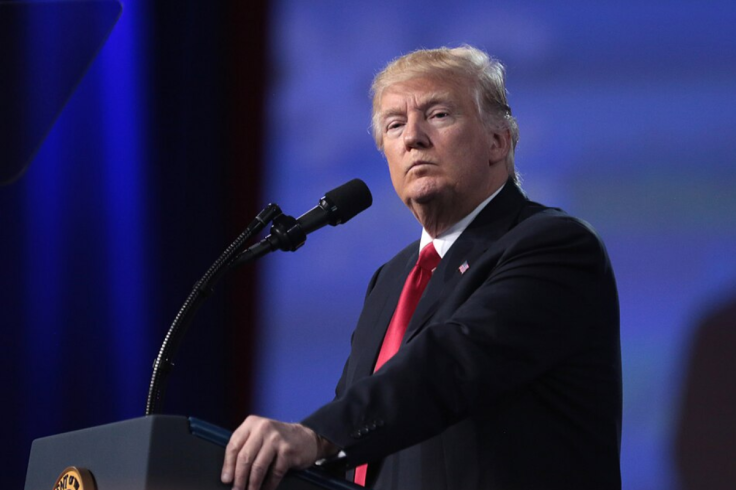
A quiet but extensive lobbying campaign by the tech and AI industries has allegedly forced the Trump administration to row back a sweeping new green card policy just days after it was announced.
On 21 May 2026, US Citizenship and Immigration Services issued policy memorandum PM-602-0199, which reframed the longstanding right to apply for a green card inside the United States as a form of 'extraordinary relief.' The following day, a USCIS spokesman announced that most temporary visa holders would need to return to their home countries to apply.
Within hours of that statement, the same spokesman issued a second, markedly different statement that carved out broad exemptions for anyone providing an 'economic benefit' or serving the 'national interest.' The Washington Post reported that between those two statements, the tech and AI sectors had mounted a sustained, behind-the-scenes lobbying push that shaped the retreat.
USCIS Memorandum and the U-Turn That Followed
The USCIS policy memorandum, titled 'Adjustment of Status is a Matter of Discretion and Administrative Grace, and an Extraordinary Relief that Permits Applicants to Dispense with the Ordinary Consular Visa Process,' took direct aim at a process that has existed in US immigration law since 1952. Adjustment of status, also known as Form I-485, allows a foreign national already lawfully in the United States to apply for a green card without leaving the country. The memo instructed USCIS officers to treat this pathway not as a routine option but as a rare dispensation.
USCIS senior adviser and spokesman Zach Kahler stated on 22 May: 'We're returning to the original intent of the law to ensure aliens navigate our nation's immigration system properly. From now on, an alien who is in the US temporarily and wants a green card must return to their home country to apply, except in extraordinary circumstances.'
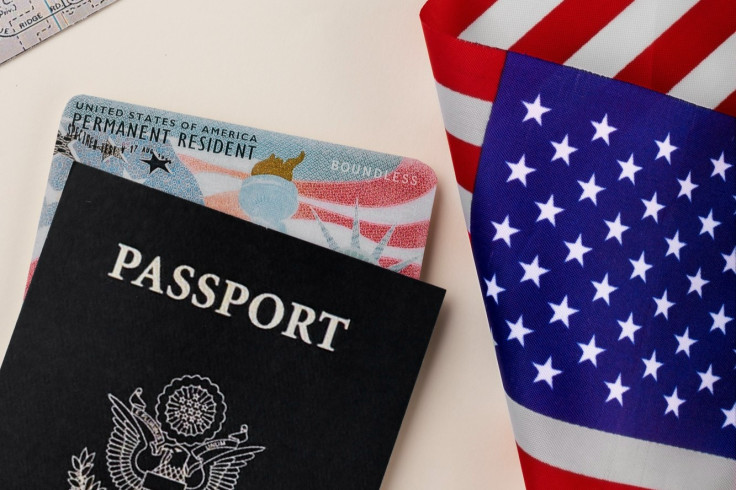
Immigration lawyers and the American Immigration Council noted immediately that the adjustment of status route had been amended by Congress more than 20 times since 1952 and that no version of those amendments ever contained the 'extraordinary relief' standard the memo now asserted.
Hours later, Kahler issued a second public statement that told a different story. 'While we work to operationalise this, people who present applications that provide an economic benefit or otherwise are in the national interest will likely be able to continue on their current path,' he said, as reported by Newsweek. That single shift effectively exempted the H-1B visa category, the primary vehicle through which US technology companies recruit skilled workers from abroad.
Unannounced Lobbying Campaign
The Washington Post reported on 5 June that the softening of the policy was not spontaneous. Big business, including technology companies and AI firms, had launched what the paper described as a 'quiet but extensive lobbying effort' against the part of the policy that required applicants to apply from abroad.
The effort targeted the administration's concern about disrupting the pipeline of skilled foreign workers that powers much of the US technology sector, including artificial intelligence development.

This was not the first time in recent weeks that tech lobbying had altered a Trump administration policy position. On 22 May 2026, the same day as the USCIS announcement, the Washington Post reported separately that last-minute calls from tech industry leaders to the president had led Trump to cancel a planned artificial intelligence executive order. In that case, industry figures warned that a proposed safety-vetting system would inhibit AI development. The green card reversal appears to follow a similar pattern, with private industry pressure resulting in a public policy change.
The tech sector's stake in the green card policy is not trivial. According to USCIS data cited by Fox News, Amazon alone obtained 19,301 H-1B visas in 2024 through to mid-2025. Microsoft obtained 9,914 and Apple obtained 8,075. The adjustment of status process is the primary mechanism by which H-1B holders eventually convert to permanent residency without interrupting employment. Forcing those workers to leave the country mid-process could disrupt projects, break employment continuity and create operational chaos for firms dependent on global talent.
Immigration Lawyers: 'A Rewrite of Well-Settled Law'
For immigration practitioners, the alarm went beyond the eventual softening. The original memorandum's framing raised questions that the carve-out for 'economic benefit' workers did not answer. Shev Dalal-Dheini, senior director of government relations at the American Immigration Lawyers Association and a former USCIS official, called it 'a rewrite of well-settled law' at a press briefing.
'Rather than improving the immigration system and making us safer, this policy risks penalising individuals who are trying to follow the law,' she said, as reported by the Christian Science Monitor. Her organisation is considering litigation to halt the policy's rollout.
The legal foundation of the adjustment of status process rests on Section 245(a) of the Immigration and Nationality Act, which grants the attorney general discretion to approve such applications for individuals who are inspected, admitted, and have an immigrant visa immediately available. The law does not describe the process as extraordinary relief. USCIS has maintained publicly that the memo is a 'reminder' of existing policy, a characterisation the American Immigration Council and legal experts have rejected.
Dalal-Dheini reported that USCIS interviewers had already begun asking applicants during interviews why they had not left the country to pursue a green card through consular processing, suggesting the memo was already being applied in practice before any formal implementation guidance had been issued. The American Immigration Council's analysis noted that the agency still had not clarified whether the memo applied to applications already filed, a critical gap for hundreds of thousands of pending cases.
Who Gets Protected and Who Remains Exposed
The practical effect of the lobbying-driven carve-out is a two-tier system. Skilled workers on H-1B and L visas employed by major companies are likely to retain domestic adjustment of status processing, provided their employers can demonstrate economic benefit.
Humanitarian applicants, people married to US citizens from countries with closed US embassies, and those whose employers lack the resources to make the national interest case face considerably more uncertainty.
Fortune reported that among those potentially caught by the policy are doctors, religious visa holders, individuals with humanitarian protection and Afghan nationals whose only route to consular processing is the US Embassy in Kabul, which has been closed since August 2021. For those applicants, 'applying abroad' is not a bureaucratic inconvenience; it has no practical pathway. The Morgan Lewis analysis of PM-602-0199, published on 26 May 2026, confirmed that the law and regulations governing eligibility had not changed, but warned that officers now held a wider discretion to deny cases on non-legal grounds.
A policy drafted to tighten immigration may ultimately tell a simpler story that, in this administration, the loudest voices in the room are those with the most workers to protect.
© Copyright IBTimes 2026. All rights reserved.