Donald Trump Mocked as CNN Panel Laughs at Claim World Leaders Fear 'Crazy' President
A CNN panel erupts in laughter as a MAGA guest defends Trump's unpredictability in foreign policy, sparking debate over its effectiveness.
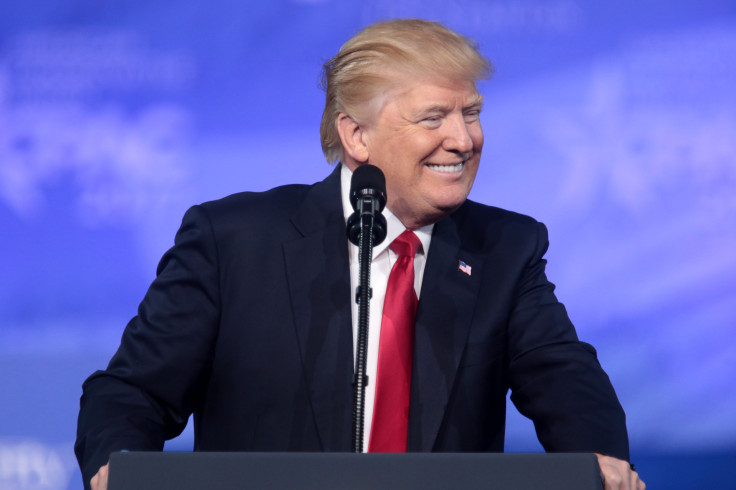
Donald Trump and CNN were at the centre of a sharp on-air clash after a MAGA guest argued on CNN NewsNight that the US president's unpredictability makes him more formidable in foreign policy. The exchange, which unfolded in the latest discussion of Trump's dealings with China, quickly turned into laughter from panelists Charles Blow and John Avlon as the argument was pushed to its limit.
The news came after a debate on CNN NewsNight over Trump's posture towards China and whether his combative style helps or hurts the United States abroad. Bloomberg Opinion journalist Bobby Ghosh said Chinese President Xi Jinping had used unusually hard language, suggesting that Beijing believed Trump entered talks from a position of weakness.
According to Ghosh, Xi was effectively setting the terms. He said the Chinese leader was sensing that 'Trump is weak' and that Beijing understood the president needed Xi for economic and geopolitical reasons. In that reading, Trump was not walking into the room as the dominant force. He was being sized up, tested and found wanting.
That view was flatly rejected by Emily Austin, the former sports broadcaster turned conservative influencer who appeared as a MAGA guest on the programme. Austin leaned on the so-called 'madman theory,' the idea that projecting volatility can make rivals hesitate, and insisted that world leaders back away because 'you have to agree he is crazy, and nobody wants to mess with him.'
CNN Panelists Laugh at MAGA Guest Who Argues That Donald Trump Being 'Crazy' Is Good: 'Nobody Wants to Mess With Him' https://t.co/NplvBAuotk pic.twitter.com/PwrR52j2h1
— OK! Magazine USA (@OKMagazine) May 16, 2026
The line drew instant pushback. Charles Blow and John Avlon laughed openly as Austin tried to build the case that unpredictability is not a liability but a geopolitical asset. Blow cut in, laughing, and said, 'That's exactly the opposite.'
The moment was telling not just for the panel's reaction, but for what it revealed about the argument itself, there is a thin line between deterrence and self-parody, and Austin seemed determined to stand on it.
CNN React to Xi's Hard Line
The argument was framed against a broader assessment of Trump's latest dealings with Xi in Beijing, where analysts have said the Chinese side held the structural advantage. According to OK!, Trump spoke of 'fantastic trade deals' before leaving, yet commentary in The Spectator and TIME suggested Xi had set the boundaries of the summit and left Trump unusually quiet on the most sensitive disputes.
It was about a familiar question in Trump's politics, does forceful unpredictability command respect, or does it simply reveal how much the other side can lean on him? Ghosh's answer was the latter. Austin's answer was the old argument that chaos, if cultivated correctly, can be a shield.
CNN Panelists Laugh at MAGA Guest Who Says Trump Being ‘Crazy’ Is Good, Actually https://t.co/rhCcxlAPwh
— Mediaite (@Mediaite) May 15, 2026
The trouble with that theory is that it asks audiences to admire instability as strategy. It also assumes adversaries are more frightened than they are opportunistic. Blow and Avlon's laughter suggested they did not buy it for a second. Their scepticism was not subtle, but then neither was Austin's defence.
Panel Splits Over Strength
There was, beneath the back-and-forth, a more serious point about how Trump is viewed overseas. If Xi believes the US president is arriving 'with his hat in his hand,' as Ghosh put it, then the optics of the meeting become the message. China is not just responding to policy. It is reading psychology, and broadcasting its own confidence in return.
The CNN panel erupted in laughter when a MAGA podcaster desperately tried to suggest that Trump being “crazy” is actually a positive. https://t.co/DHHCzPqUp0
— The Daily Beast (@thedailybeast) May 15, 2026
That is what made Austin's intervention so combustible. She was not merely praising Trump. She was recasting his critics' favourite attack line that he is erratic, as proof of power. In another political era, that might have sounded like provocation. On this panel, it sounded closer to an unwitting joke.
What remained unchallenged was the central tension at the heart of the segment. Trump's defenders see unpredictability as leverage. His critics see it as proof of weakness dressed up as swagger. Xi, according to the analysis cited on the programme, seemed to have no difficulty choosing which version he believed.
© Copyright IBTimes 2026. All rights reserved.
- Recommended For You