'22 Specialists, Zero Answers': Doctor Sounds Alarm Over Trump's 'Very Well Concealed' White House Health Crisis
Behind the closed doors of the Trump White House, the fight to control the story of the president's body has become as political as any battle over policy.

Donald Trump's White House has come under renewed scrutiny over the president's health after journalist Jonathan Swan said on Wednesday that crucial details about Trump's medical condition were being 'very well concealed' even from some of his most senior aides, despite an unprecedented examination by 22 specialists at Walter Reed National Military Medical Center in Maryland in May.
A string of public episodes and visible ailments raised questions about how robust the 80-year-old president really is, and how honestly the White House is describing it. For months, Trump has been filmed apparently nodding off during meetings and high‑stakes summits, walking with visibly swollen ankles and turning up with bruised hands and a persistent rash on his neck. He has repeatedly boasted about 'acing' a dementia screening test that he presents as proof of high intelligence, while his meandering, off‑topic tangents in interviews and speeches have become their own subplot to his second term.

Donald Trump's Health Under The Microscope
Many of the latest concerns are drawn together in Regime Change, a new book by New York Times reporter Maggie Haberman and CNN's Swan, which examines Trump's second term in office. The authors say that inside the White House, aides had begun quietly remarking that Trump was 'beginning to seem old to them,' and they had started to notice what they delicately described as 'moments of fatigue.'
One detail speaks volumes. According to the book, Trump's declining hearing meant he increasingly preferred to hold meetings in the Oval Office rather than the East Wing, where the acoustics were worse. It was a practical choice for audio, but also for stamina. Remaining in the Oval Office allowed the oldest president in US history to stay seated behind his desk rather than stand through an hour‑long briefing.
The authors describe staff clocking the tell‑tale 'cupped hand' behind his ear as he strained to hear, and a growing pattern of afternoon lethargy. None of this is formally acknowledged in the carefully worded medical summaries issued by the White House, which depict a president in broadly stable health. Yet the picture emerging from the book and from televised moments is at odds with that.
Swan said he believed the reality of Trump's health was being tightly guarded, even within the building. 'I'm not even sure that his most senior aides have a clear picture of his health, about all the aspects of his medical reports,' he said. In his view, the White House's oft‑repeated claim that it has been uniquely transparent about presidential health is 'manifestly not the case.'
'22 Specialists, Zero Answers' On Donald Trump's Care
The most concrete flashpoint is Trump's latest visit to Walter Reed on 26 May, when he spent three hours being evaluated by a team of 22 specialists. His previous annual check‑up involved 14 doctors. The Washington Post reported that 22 is the highest number of specialists ever recorded at a single presidential examination.
CNN medical analyst Jonathan Reiner, a cardiologist who once treated former vice president Dick Cheney, called it 'an extraordinary number' and asked on air what many medical professionals were thinking: what on earth required so many different experts.
'What specialties do they represent? Why so many?' Reiner asked. Those questions have not been answered. Swan told CNN that the administration has not disclosed which disciplines were involved, what imaging was carried out, or what any of it showed. 'We have no indication of who those specialists are or what their specialties are,' he said. 'They haven't released all the imaging results. You can go down the list.'
Pressed by the Post, the White House's medical office argued there was nothing unusual about the scale of the team. 'The involvement of multiple specialists reflects a comprehensive, multidisciplinary evaluation consistent with best practices for executive-level medical care,' it said in a written statement.
On paper, that sounds reassuring. In practice, it leaves the central mystery intact. The public still does not know why this president, at this time, needed such an elaborate line‑up.
The opacity contrasts with what Americans can see for themselves. Swan pointed to the footage of Trump struggling to stay awake in afternoon briefings, and the noticeable swelling around his ankles that media outlets and social media users have latched on to. These so‑called 'cankles' became enough of a fixation that, according to Regime Change, Trump was angered by the coverage and demanded that his press secretary, Karoline Leavitt, formally address the subject in a briefing room Q&A.
Some aides reportedly thought elevating chatter about his ankles to the podium was bizarre, but the authors argue it was perfectly in character for a president intensely focused on his own image. That fixation might partly explain why genuine health information is released so selectively, while relatively trivial matters provoke outsized fury behind the scenes.
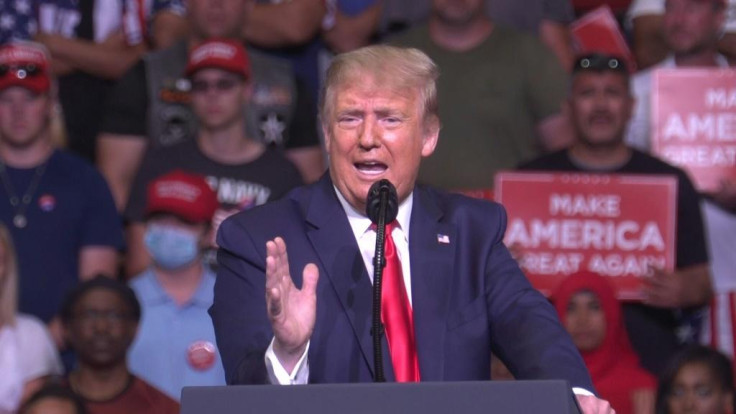
Swan is careful not to overstate what he and Haberman have been able to nail down. Despite months of reporting, he admits there are large gaps. 'We can see for ourselves that he sometimes has trouble staying awake in the afternoons. We can see the swelling around the ankles. There's a lot of unknowns,' he told Collins. 'There's nothing beyond what is publicly available. But I think we actually know very little, frankly.'
Nothing in the book or the broadcasts amounts to a definitive diagnosis, and there is no public evidence of a specific undisclosed condition driving Trump's assorted ailments. As of now, many of the most pointed allegations remain just that. Without fuller records, and with the White House sharply curating what it releases, the reality of Trump's health and whether it affects his capacity to serve rests in a fog of partial glimpses, nervous staff whispers and a three‑hour appointment with 22 unnamed specialists that has raised far more questions than it has answered.
© Copyright IBTimes 2026. All rights reserved.
- Recommended For You