

New FAA 'Line Up and Wait' Rule Hits Thanksgiving; May Lengthen Departure Lines at Some Airports
New FAA staffing requirement takes effect as millions travel for Thanksgiving, with possible departure delays at some airports

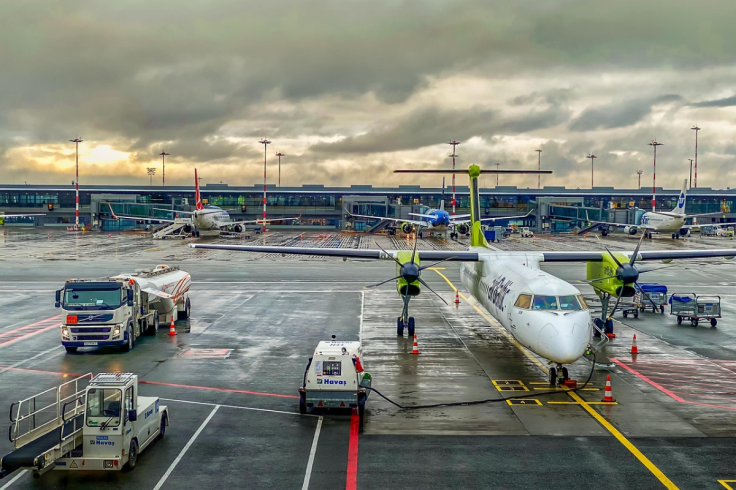
A new Federal Aviation Administration (FAA) staffing requirement for a runway procedure took effect on 24 November, as millions of Americans travelled for Thanksgiving. The change could slow departures at some airports if control towers cannot provide the supervisor required to use it.
The requirement applies to 'Line Up and Wait' (LUAW), which allows controllers to direct an aircraft onto a runway and hold it there while awaiting take-off clearance. A tower must staff a stand-alone watch supervision position whenever it uses LUAW. If it cannot, controllers cannot use the procedure.
The FAA told CNN the change 'will not impact airport operations'. The notice does not estimate how many facilities may be unable to meet the requirement or quantify any effect on departure rates. The impact will vary by tower.
What the FAA's Notices Change
The FAA issued Notice JO 7210.979 on 9 October, effective 24 November. It amends paragraph 10-3-8 of FAA Order JO 7210.3, requiring the watch supervision position to be staffed by an Operations Supervisor or Controller-in-Charge. That person cannot combine the role with another operational position.
The notice also bars local control from being combined with non-local positions, including ground control, clearance delivery, flight data and Cab Coordinator. It permits combinations with certain other local control positions. The FAA changed earlier guidance that a separate supervisor 'should' be assigned into a requirement that one 'must' be present, citing the need to reduce ambiguity and distractions from other duties.
A second notice, JO 7210.982, was issued on 24 November and takes effect on 24 December. It amends paragraph 2-6-6 of the same FAA order, updating position-consolidation provisions to reflect the independent supervisory arrangement for LUAW. It updates the position-consolidation provisions to reflect the independent supervisory arrangement required for LUAW.
Controller Staffing Raises Questions
The requirement comes as the FAA addresses what it describes as a longstanding shortage of certified air traffic controllers. Its 2026 workforce plan set a target of 12,563 certified professional controllers. About 11,000 were deployed as of April, with another 4,000 in training, including approximately 1,000 previously certified controllers completing facility-specific training after relocating. National figures do not show staffing at individual towers.
A radio exchange at Albuquerque International Sunport on 23 November illustrated the concern at one facility. A controller told a pilot the tower needed a separate supervisor to use LUAW. The Southwest Airlines pilot said the requirement would probably cause delays, and the controller agreed. ATC.com recorded the audio, which CNN reported. The exchange reflects a local concern, not confirmed delays elsewhere.
AVweb reported that towers unable to staff the supervisory position would have to stop using LUAW, potentially affecting departure rates. JO 7210.979 does not identify which facilities may be unable to provide the required supervisor.
Thanksgiving Travel Forecast
AAA forecast that 81.5 million Americans would travel at least 50 miles from home between 24 and 30 November. That included 5.96 million domestic air travellers, down 0.2% from 2025. Overall holiday travel was forecast to be 0.1% lower than the previous year, ending a three-year run of record Thanksgiving travel.
The figures do not predict airport-specific delays. The effect will depend on towers' use of LUAW and ability to staff the supervisor. Towers unable to meet the requirement must manage departures without the procedure.
Notice JO 7210.979 lists 9 June 2027 as its cancellation date, while the FAA's online record of changes lists 10 June. JO 7210.982 has its own cancellation date of 10 June 2027. The FAA's published records do not explain the one-day discrepancy for JO 7210.979. How many towers will be affected, and whether the change produces measurable delays, remain unknown.
© Copyright IBTimes 2026. All rights reserved.