Was Charlie Kirk Death Investigation Blocked? Turning Point USA Founder's Chilling Final Words to Joe Kent Unveiled
A former spy chief's last conversation with Charlie Kirk — and the investigation he says he was not allowed to finish.
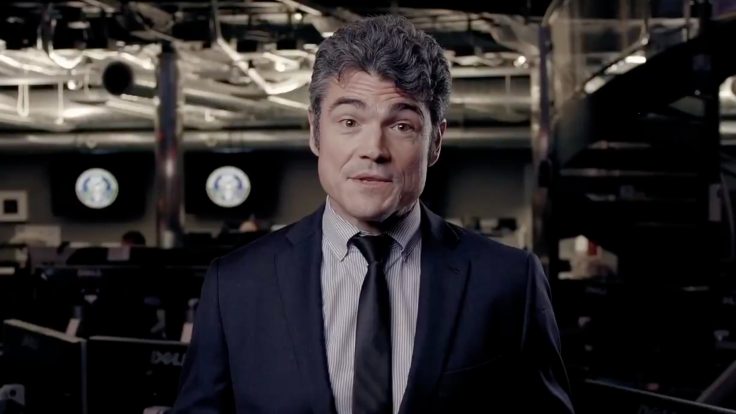
Joe Kent, the recently resigned Director of the National Counterterrorism Center, alleged on The Tucker Carlson Show this week that his office was instructed to abandon its investigation into the killing of Turning Point USA co-founder Charlie Kirk.
Kent made the disclosure just days after stepping down from his federal post on 17 March 2026, and during the same interview he revealed what he says were Charlie Kirk's last words to him — an unsolicited, very public warning about Iran.
Kirk was 31 when he was shot in the neck on 10 September 2025 while speaking at an outdoor event at Utah Valley University in Orem, Utah, the first stop of his 'American Comeback Tour.' Tyler Robinson, then 22, was arrested the following day after a 33-hour manhunt and charged with aggravated murder; prosecutors stated their intent to seek the death penalty. Robinson's own family contacted authorities after he reportedly confessed or implied involvement to them. The FBI's official position was that Robinson acted as a lone gunman, and the case was subsequently handed to Utah State authorities ahead of trial.
What Kent Claims About the Charlie Kirk Investigation
Kent did not mince words with Carlson, though he chose them with evident care. 'We've been told that this individual, Robinson, is a lone gunman, and maybe he is,' he said. 'But the investigation that I was a part of, the National Counterterrorism Center was a part of, we were stopped from continuing to investigate.' The FBI's stated justification, he explained, was procedural: everything had to be transferred to Utah State authorities given the sensitivity of the case and its trajectory towards trial. Kent wasn't buying it wholesale.
'There was still a lot for us to look into that I can't really get into. But there was still linkage for us to investigate that we needed to run down.' He hedged throughout, and pointedly so. 'I'm not making any conclusions. I'm not saying... because of this, this happened. I'm not saying that at all. I'm just saying there's unanswered questions.' Carlson added that reports of Kent's office being stopped had already surfaced months earlier, suggesting this was less a fresh revelation than a long-rumoured claim finally being stated openly, on the record, by someone with direct knowledge.
NEW: Joe Kent says he was blocked from investigating the assassination of Charlie Kirk, says the last thing Charlie told him was to stop the U.S. from getting into a war with Iran.
— Collin Rugg (@CollinRugg) March 19, 2026
"The investigation that the National Counterterrorism Center was a part of, we were stopped from… pic.twitter.com/HTokpRfg47
It should be noted that none of Kent's allegations about blocked foreign-connection leads have been independently verified. His claims rest on his own account and should be treated with appropriate caution until further evidence is produced or official responses are forthcoming.
Charlie Kirk's Final Warning and His Stance Against the Iran War
What gives the account its particular weight is what Kent says happened in June 2025, roughly three months before Kirk was killed. He was in the West Wing when he crossed paths with Kirk in the stairway — a notoriously tight space, as Kent observed, where voices carry. Kirk, by his account, didn't bother with small talk. 'He looked me in the eye. And he said very loudly, and it's a small, you've been in the West Wing, it's small, it's a tight space. And he said, 'Joe, stop us from getting into a war with Iran.' Very loudly.'
Kent placed that exchange inside a broader picture. Kirk had been, in his telling, one of President Trump's closest advisors and had been pressing publicly against military confrontation with Iran, urging a rethink of the American relationship with Israel. 'Charlie Kirk is killed publicly in a very horrific way. And we're not really even allowed to look into that at all. And Charlie Kirk was one of President Trump's closest advisors. And he also advocated heavily against a war with Iran.'
Charlie Kirk warned against starting a war with Iran. His worst fears are playing out in real time.
— The American Conservative (@amconmag) March 9, 2026
"A possible scenario is Iran says: 'You humiliated us, you killed our leaders, we're going to make this a regional mess.'" pic.twitter.com/iXmPT29aSJ
Kent branded Kirk's death 'a data point'—spy-speak from a pro who knows better than to rant. 'One of Trump's top advisors rails against Iran war and Israel ties, gets publicly assassinated, and no questions allowed? That's a data point we need to chase,' he hammered home to Carlson.
Kent acknowledged he was 'not particularly close' with Kirk, though he noted the TPUSA co-founder had been generous in backing his congressional run. The framing throughout remained consistent: unanswered questions, not accusations. But for a former senior intelligence official, speaking on record less than 48 hours after resigning in protest over the very war Kirk had warned him against, even a 'data point' lands with considerable force.
© Copyright IBTimes 2026. All rights reserved.
- MOST POPULAR IN Trending