

Bernie Sanders Explodes at Scott Bessent Over $700 Billion Medicaid Cuts During Explosive Senate Clash
Senate hearing turns heated as Sanders questions priorities in healthcare and tax policies
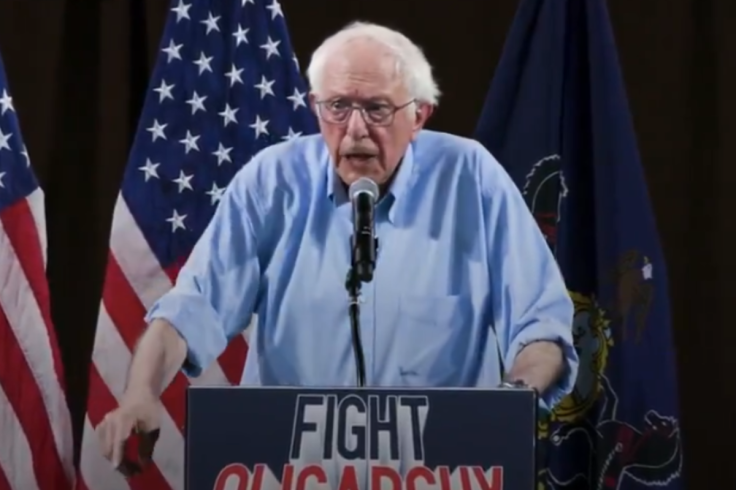
A heated Senate hearing descended into a fierce war of words after Bernie Sanders repeatedly pressed US Treasury Secretary Scott Bessent to explain why Republicans support cutting Medicaid by $700 billion (£520 billion) while expanding estate tax breaks worth $235 billion (£175 billion) for some of America's wealthiest families.
The confrontation began when Sanders questioned whether it was fair to reduce healthcare funding for low-income Americans while providing generous tax relief to a tiny fraction of the country's richest families.
Sanders Presses Bessent Over Medicaid and Tax Breaks
'Why do you think it's a good idea to cut Medicaid for low-income and working-class people by $700 billion (£520 billion) to give $235 billion (£175 billion) of tax breaks to the very, very, very richest people in this country, perhaps a few hundred families? Please justify that.'
Rather than directly answering the question, Bessent pointed to previous Democratic control of Congress and argued that Democrats had not introduced a wealth tax when they had the opportunity.
Sanders immediately interrupted. 'I'm not talking about a wealth tax.'
He continued pressing Bessent to explain why expanding estate tax exemptions for a handful of wealthy families should take priority over healthcare spending.
When Bessent argued the measure would substantially help small businesses, Sanders dismissed the explanation.
'Come on. You're smarter than that.'
He added that the provision affected only the top 0.2 per cent of taxpayers and described it as 'nothing more than a gift to billionaires in this country.'
Healthcare Figures Become the Centre of the Debate
Sanders cited Congressional Budget Office estimates suggesting around 15 million Americans could lose health insurance if the wider Medicaid and Affordable Care Act changes move forward.
He also referenced research from Yale University and the University of Pennsylvania estimating that as many as 50,000 people each year could die because of reduced access to healthcare.
'Tell me why you think it's a good idea to give tax breaks to billionaires and allow 50,000 low-income and working-class people to die unnecessarily,' Sanders asked.
Bessent disputed those figures, arguing they overstated the impact by including other factors, such as the scheduled expiry of Affordable Care Act subsidies.
He also defended the proposed work requirements, saying they were intended to direct more resources towards children and working families.
Sanders remained unconvinced, arguing that millions of Americans leave or lose their jobs every year because of changing life circumstances.
'What happens when I leave my job and maybe I have to move to another state to take care of my ill mother and I desperately need Medicaid? Am I too lazy now to be able to get Medicaid?'
Bessent replied that Sanders was mischaracterising the work requirement proposals.
Tariffs Spark Another Heated Exchange
The hearing later moved beyond healthcare as lawmakers questioned Bessent about President Donald Trump's tariff strategy.
One lawmaker argued that the effective tariff rate had climbed to around 28 per cent, the highest level in more than a century, and repeatedly asked a straightforward question.
'Who pays tariffs?'
Bessent responded by describing the issue as 'a very complicated question' and referred to a 'strategic uncertainty' approach during trade negotiations.
One member criticised the administration's shifting tariff policies, saying the uncertainty was making life increasingly difficult for small businesses already struggling with rising costs.
The exchange became increasingly tense as repeated requests for a direct answer went unanswered.
© Copyright IBTimes 2026. All rights reserved.