Netflix Fraudster Carl Rinsch Gets 30 Months, Keanu Reeves Letter Helped Reduce Sentence
Keanu Reeves' letter and mental health issues influence reduced sentence.
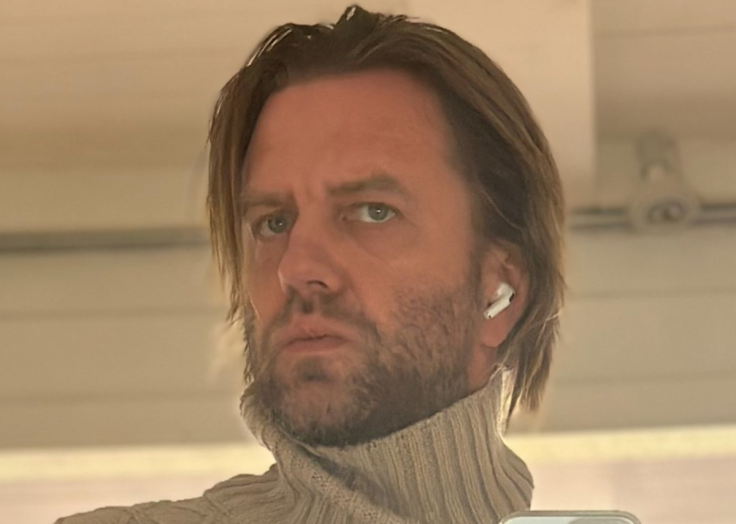
Hollywood director Carl Rinsch has been sentenced to 30 months in prison after defrauding Netflix of roughly $11 million (£8.3 million), with a letter from actor Keanu Reeves and evidence of the filmmaker's mental health struggles helping secure a shorter sentence.
The 48-year-old director, best known for '47 Ronin,' was sentenced on Monday in a federal court in New York after being convicted in December of wire fraud and money laundering. Prosecutors had asked for a five-year prison term, while federal sentencing guidelines suggested as much as nine to 11 years because of the scale of the fraud.
Instead, U.S. District Judge Jed Rakoff imposed a 30-month sentence, saying the punishment should be 'sufficient but no more than necessary.'
How Keanu Reeves' Letter Influenced the Sentence
One of the key factors in the judge's decision was a series of character references submitted on Rinsch's behalf, including one from Reeves, who starred in Rinsch's 2013 film '47 Ronin.'
Reeves told the court he and others had tried to organise an intervention for Rinsch in 2019 after noticing his deteriorating mental health, but the director rejected professional help at the time.
The actor wrote that he believed Rinsch's mental state had been worsened by medication misuse and other issues, contributing to 'self-sabotage' and grandiose behaviour that affected both his relationships and his ability to complete Netflix's sci-fi series 'White Horse,' later renamed 'Conquest.'
Reeves described Rinsch as someone who brought 'exceptional joy and warmth' to those around him and urged the court to temper justice with mercy.
Mental Health Became Central at Sentencing
Unlike the trial, where Rinsch's lawyers deliberately kept discussions of his mental health away from the jury, the issue became central during sentencing.
Defence lawyer Daniel McGuinness told the court that Rinsch had been receiving inadequate medical care during production of the series but had since completed treatment with a new provider and was now thinking more clearly.
Judge Rakoff said he had not observed signs of psychosis during the trial. However, he noted that some of Rinsch's extravagant decisions, including buying five Rolls-Royces registered under other people's names, suggested behaviour that went beyond simple greed.
Addressing the court, Rinsch apologised for his actions.
'I made a mistake,' he said. 'This process has forced me to confront things about my health, my judgment and my life.'
His mental health had also surfaced during his divorce from ex-wife Gabriela Rosés Bentancor. In court filings submitted in 2020, she alleged that Rinsch became increasingly erratic while working on 'White Horse,' claiming he believed he could predict lightning strikes and describing aeroplanes as 'organic, intelligent forces' that had 'come to say hi.'
Millions Spent on Luxury Purchases
According to prosecutors, Netflix originally paid Rinsch about $44 million (£33.2 million) to produce 'White Horse' before approving an additional $11 million (£8.3 million) after he claimed the ambitious sci-fi series needed more funding.
Instead of completing the production, prosecutors said Rinsch transferred the money into a personal account, lost around half through risky stock market trades and later made profits through cryptocurrency investments.
He then spent millions on luxury items, including five Rolls-Royces, a Ferrari, $652,000 (£493,000) worth of watches and clothes, and household goods. Court records also revealed he spent more than $638,000 (£482,000) on two mattresses, along with another $295,000 (£223,000) on luxury bedding and furnishings. Prosecutors also said he used $1.8 million (£1.3 million) to pay off credit card bills.
Prosecutors argued Rinsch had every opportunity to finance his projects legally, pointing to his wealthy background, successful career and influential Hollywood connections. They described his actions as driven by 'naked greed' and said the unfinished production damaged the careers of numerous actors and crew members who had worked on the project.
Restitution Ordered as Prison Date Set
Alongside the prison sentence, Rinsch was ordered to repay approximately $11 million (£8.3 million) to Netflix, complete outpatient mental health treatment and avoid narcotics and other drugs. He will also serve three years of supervised release after leaving prison.
Judge Rakoff acknowledged Netflix was unlikely to recover the full amount, joking that he would not recommend Rinsch continue investing in cryptocurrency because it was 'just a market for gambling.'
Rinsch has been ordered to surrender to prison on September 1, while his legal team says it intends to appeal the conviction. Judge Rakoff concluded by saying Rinsch remained 'a very talented person' who could still make use of those talents after his release, but stressed that he had knowingly committed the fraud and concealed it for years.
© Copyright IBTimes 2026. All rights reserved.
- Recommended For You