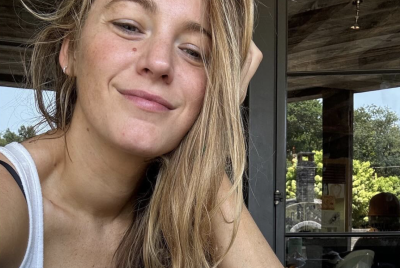
Blake Lively Denied Punitive Damages But Justin Baldoni Ordered To Pay Legal Fees: Report
Court orders Justin Baldoni to pay Blake Lively's legal fees after failed countersuit

Blake Lively was denied a bid for punitive and treble damages against It Ends With Us director Justin Baldoni in a Los Angeles court ruling this month, but the judge ordered Baldoni to cover her legal fees and litigation costs linked to his failed counterclaim, according to People Magazine. The decision comes after months of bitter legal wrangling between Blake Lively, 38, and Baldoni, 42, over their work together on the troubled 2024 film adaptation.
The court's order followed news that the pair had settled their wider 'legal drama' over It Ends With Us, a project that once looked like a glossy star vehicle and ended up spawning duelling lawsuits. In the aftermath of filming, Lively accused Baldoni and others of sexual harassment and retaliation on set, while Baldoni responded with an explosive countersuit accusing the actress, her husband Ryan Reynolds and their publicist of extortion and defamation. His case was ultimately thrown out by a judge, setting the stage for the latest fight over who should pay the cost of that failed legal offensive.
Blake Lively's Legal Fees And What The Judge Decided
The new ruling, first reported by People and summarised by TMZ, draws a clear line between money Lively wanted and money she will get. The judge refused her attempt to pursue treble damages and punitive damages from Baldoni, a legal route that would have significantly increased any financial penalty against him.
At the same time, the court ordered Baldoni and his production company, Wayfarer Studios, to pay Lively's attorneys' fees and litigation expenses relating specifically to his counterclaim. It is not yet clear how much that bill will amount to, with TMZ noting that the dollar figure has not been disclosed.
In a statement to People, Lively's lawyers Esra Hudson and Michael Gottlieb framed the order as a vindication of their client's conduct in the saga. They said the ruling 'makes it clear that Ms. Lively brought her claims in good faith, that there was no evidence she acted with malice, and that she is the prevailing defendant under Section 47.1.' That legal reference appears to point to protections around communications in connection with judicial proceedings, a key issue in a defamation dispute.
On paper, then, Lively has not secured the headline-grabbing punitive payout some might have anticipated. But she has, at least in this slice of the case, been held up by the court as the party entitled to recover her costs from an unsuccessful lawsuit that tried to paint her as the aggressor.
How The Blake Lively–Justin Baldoni Row Escalated
The news came after a June 1 hearing in which Lively's legal team argued that Baldoni should be ordered to pick up her legal tab once his defamation and extortion claims had been dismissed. Those claims were part of a countersuit Baldoni launched after Lively filed her own complaint stemming from what she described as inappropriate behaviour during production.
As previously reported in US media, Lively alleged that Baldoni, who both directed and starred in It Ends With Us, engaged in unscripted improvisations on set that made her uncomfortable. Her lawsuit accused Baldoni and others of sexual harassment and retaliation. Baldoni has denied those allegations.
He hit back with a counter-accusation that Lively, Reynolds and their publicist had tried to extort him and had defamed him in the process. A judge later threw out that countersuit, stripping Baldoni of one of his most aggressive legal weapons and opening the door to this month's fight over fees.
Both sides have sought to claim the upper hand in public. After a settlement resolving the broader dispute was reached, Lively's camp described the outcome as a 'resounding victory', leaning into the idea that she had stood her ground and been legally vindicated. Baldoni's side, for its part, insisted the resolution was 'a win and total victory for the Wayfarer parties.' The truth, as often in Hollywood lawfare, sits somewhere in the messy middle.
Nothing is confirmed yet so everything should be taken with a grain of salt.
A Troubled Film, A Public Battle, And No Neat Ending
The court fight has run parallel to It Ends With Us shifting from passion project to PR headache. The film, adapted from Colleen Hoover's bestselling novel, was meant to capitalise on Hoover's rabid fanbase and Lively's blockbuster draw. Instead, it has been dogged by delays and murmurs of on‑set tension, culminating in these legal salvos.
For a while, it felt like the litigation might overshadow the film entirely. The allegations themselves are serious: sexual harassment, retaliation, extortion, defamation. Behind each of those legal labels are very human questions about who felt unsafe, who felt maligned and who, in the end, gets to control the story.
Officially, Baldoni continues to deny Lively's claims, and the settlement means many of the underlying factual disputes are unlikely ever to be aired in full at trial. The payment of legal fees on one counterclaim does not determine whether harassment happened, or whether anyone misused their power on set. It does, however, send a pointed message about which claims the court found baseless enough that the person targeted should not be left out of pocket.
Lively, notably, appeared at the Met Gala red carpet shortly after the settlement became public, stepping back into the fashion circus while lawyers were still ironing out financial details. It was a familiar kind of Hollywood image management: project normality, even when the off‑screen stuff is mad.
For now, one thing is certain. What began as a romance drama about a complicated relationship has bled into real life, with Blake Lively and Justin Baldoni locked in a different sort of power struggle, one that is playing out not in front of cameras, but in filings, hearings and carefully worded statements that will probably never capture the whole story.
© Copyright IBTimes 2026. All rights reserved.
- Recommended For You