Iran Walks Out of US Talks in Switzerland Amid Trump's Renewed Threats Over Lebanon
Iranian negotiators exit Switzerland talks after Trump threats, complicating the easing of regional tension
Iranian negotiators walked out of high-level talks with the United States in Switzerland on Sunday after President Donald Trump renewed threats to strike Iran over its support for Hezbollah activities in Lebanon. The move came during the first round of discussions at the Bürgenstock resort near Lucerne, part of efforts to implement a memorandum of understanding signed last week to ease regional tensions and facilitate the reopening of the Strait of Hormuz to global shipping.
The agreement followed weeks of indirect diplomacy and aimed to end a cycle of attacks across multiple fronts. Iranian state media reported that the delegation left the venue in protest following Trump's social media posts. The team had refused a planned joint handshake and photograph with the American delegation before the session began.
US-Iran Talks Face Disruption Over Lebanon
Trump posted that Iran must 'immediately stop their highly paid PROXIES in Lebanon from causing trouble. If they don't, we'll hit Iran very hard again, just like we did last week, only harder!!!' Iranian officials made clear that continuation of broader negotiations depended on an end to the conflict in Lebanon.
Israeli strikes there over the weekend killed more than 30 people, adding to tensions over the Strait of Hormuz, which Iran had previously threatened to close in response to perceived ceasefire violations.
The Lebanon fighting has tested the fragile framework agreed last week, with both sides accusing each other of breaches. Iranian negotiators insisted that any deal on shipping lanes and sanctions would require firm guarantees on halting operations against Hezbollah.
Vance Offers Path To Improved Ties
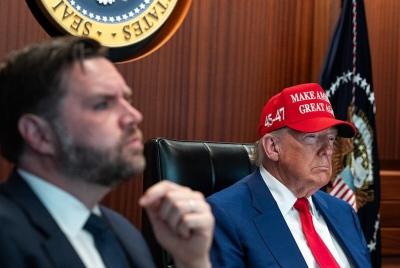
US Vice President JD Vance, who led the American delegation alongside other envoys, took a more measured approach during the talks. He said the United States was ready to fundamentally transform its relationship with Iran if Tehran's leadership was willing to give up being a driver of regional instability and to abandon nuclear weapons ambitions for the long term.
Vance described the current discussions as an opportunity to turn over a new leaf in relations between the two countries and the wider region. He acknowledged that situations such as the violence in Lebanon were often messy but expressed optimism about progress on de-escalation.
Mediators Highlight Progress And Next Steps
Pakistan and Qatar, serving as mediators in the quadrilateral format, reported encouraging progress despite the disruption caused by the walkout. They announced agreements to establish a communication line to avoid incidents in the Strait of Hormuz and a de-confliction cell with Lebanon's government to ensure adherence to the termination of military operations.
The overall process forms part of a structured 60-day period agreed last week to resolve outstanding matters including the lifting of US sanctions on Iranian oil exports and the unfreezing of assets abroad. Iranian Foreign Minister Abbas Araghchi thanked the mediators for their tireless work in delivering major advances during the initial discussions.
Technical talks are scheduled to continue for the rest of the week as part of the 60-day window for finalising details on sanctions relief, nuclear issues and the reopening of the vital shipping route. The episode illustrates the difficulties in maintaining momentum amid ongoing regional conflicts, though mediators expressed confidence that the process would proceed with further sessions this week.
© Copyright IBTimes 2026. All rights reserved.
- Recommended For You